
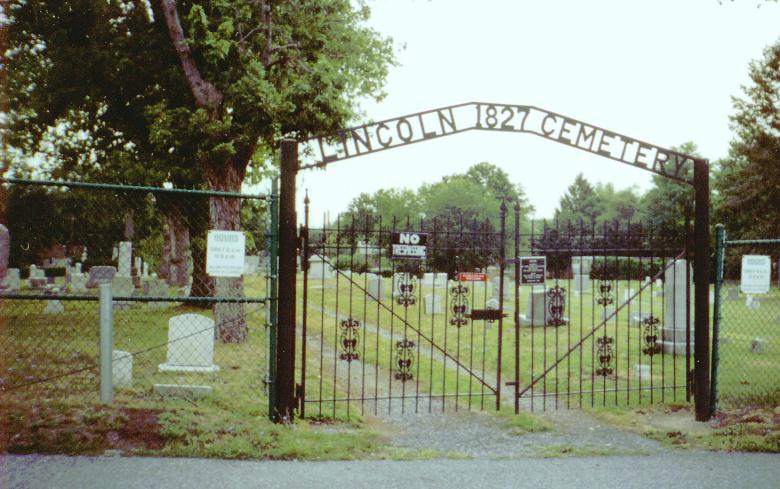
Lincoln Cemetery
Penbrook, Dauphin County, Pennsylvania, USA
About
-
Get directions 201 South 30th Street, Harrisburg, Pennsylvania 17103, United StatesCoordinates: 40.28050, -76.84360
- lincolncemetery.org
- [email protected]
- 717-727-0071
- Cemetery ID:
Members have Contributed
Photos


Lincoln Cemetery, located in Penbrook Borough and Susquehanna Township, Dauphin County, Pennsylvania, is Harrisburg's oldest surviving historic African American burial ground. Established in November 1877, the cemetery was created by Harrisburg's African American community in response to segregation, overcrowding, and the poor condition of earlier Black burial grounds. Although founded to meet the urgent burial needs of Black Harrisburg, Lincoln Cemetery's founders publicly rejected exclusionary burial practices and welcomed burial "without distinction to color or creed."
Lincoln Cemetery also became a caretaker cemetery for people reinterred from earlier African American burial grounds, including the Wesleyan Union Church Grave Yard and Harris Free Cemetery. Documentary evidence suggests that some of the "unknown dead" removed from the older Black cemeteries were reinterred at Lincoln Cemetery in a mass grave. The cemetery is both an Independent Legacy Cemetery and an Independent Caretaker Cemetery under the Multiple Property Documentation Form "African American Churches and Cemeteries in Pennsylvania, c. 1644-c. 1970."
In 2026, Lincoln Cemetery was nominated for the National Register of Historic Places through the Pennsylvania State Historic Preservation Office under Criterion A and Criterion D, with Criteria Consideration D for cemeteries. Under Criterion A, the cemetery is locally significant for Ethnic Heritage: Black and Social History. Under Criterion D, it is significant for its potential to yield important historical and archaeological information about cemetery organization, reinterments, unmarked burials, grave markers, funerary art, landscape features, African American burial practices, and the social history of Harrisburg's Black community.
Lincoln Cemetery is an essential site for understanding Black Deathways, women's history, enslavement and freedom, migration, education, military service, mutual aid, religious life, public memory, and African American migration across Pennsylvania, Maryland, Virginia, West Virginia, and beyond. It preserves the lives of generations of Black families, including civic and religious leaders, educators, activists, formerly enslaved people, Underground Railroad associates, women organizers, fraternal and benevolent society members, and military veterans.
By 1884, Lincoln Cemetery had been developed as a carefully designed rural-style cemetery with graveled paths, trees, monuments, a Gothic-style summer house, and a mound marking the unknown dead removed from the old Herr Street cemetery. Today, the cemetery contains thousands of known burials, with additional burials still being identified through ongoing research. It is the final resting place of hundreds of documented veterans, including more than 160 Black military veterans.
After decades of underfunding, neglect, vandalism, animal disturbance, and loss of records, descendant-led restoration work has helped recover and document the cemetery's history. Saving Our Ancestors Legacy (SOAL) leads ongoing restoration, research, public education, and community stewardship at Lincoln Cemetery. In 2026, the Pennsylvania State Historic Preservation Office recognized SOAL with a Community Initiative Award for its stewardship, restoration, public education, partnership-building, and historical research.
Lincoln Cemetery, located in Penbrook Borough and Susquehanna Township, Dauphin County, Pennsylvania, is Harrisburg's oldest surviving historic African American burial ground. Established in November 1877, the cemetery was created by Harrisburg's African American community in response to segregation, overcrowding, and the poor condition of earlier Black burial grounds. Although founded to meet the urgent burial needs of Black Harrisburg, Lincoln Cemetery's founders publicly rejected exclusionary burial practices and welcomed burial "without distinction to color or creed."
Lincoln Cemetery also became a caretaker cemetery for people reinterred from earlier African American burial grounds, including the Wesleyan Union Church Grave Yard and Harris Free Cemetery. Documentary evidence suggests that some of the "unknown dead" removed from the older Black cemeteries were reinterred at Lincoln Cemetery in a mass grave. The cemetery is both an Independent Legacy Cemetery and an Independent Caretaker Cemetery under the Multiple Property Documentation Form "African American Churches and Cemeteries in Pennsylvania, c. 1644-c. 1970."
In 2026, Lincoln Cemetery was nominated for the National Register of Historic Places through the Pennsylvania State Historic Preservation Office under Criterion A and Criterion D, with Criteria Consideration D for cemeteries. Under Criterion A, the cemetery is locally significant for Ethnic Heritage: Black and Social History. Under Criterion D, it is significant for its potential to yield important historical and archaeological information about cemetery organization, reinterments, unmarked burials, grave markers, funerary art, landscape features, African American burial practices, and the social history of Harrisburg's Black community.
Lincoln Cemetery is an essential site for understanding Black Deathways, women's history, enslavement and freedom, migration, education, military service, mutual aid, religious life, public memory, and African American migration across Pennsylvania, Maryland, Virginia, West Virginia, and beyond. It preserves the lives of generations of Black families, including civic and religious leaders, educators, activists, formerly enslaved people, Underground Railroad associates, women organizers, fraternal and benevolent society members, and military veterans.
By 1884, Lincoln Cemetery had been developed as a carefully designed rural-style cemetery with graveled paths, trees, monuments, a Gothic-style summer house, and a mound marking the unknown dead removed from the old Herr Street cemetery. Today, the cemetery contains thousands of known burials, with additional burials still being identified through ongoing research. It is the final resting place of hundreds of documented veterans, including more than 160 Black military veterans.
After decades of underfunding, neglect, vandalism, animal disturbance, and loss of records, descendant-led restoration work has helped recover and document the cemetery's history. Saving Our Ancestors Legacy (SOAL) leads ongoing restoration, research, public education, and community stewardship at Lincoln Cemetery. In 2026, the Pennsylvania State Historic Preservation Office recognized SOAL with a Community Initiative Award for its stewardship, restoration, public education, partnership-building, and historical research.
Nearby cemeteries


- Added: 13 Aug 2006
- Find a Grave Cemetery ID: 2185635

Cemetery Photos
This is a carousel with slides. Use Next and Previous buttons to navigate, or jump to a slide with the slide dots. Use Escape keyboard button or the Close button to close the carousel.


Success
Uploading...
Waiting...
Failed
This photo was not uploaded because this cemetery already has 20 photos
This photo was not uploaded because you have already uploaded 5 photos to this cemetery
This photo was not uploaded because you have already uploaded 5 photos to this cemetery
Invalid File Type
Birth and death years unknown.
1 photo picked...
2 photos picked...
Uploading 1 Photo
Uploading 2 Photos
1 Photo Uploaded
2 Photos Uploaded
This photo is larger than 20 MB. Please resize to less than 20 MB and try again.
Too many photos have been uploaded
"Unsupported file type"
• ##count## of 0 memorials with GPS displayed. Double click on map to view more.No cemeteries found