
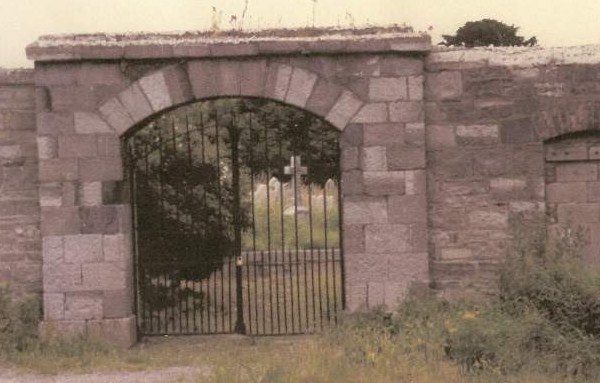
St. George's Church Cemetery
Dublin, County Dublin, Ireland
About
-
- Cemetery ID:
Members have Contributed
Photos


The graveyard has served the needs of the Church of Ireland parish of St George since at least the early 19th century and the majority of grave markers and funerary memorials date to the early- to mid-20th century. The parish of St George was established in 1793. The site of the graveyard was initially considered for the church, however it was found to be too far from the population centre of the new parish. Francis Johnston's church was thus built on the junction of Hardwicke Street and Temple Street in 1814. The graveyard was probably laid out and enclosed before the turn of the century and the plot of land to the south facing the canal was given over for the provision of a new hospital for the parish, the Whitworth Fever Hospital, which opened in 1818. After 1842, it became a general hospital for the area and its name was changed to the Drumcondra Hospital in 1893. The hospital continued as such until 1973, when it became an annex to the Rotunda Hospital. In 1986 the premises were acquired by the National Council for the Blind of Ireland.
Source: www.Excavations.ie website.
Rectangular-plan burial ground, laid out 1817 and consecrated 1824. No longer in active use. Enclosed by dressed snecked limestone walls, that to west having granite coping. Entrance gateway to concave southeast corner, with segmental-headed vehicular archway within slight projection of ashlar limestone with dressed coping, and having double-leaf cast-iron vehicular gate. Headstones, crosses and box tombs of nineteenth-century date to interior. Located to north of former fever hospital.
While no longer in active use, this burial ground remains of social importance to the parish of St. George which it once served. Many of the grave markers exhibit skilled artisanship. The burial ground was laid out and enclosed by John Read in the early nineteenth century. It is also of historic interest for containing notable burials, including those of the architect Francis Johnston (1761-1829) and surgeon Richard Carmichael (1776-1849), founder of the Carmichael School of Medicine.
Source: National Built Heritage Service Website
The graveyard has served the needs of the Church of Ireland parish of St George since at least the early 19th century and the majority of grave markers and funerary memorials date to the early- to mid-20th century. The parish of St George was established in 1793. The site of the graveyard was initially considered for the church, however it was found to be too far from the population centre of the new parish. Francis Johnston's church was thus built on the junction of Hardwicke Street and Temple Street in 1814. The graveyard was probably laid out and enclosed before the turn of the century and the plot of land to the south facing the canal was given over for the provision of a new hospital for the parish, the Whitworth Fever Hospital, which opened in 1818. After 1842, it became a general hospital for the area and its name was changed to the Drumcondra Hospital in 1893. The hospital continued as such until 1973, when it became an annex to the Rotunda Hospital. In 1986 the premises were acquired by the National Council for the Blind of Ireland.
Source: www.Excavations.ie website.
Rectangular-plan burial ground, laid out 1817 and consecrated 1824. No longer in active use. Enclosed by dressed snecked limestone walls, that to west having granite coping. Entrance gateway to concave southeast corner, with segmental-headed vehicular archway within slight projection of ashlar limestone with dressed coping, and having double-leaf cast-iron vehicular gate. Headstones, crosses and box tombs of nineteenth-century date to interior. Located to north of former fever hospital.
While no longer in active use, this burial ground remains of social importance to the parish of St. George which it once served. Many of the grave markers exhibit skilled artisanship. The burial ground was laid out and enclosed by John Read in the early nineteenth century. It is also of historic interest for containing notable burials, including those of the architect Francis Johnston (1761-1829) and surgeon Richard Carmichael (1776-1849), founder of the Carmichael School of Medicine.
Source: National Built Heritage Service Website
Nearby cemeteries


- Added: 2 Jul 2010
- Find a Grave Cemetery ID: 2360461

Cemetery Photos
This is a carousel with slides. Use Next and Previous buttons to navigate, or jump to a slide with the slide dots. Use Escape keyboard button or the Close button to close the carousel.


Success
Uploading...
Waiting...
Failed
This photo was not uploaded because this cemetery already has 20 photos
This photo was not uploaded because you have already uploaded 5 photos to this cemetery
This photo was not uploaded because you have already uploaded 5 photos to this cemetery
Invalid File Type
Birth and death years unknown.
1 photo picked...
2 photos picked...
Uploading 1 Photo
Uploading 2 Photos
1 Photo Uploaded
2 Photos Uploaded
This photo is larger than 20 MB. Please resize to less than 20 MB and try again.
Too many photos have been uploaded
"Unsupported file type"
• ##count## of 0 memorials with GPS displayed. Double click on map to view more.No cemeteries found