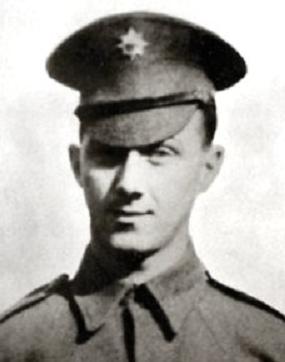
World War II Victoria Cross Recipient. Born in Manchester, England, he served as a Guardsman in the 2nd Battalion, Irish Guards, Armour Division, British Army. On April 21, 1945, he was co-driver in one tank of a troop which, with a platoon of infantry, seized the village of Wistedt, Germany. Suddenly the enemy attacked this position in great strength, all the tanks, including Guardsman Charlton's, were hit and the infantry were hard pressed of being over-run. He decided to counter-attack the enemy on his own and halted the leading enemy company, inflicting heavy casualties on them. He mounted his machine gun on a nearby fence, which he used to support his wounded left arm, was twice more wounded and was suffering from loss of blood. He still continued to inflict casualties on the enemy, until finally, he was hit for the third time, collapsed and was taken prisoner. He died shortly after in a German POW camp. Unusually, much of the citation was based on German accounts of the fight, as most of his later actions had not been witnessed by any of the Guards officers or surviving non-commissioned officers. For most prestigious gallantry, he was posthumously awarded the Victoria Cross (VC) on May 2, 1946 and he was the very last British soldier to be awarded the VC in the European theatre of World War II (WWII).
World War II Victoria Cross Recipient. Born in Manchester, England, he served as a Guardsman in the 2nd Battalion, Irish Guards, Armour Division, British Army. On April 21, 1945, he was co-driver in one tank of a troop which, with a platoon of infantry, seized the village of Wistedt, Germany. Suddenly the enemy attacked this position in great strength, all the tanks, including Guardsman Charlton's, were hit and the infantry were hard pressed of being over-run. He decided to counter-attack the enemy on his own and halted the leading enemy company, inflicting heavy casualties on them. He mounted his machine gun on a nearby fence, which he used to support his wounded left arm, was twice more wounded and was suffering from loss of blood. He still continued to inflict casualties on the enemy, until finally, he was hit for the third time, collapsed and was taken prisoner. He died shortly after in a German POW camp. Unusually, much of the citation was based on German accounts of the fight, as most of his later actions had not been witnessed by any of the Guards officers or surviving non-commissioned officers. For most prestigious gallantry, he was posthumously awarded the Victoria Cross (VC) on May 2, 1946 and he was the very last British soldier to be awarded the VC in the European theatre of World War II (WWII).
Bio by: John "J-Cat" Griffith
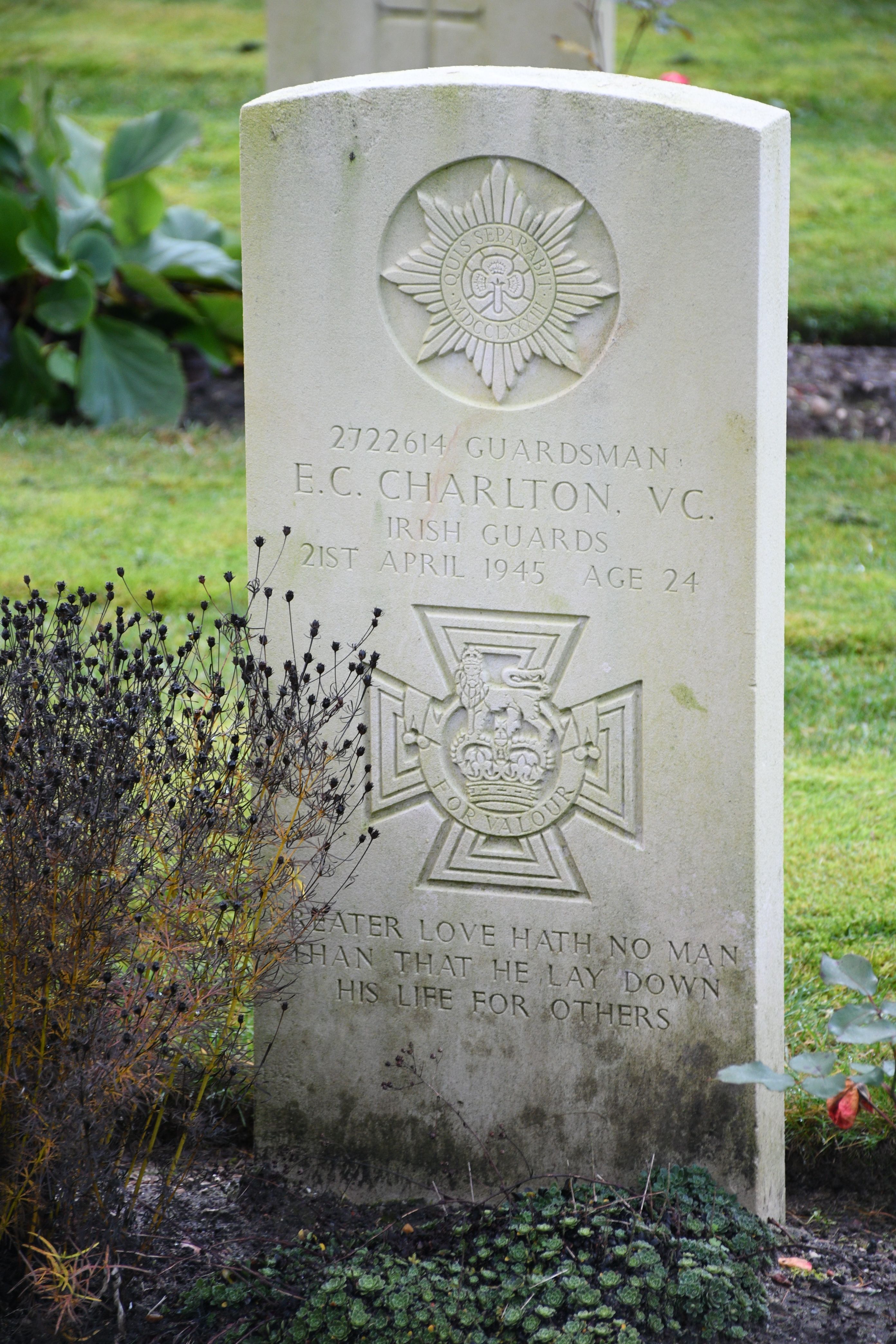
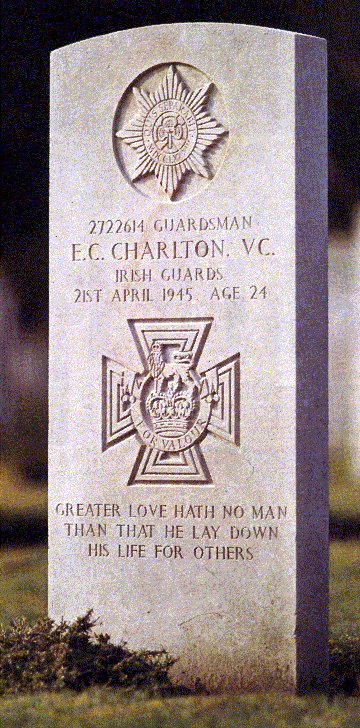
Inscription
Greater Love Hath No Man Than That He Lay Down His Life For Others