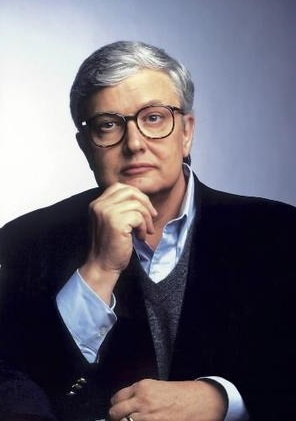
Pulitzer Prize Recipient Journalist. He gained fame as an American film critic. He joined the Chicago "Sun-Times" newspaper, part-time in 1966, while pursuing graduate study at the University of Chicago, and went on to become one of the most influential film critics in the nation. In 1969, he took a leave of absence from the newspaper to write the 1970 screenplay for "Beyond the Valley of the Dolls," which went on to become somewhat of a cult classic. In the mid-1970s, he paired with Gene Siskel of the rival "Chicago Tribune" for a televised monthly PBS program called "Opening Soon at a Theater Near You," which shortly thereafter became known as "At the Movies." The show made the two men household names when the show went national in 1978. They sparred on air and off, but always as equals and not without respect. Ebert earned a Pulitzer Prize in 1975 for distinguished criticism and was the first, and one of only three, given to a film reviewer since the category was created in 1970. In 2005, he became the first critic to have a star on the Hollywood Walk of Fame. He was a respected film historian. He was honored by the Gotham Awards, receiving a tribute and award for his lifetime contributions to independent film in 2007. Ebert, who authored more than a dozen books, died at age 70 in 2013 after an eleven-year battle with cancer of the thyroid and salivary gland, which was treated with radical facial surgery. Since 1979, he was a recovering alcoholic. At the age of 50, he married for the first time. In their honor, there is a street named Siskel and Ebert Way in their hometown of Chicago.
Pulitzer Prize Recipient Journalist. He gained fame as an American film critic. He joined the Chicago "Sun-Times" newspaper, part-time in 1966, while pursuing graduate study at the University of Chicago, and went on to become one of the most influential film critics in the nation. In 1969, he took a leave of absence from the newspaper to write the 1970 screenplay for "Beyond the Valley of the Dolls," which went on to become somewhat of a cult classic. In the mid-1970s, he paired with Gene Siskel of the rival "Chicago Tribune" for a televised monthly PBS program called "Opening Soon at a Theater Near You," which shortly thereafter became known as "At the Movies." The show made the two men household names when the show went national in 1978. They sparred on air and off, but always as equals and not without respect. Ebert earned a Pulitzer Prize in 1975 for distinguished criticism and was the first, and one of only three, given to a film reviewer since the category was created in 1970. In 2005, he became the first critic to have a star on the Hollywood Walk of Fame. He was a respected film historian. He was honored by the Gotham Awards, receiving a tribute and award for his lifetime contributions to independent film in 2007. Ebert, who authored more than a dozen books, died at age 70 in 2013 after an eleven-year battle with cancer of the thyroid and salivary gland, which was treated with radical facial surgery. Since 1979, he was a recovering alcoholic. At the age of 50, he married for the first time. In their honor, there is a street named Siskel and Ebert Way in their hometown of Chicago.
Bio by: Linda Davis