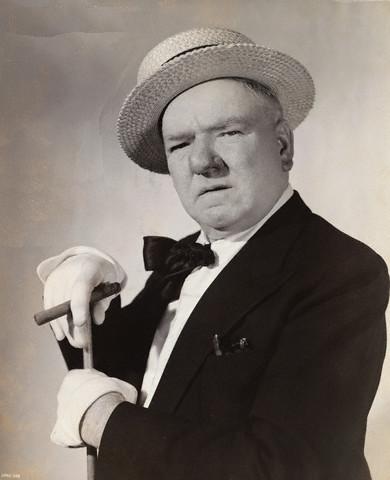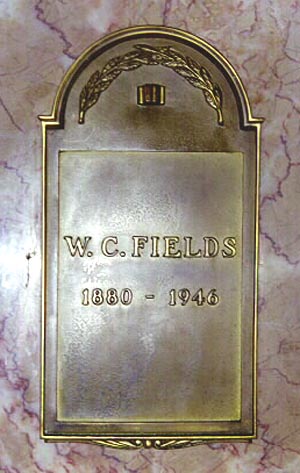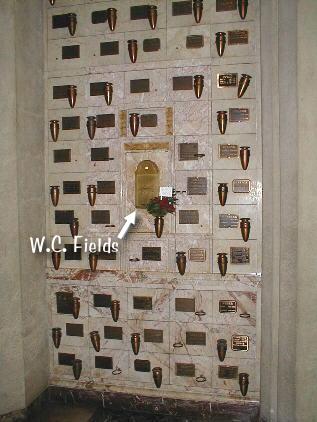
Actor, Comedian. He gained stardom as an American entertainer who could deliver perfect line as a straight man in a comedic performance. Born William Claude Dukenfield, he was the oldest of the five children born to Kate Spangler Felton, a native of Philadelphia, and James Dukenfield, an immigrant from England. Following attending four years of formal school, he left school to help his father with his business. After realizing he did not want a career of selling vegetables, he left home at the age of eleven after many fights, some of them physical and abusive, with his father. The young boy lived a precarious hand to mouth existence, often spending the night in jail. After a time, he got a steady job delivering ice, and by age thirteen, he was hired as a juggler at an amusement park in Norristown, Pennsylvania. His juggling act was very successful and a big crowd-pleaser. Later on in his thirteenth year, he moved to Atlantic City to work as a juggler at Fortescue's Pier. By the age of nineteen, he was being billed as "The Distinguished Comedian", and by the age of twenty-one was a headliner everywhere he traveled. By this point, he had moved on from entertaining at amusement parks and was doing his comedy juggling routine for Vaudeville. He was playing for more and more prestigious theatres and Vaudeville houses in the United States as well as England, and appearing with some very important people of the day, such as Sarah Bernhardt at Buckingham Palace and Maurice Chevalier. In 1906, he debuted on Broadway in "The Ham Tree," a musical comedy, and joined the Ziegfeld Follies in 1915. In 1908, he legally changed his name to W.C. Fields. He stayed with the Ziegfeld Follies until 1921. In 1923, he made a splash on Broadway with the musical comedy "Poppy." During these same years, he had begun to appear in silent films, both one-reel comedies and full-length features, though he did not become a star in his own right until the sound era. His style of comedy and screen persona were more suited to sound, although he did turn in a few well-regarded silent comedies, most notably "Sally of the Sawdust," which earned him a 1925 Best Performance award from "Photoplay." Some of his silent films were later remade and reworked during the sound era. During the sound era, he made such films as "It's a Gift" in 1934, "Million Dollar Legs" in 1932, "The Man on the Flying Trapeze" in 1935, "My Little Chickadee" in 1940, "The Bank Dick" in 1940, "You Can't Cheat an Honest Man" in 1939, and "Never Give a Sucker an Even Break" in 1941. He also occasionally appeared on ventriloquist Edgar Bergen's radio show. He was a talented amateur cartoonist who frequently drew the illustrations for his Vaudeville publicity materials, and continued to send friends hand-made greeting and holiday cards and drawings his entire life. Fields was married only once to Harriet Hughes from 1900 to 1946. The couple had one son, William Claude Fields Jr., but with his numerous other romantic relationships, he produced a second son, William Rexford Fields Morris, with Bessie Poole. He authored a 59-page book "I Never Met a Kid I Liked." In 1960, he was awarded two stars on the Hollywood Walk of Fame, one for radio and the other for motion pictures. His health greatly declined starting in 1941. He suffered from Rhinophyma, which gave him a large red nose or as it became known, the "W.C. Fields syndrome." He died on Christmas Day of a gastrointestinal hemorrhage, which may have been related to his chronic alcohol abuse as was the condition of Rhinophyma.
Actor, Comedian. He gained stardom as an American entertainer who could deliver perfect line as a straight man in a comedic performance. Born William Claude Dukenfield, he was the oldest of the five children born to Kate Spangler Felton, a native of Philadelphia, and James Dukenfield, an immigrant from England. Following attending four years of formal school, he left school to help his father with his business. After realizing he did not want a career of selling vegetables, he left home at the age of eleven after many fights, some of them physical and abusive, with his father. The young boy lived a precarious hand to mouth existence, often spending the night in jail. After a time, he got a steady job delivering ice, and by age thirteen, he was hired as a juggler at an amusement park in Norristown, Pennsylvania. His juggling act was very successful and a big crowd-pleaser. Later on in his thirteenth year, he moved to Atlantic City to work as a juggler at Fortescue's Pier. By the age of nineteen, he was being billed as "The Distinguished Comedian", and by the age of twenty-one was a headliner everywhere he traveled. By this point, he had moved on from entertaining at amusement parks and was doing his comedy juggling routine for Vaudeville. He was playing for more and more prestigious theatres and Vaudeville houses in the United States as well as England, and appearing with some very important people of the day, such as Sarah Bernhardt at Buckingham Palace and Maurice Chevalier. In 1906, he debuted on Broadway in "The Ham Tree," a musical comedy, and joined the Ziegfeld Follies in 1915. In 1908, he legally changed his name to W.C. Fields. He stayed with the Ziegfeld Follies until 1921. In 1923, he made a splash on Broadway with the musical comedy "Poppy." During these same years, he had begun to appear in silent films, both one-reel comedies and full-length features, though he did not become a star in his own right until the sound era. His style of comedy and screen persona were more suited to sound, although he did turn in a few well-regarded silent comedies, most notably "Sally of the Sawdust," which earned him a 1925 Best Performance award from "Photoplay." Some of his silent films were later remade and reworked during the sound era. During the sound era, he made such films as "It's a Gift" in 1934, "Million Dollar Legs" in 1932, "The Man on the Flying Trapeze" in 1935, "My Little Chickadee" in 1940, "The Bank Dick" in 1940, "You Can't Cheat an Honest Man" in 1939, and "Never Give a Sucker an Even Break" in 1941. He also occasionally appeared on ventriloquist Edgar Bergen's radio show. He was a talented amateur cartoonist who frequently drew the illustrations for his Vaudeville publicity materials, and continued to send friends hand-made greeting and holiday cards and drawings his entire life. Fields was married only once to Harriet Hughes from 1900 to 1946. The couple had one son, William Claude Fields Jr., but with his numerous other romantic relationships, he produced a second son, William Rexford Fields Morris, with Bessie Poole. He authored a 59-page book "I Never Met a Kid I Liked." In 1960, he was awarded two stars on the Hollywood Walk of Fame, one for radio and the other for motion pictures. His health greatly declined starting in 1941. He suffered from Rhinophyma, which gave him a large red nose or as it became known, the "W.C. Fields syndrome." He died on Christmas Day of a gastrointestinal hemorrhage, which may have been related to his chronic alcohol abuse as was the condition of Rhinophyma.
Bio by: Carrie-Anne