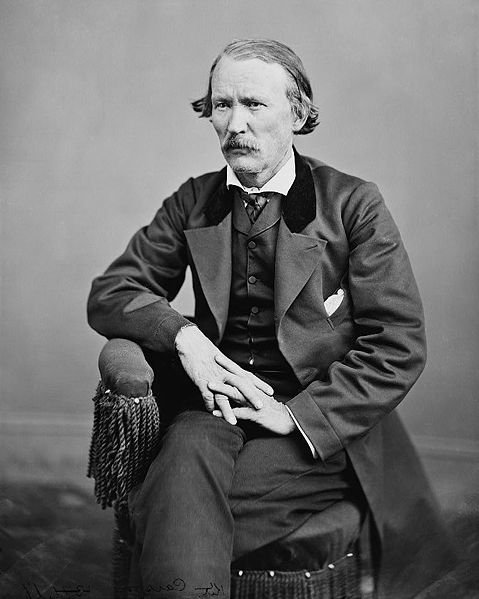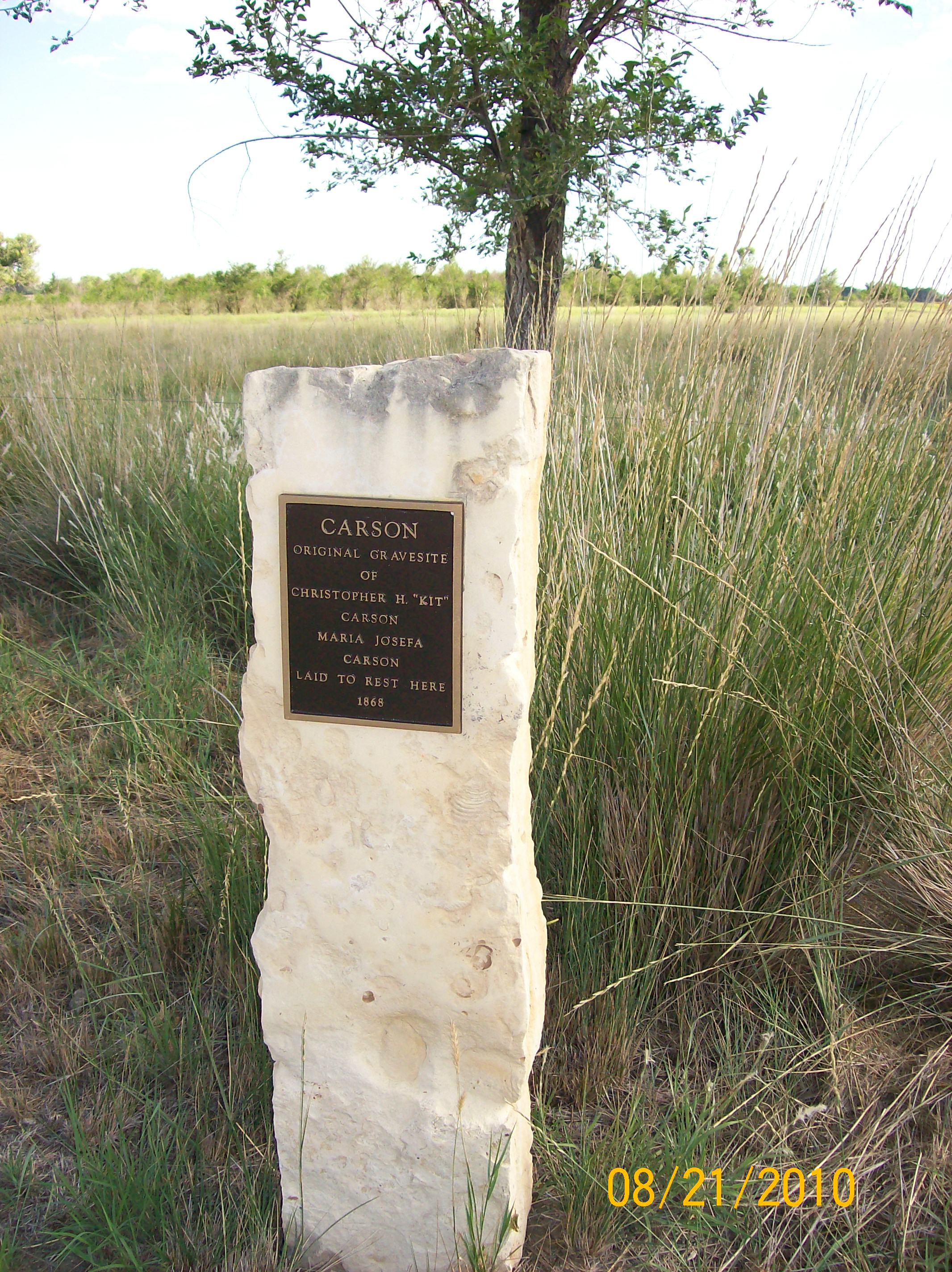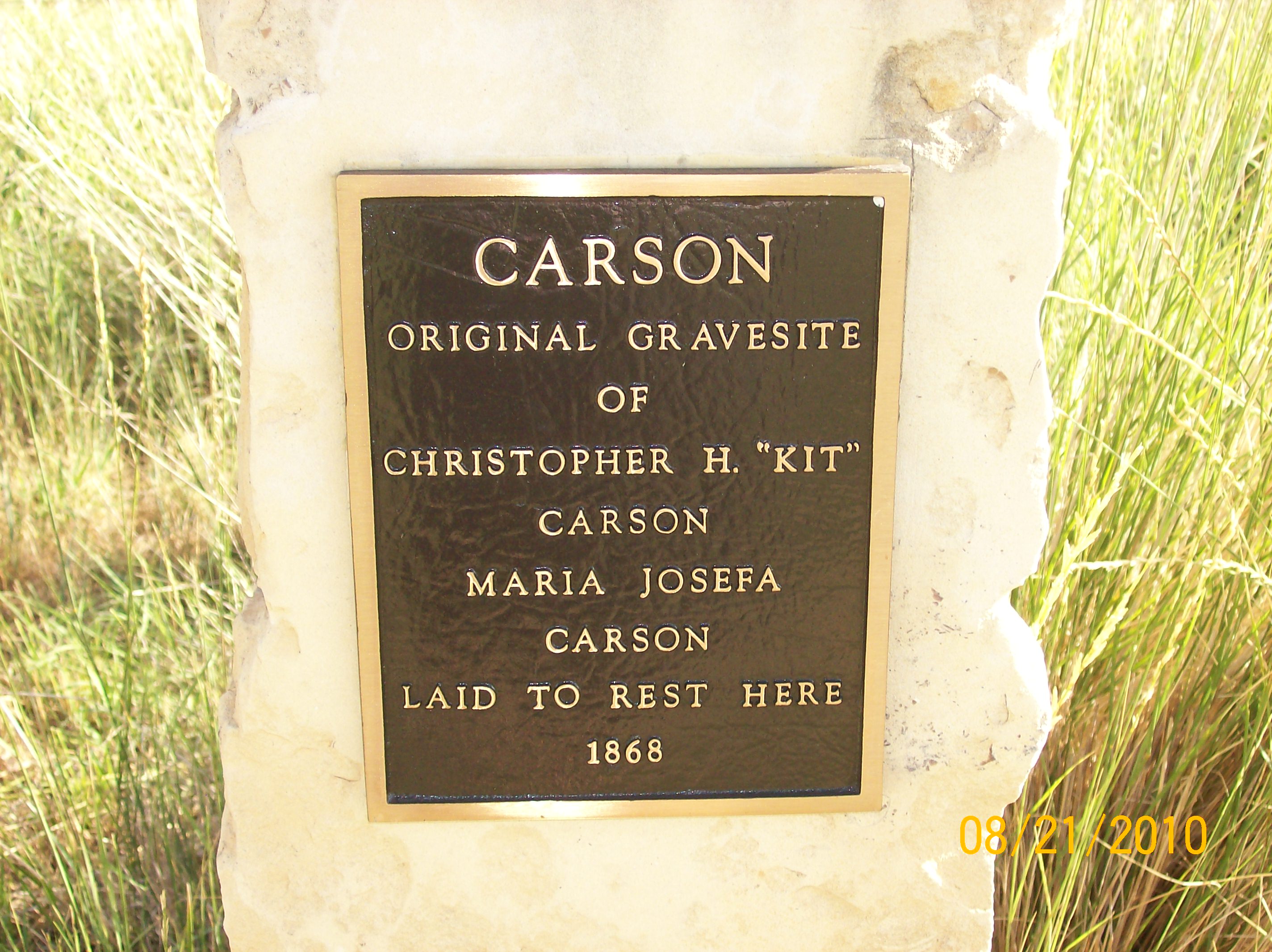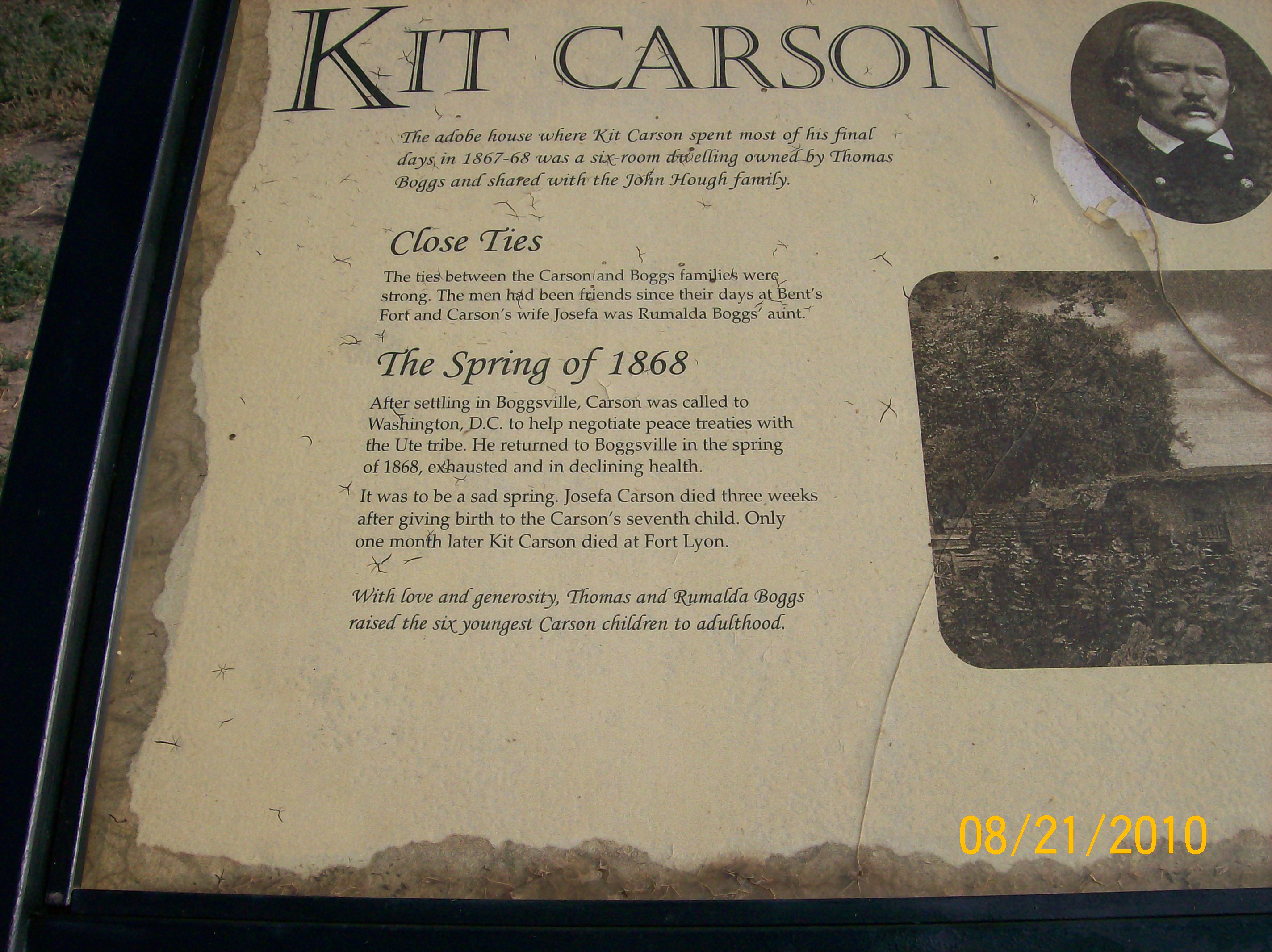
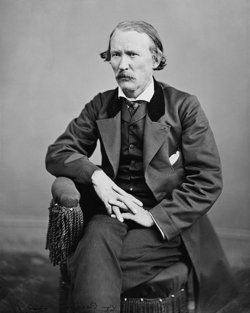
Frontiersman, Explorer, and Civil War Brevet Brigadier General. He was known for his frontier skills and for his daring. Many people described him as brave, gentle, honest, and wise, but his most notable qualities were that he was humble, reverent, polite, ingenious, resourceful, respectful of all cultures, and loyal to his country. At five feet, five inches tall, 140 pounds, and slightly bow-legged, he was slow spoken, often spoke softly, and posed a great natural modesty. Born Christopher Houston Carson in Madison County, Kentucky, his family moved to Boon's Lick, Missouri (near Arrow Rock), when he was a year old. He was a cousin to another famous frontiersman, Daniel Boone, through his mother. His father, Lindsey Carson, was a veteran of the American Revolution, and decided the nickname "Kit" fit his son better than his given name, and it stuck. On the Missouri frontier, Indians were a constant problem, and as a result, formal schooling took second place to survival skills. As a result, Carson never learned to read or write. When Kit was nine, his father was killed by Indians, and his mother remarried. He and his stepfather never agreed, so in 1824, his stepfather apprenticed the 14 year-old to a saddle maker, David Workman, in nearby Franklin, Missouri. Hating the work, in 1826 he ran away to join a group of traders going to Santa Fe, New Mexico. From 1829 to 1841, he trapped beavers from Arizona to Idaho, and along the Rocky Mountains; during these trips, he often fought the local Indians. In 1842, John C. Fremont, the famous explorer, hired Carson to guide him through the Rockies and Fremont highly praised Carson in his official reports, which helped make him famous. Carson then joined Fremont's second and third expeditions, establishing trails to California and to Oregon. In 1846, Carson joined Fremont's group that revolted against the Mexicans, and after several victories, went to carry the news to Washington DC, but at Socorro, New Mexico, he joined General Stephen Kearny's troops and led them back to California. When the Civil War began in 1861, Carson was made Colonel of the New Mexico Volunteer Regiment, and fought the Confederates at Valverde, New Mexico, in 1862, when the Confederates sent an Army from Texas to seize California. When the Confederates retreated back to Texas, and over the next three years, Carson fought Indians, including the Apaches, Navajo, Kiowas and Commanches, forcing many of the Indians to accept living on reservations. Carson was fluent in English, French, Spanish, and in a number of Indian languages, including the common sign language used by mountain men. Spanish was the preferred language in the Taos, New Mexico, home of his third wife, Josefa. In 1865, a grateful US government made him a Brevet Brigadier General for his services to the Union, and he was given command of Fort Garland, Colorado, in 1866. The next year, he resigned, due to poor health, and died within eight months at Fort Lyon, Colorado, in the quarters of Assistant Army Surgeon H. K. Tilden, when an aneurysm ruptured in his trachea. Carson was transported to Boggsville, and buried beside his third wife, Josefa, who had died in childbirth a month earlier. A year later, both bodies would be taken to Taos, New Mexico, for their final burial.
Frontiersman, Explorer, and Civil War Brevet Brigadier General. He was known for his frontier skills and for his daring. Many people described him as brave, gentle, honest, and wise, but his most notable qualities were that he was humble, reverent, polite, ingenious, resourceful, respectful of all cultures, and loyal to his country. At five feet, five inches tall, 140 pounds, and slightly bow-legged, he was slow spoken, often spoke softly, and posed a great natural modesty. Born Christopher Houston Carson in Madison County, Kentucky, his family moved to Boon's Lick, Missouri (near Arrow Rock), when he was a year old. He was a cousin to another famous frontiersman, Daniel Boone, through his mother. His father, Lindsey Carson, was a veteran of the American Revolution, and decided the nickname "Kit" fit his son better than his given name, and it stuck. On the Missouri frontier, Indians were a constant problem, and as a result, formal schooling took second place to survival skills. As a result, Carson never learned to read or write. When Kit was nine, his father was killed by Indians, and his mother remarried. He and his stepfather never agreed, so in 1824, his stepfather apprenticed the 14 year-old to a saddle maker, David Workman, in nearby Franklin, Missouri. Hating the work, in 1826 he ran away to join a group of traders going to Santa Fe, New Mexico. From 1829 to 1841, he trapped beavers from Arizona to Idaho, and along the Rocky Mountains; during these trips, he often fought the local Indians. In 1842, John C. Fremont, the famous explorer, hired Carson to guide him through the Rockies and Fremont highly praised Carson in his official reports, which helped make him famous. Carson then joined Fremont's second and third expeditions, establishing trails to California and to Oregon. In 1846, Carson joined Fremont's group that revolted against the Mexicans, and after several victories, went to carry the news to Washington DC, but at Socorro, New Mexico, he joined General Stephen Kearny's troops and led them back to California. When the Civil War began in 1861, Carson was made Colonel of the New Mexico Volunteer Regiment, and fought the Confederates at Valverde, New Mexico, in 1862, when the Confederates sent an Army from Texas to seize California. When the Confederates retreated back to Texas, and over the next three years, Carson fought Indians, including the Apaches, Navajo, Kiowas and Commanches, forcing many of the Indians to accept living on reservations. Carson was fluent in English, French, Spanish, and in a number of Indian languages, including the common sign language used by mountain men. Spanish was the preferred language in the Taos, New Mexico, home of his third wife, Josefa. In 1865, a grateful US government made him a Brevet Brigadier General for his services to the Union, and he was given command of Fort Garland, Colorado, in 1866. The next year, he resigned, due to poor health, and died within eight months at Fort Lyon, Colorado, in the quarters of Assistant Army Surgeon H. K. Tilden, when an aneurysm ruptured in his trachea. Carson was transported to Boggsville, and buried beside his third wife, Josefa, who had died in childbirth a month earlier. A year later, both bodies would be taken to Taos, New Mexico, for their final burial.
Bio by: Kit and Morgan Benson