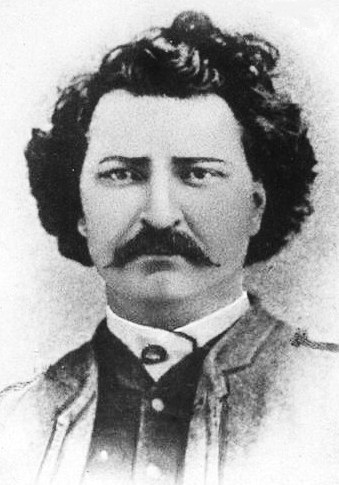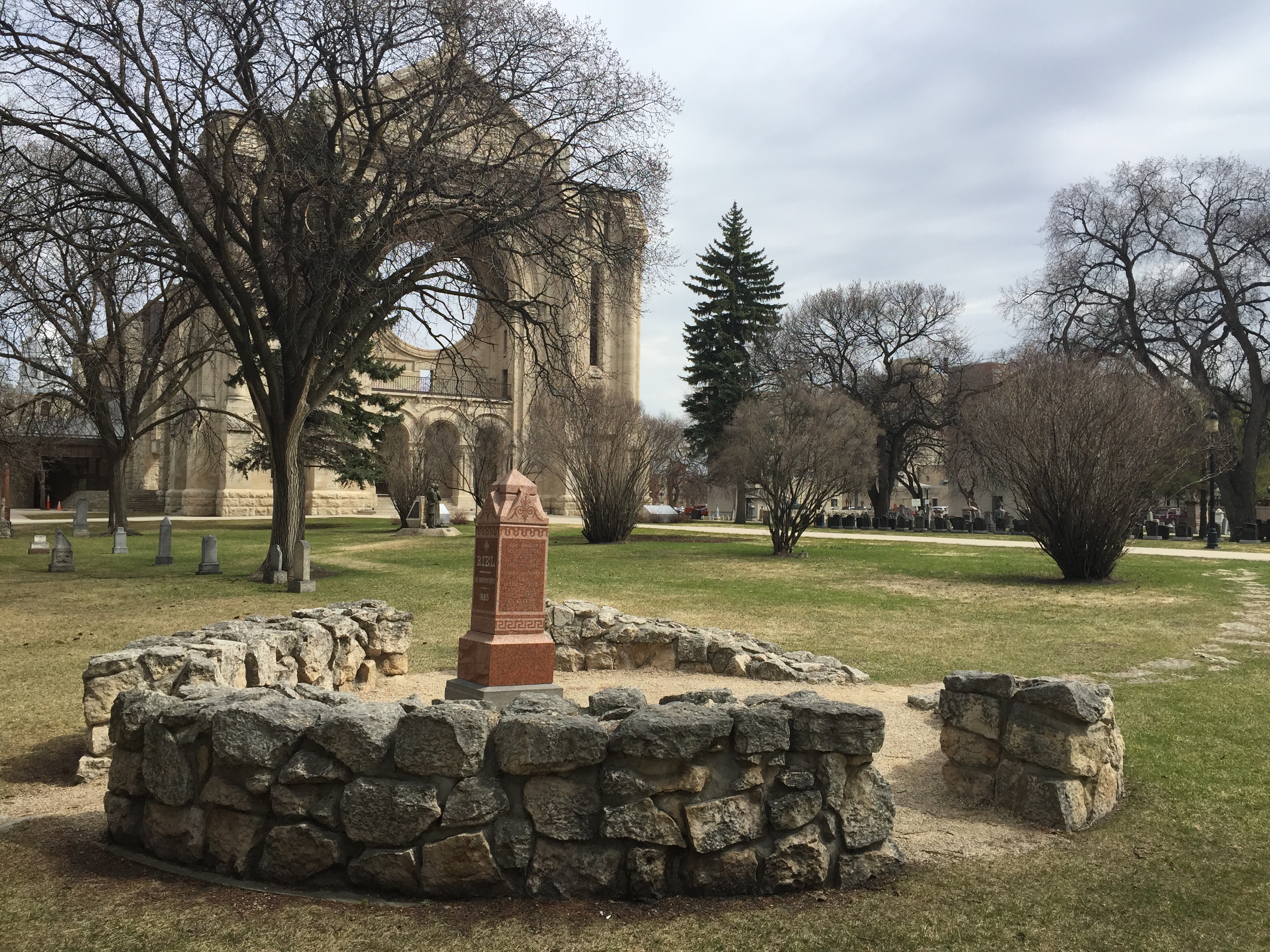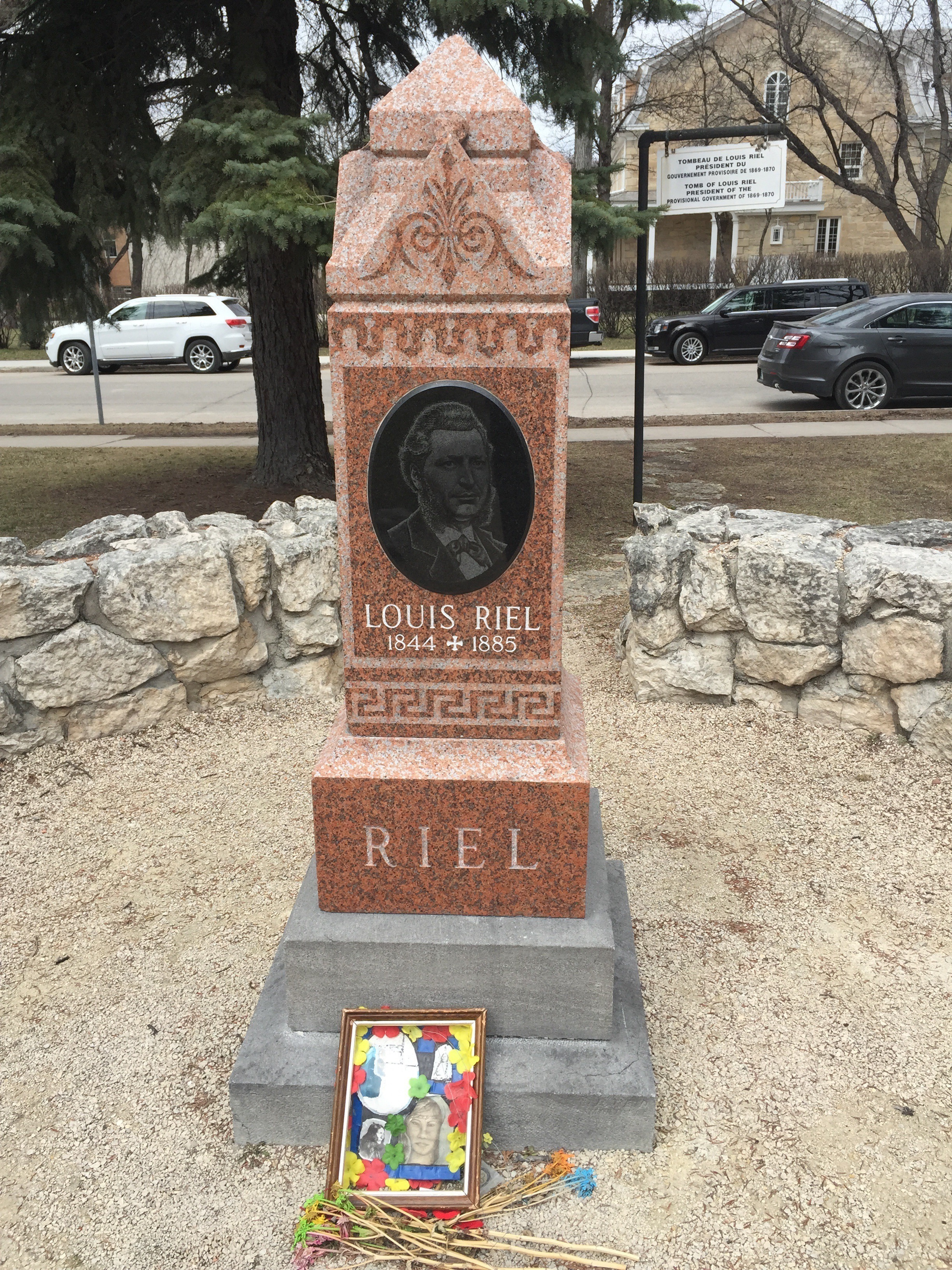
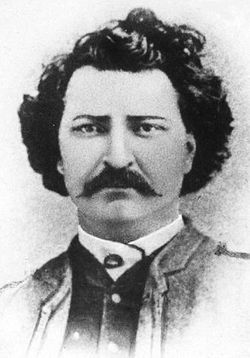
Politician. Born the eldest son of Julie Lagimonière and Louis Riel, who were Franco-Chipewyan Métis, in Saint-Boniface, in the Red River Settlement in present-day Manitoba, Canada. In 1849, his father organized a broad-scale Métis resistance to the Hudson's Bay Company fur-trading monopoly, apparently setting the tone for his life. At 13, he was given a scholarship to study at a Sulpician school in Montreal. While in the seminary, he met Marie-Julie Guernon and they became engaged, but her parents refused to allow her to marry a mixed blood Métis, and the engagement was broken. He then left the seminary and returned to Red River. There he became the secretary for the Métis National Committee, organized to protect the social, cultural, and political status of the Métis. He would later be elected the Committee president, and under his tenure, the committee halted Canadian land surveys, established a roadblock to prevent William McDougall, a Canadian expansionist, from entering the Red River, and seized Upper Fort Garry from the Hudson's Bay Company. The Métis National Committee was consolidated as a provisional government in late 1869, it issued a "Declaration of the People of Rupert's Land and the North-West," which rejected Canada's authority to govern the Northwest and proposed a negotiated settlement between Canada and them. At a meeting in January 1870, delegates drew up a "List of Rights," which they wanted met. The provisional government obtained an agreement with the Canadian government, embodied in the Manitoba Act which had the Province of Manitoba enter the Confederation. In the summer of 1870, Riel fled to the United States to avoid retaliatory military action. He returned to Canada a year later when he was denounced as a murderer by the establishment, but hailed as a hero in Manitoba as the defender of Catholicism and French culture. The federal government granted him amnesty that was conditional to five years of banishment. He, however, suffered a "nervous breakdown" and after some time in an asylum in Quebec, in January of 1878, he traveled to Keesville, New York. Between 1879 and 1883 he was in Montana Territory, and there married a Métis woman, Marguerite Monet. In June of 1884, he returned to Canada to aid a Métis contingent in the Saskatchewan Valley. At a meeting in March 1885, he drafted a 10-point "Revolutionary Bill of Rights." The federal government sent 500 soldiers in answer to the Métis petitions. He led the Métis to seize the parish church at Batoche, form a provisional government, and demanded they surrender Fort Carlton. The Canadians eventually defeated the Métis, and Riel surrendered himself to the Canadian militia. In July of 1885, he was put on trial for treason. He argued that Métis actions in 1870 and 1885 had been justifiable, but a jury pronounce him guilty, and while they recommended clemency, none was forthcoming. Appeals were dismissed, and he was publicly executed by hanging on November 16, 1885, in Regina. Historians at first painted him as a rebel but in the 21st century, he is seen as a defender of indigenous people's land and culture.
Politician. Born the eldest son of Julie Lagimonière and Louis Riel, who were Franco-Chipewyan Métis, in Saint-Boniface, in the Red River Settlement in present-day Manitoba, Canada. In 1849, his father organized a broad-scale Métis resistance to the Hudson's Bay Company fur-trading monopoly, apparently setting the tone for his life. At 13, he was given a scholarship to study at a Sulpician school in Montreal. While in the seminary, he met Marie-Julie Guernon and they became engaged, but her parents refused to allow her to marry a mixed blood Métis, and the engagement was broken. He then left the seminary and returned to Red River. There he became the secretary for the Métis National Committee, organized to protect the social, cultural, and political status of the Métis. He would later be elected the Committee president, and under his tenure, the committee halted Canadian land surveys, established a roadblock to prevent William McDougall, a Canadian expansionist, from entering the Red River, and seized Upper Fort Garry from the Hudson's Bay Company. The Métis National Committee was consolidated as a provisional government in late 1869, it issued a "Declaration of the People of Rupert's Land and the North-West," which rejected Canada's authority to govern the Northwest and proposed a negotiated settlement between Canada and them. At a meeting in January 1870, delegates drew up a "List of Rights," which they wanted met. The provisional government obtained an agreement with the Canadian government, embodied in the Manitoba Act which had the Province of Manitoba enter the Confederation. In the summer of 1870, Riel fled to the United States to avoid retaliatory military action. He returned to Canada a year later when he was denounced as a murderer by the establishment, but hailed as a hero in Manitoba as the defender of Catholicism and French culture. The federal government granted him amnesty that was conditional to five years of banishment. He, however, suffered a "nervous breakdown" and after some time in an asylum in Quebec, in January of 1878, he traveled to Keesville, New York. Between 1879 and 1883 he was in Montana Territory, and there married a Métis woman, Marguerite Monet. In June of 1884, he returned to Canada to aid a Métis contingent in the Saskatchewan Valley. At a meeting in March 1885, he drafted a 10-point "Revolutionary Bill of Rights." The federal government sent 500 soldiers in answer to the Métis petitions. He led the Métis to seize the parish church at Batoche, form a provisional government, and demanded they surrender Fort Carlton. The Canadians eventually defeated the Métis, and Riel surrendered himself to the Canadian militia. In July of 1885, he was put on trial for treason. He argued that Métis actions in 1870 and 1885 had been justifiable, but a jury pronounce him guilty, and while they recommended clemency, none was forthcoming. Appeals were dismissed, and he was publicly executed by hanging on November 16, 1885, in Regina. Historians at first painted him as a rebel but in the 21st century, he is seen as a defender of indigenous people's land and culture.
Bio by: Iola
Family Members


-
![]()
Marguerite Riel Zaste
1840–1874
-
Philomène Marie Riel
1847–1848
-
![]()
Sr Sara "Marguerite-Marie" Riel
1848–1883
-
![]()
Marie Riel
1850–1873
-
![]()
Octavie Riel Lavallée
1852–1890
-
![]()
Eulalie Riel Gladu
1853–1931
-
![]()
Charles "Meunier" Riel
1855–1875
-
![]()
Joseph Riel
1857–1921
-
![]()
Henriette Riel Poitras
1861–1898
-
![]()
Alexandre "Alex" Riel
1863–1938