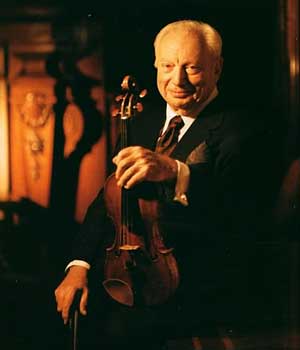
Violinist. He was a Ukrainian-born American violinist who became internationally recognized for his talent and was called "the first American violin virtuoso." When he was fourteen months old, his Jewish family immigrated to the United States. He started studying piano at age six before he became interested in the violin. He enrolled in the San Francisco Conservatory of Music in 1928 and also studied with conductor Pierre Monteux. At the age of eleven, he made his concert debut with the San Francisco Symphony, his Carnegie Hall debut in 1943, and his European debut in 1948 before touring world-wide. In the late 1950s, after hearing proposals for razing the 1897 Carnegie Hall in New York City, he mobilized his fellow artists, saying: "It's not only a building. It's an idea. It's a necessary mythology..." Stern campaigned against the building's destruction and ultimately secured legislation that allowed the city to acquire the structure in 1960. He was the first president of the Carnegie Hall Corporation and managed the operation for forty years. In 1997, the Hall's main auditorium was named in honor of him. Stern became famous for promoting younger musicians. In 1964, he helped establish the National Endowment for the Arts. Among his discoveries were Yo-Yo Ma and violinist Itzhak Perlman. In addition to playing almost 200 concerts a year, in 1971, he performed and recorded the theme for "Fiddler on the Roof." His 1979 tour of China was documented in "From Mao to Mozart--Isaac Stern in China," which received an Academy Award for Best Documentary in 1980. Among his many awards, he received the Kennedy Center Honors Award in 1984, a Grammy for lifetime achievement in 1987, the American National Medal of the Arts in 1991 by the National Endowment of the Arts, and the Polar Music Prize from the Royal Swedish Academy of Music Award in 2000. The corner of West 57th Street and Seventh Avenue in New York City was co-named Isaac Stern Place in 2003.
Violinist. He was a Ukrainian-born American violinist who became internationally recognized for his talent and was called "the first American violin virtuoso." When he was fourteen months old, his Jewish family immigrated to the United States. He started studying piano at age six before he became interested in the violin. He enrolled in the San Francisco Conservatory of Music in 1928 and also studied with conductor Pierre Monteux. At the age of eleven, he made his concert debut with the San Francisco Symphony, his Carnegie Hall debut in 1943, and his European debut in 1948 before touring world-wide. In the late 1950s, after hearing proposals for razing the 1897 Carnegie Hall in New York City, he mobilized his fellow artists, saying: "It's not only a building. It's an idea. It's a necessary mythology..." Stern campaigned against the building's destruction and ultimately secured legislation that allowed the city to acquire the structure in 1960. He was the first president of the Carnegie Hall Corporation and managed the operation for forty years. In 1997, the Hall's main auditorium was named in honor of him. Stern became famous for promoting younger musicians. In 1964, he helped establish the National Endowment for the Arts. Among his discoveries were Yo-Yo Ma and violinist Itzhak Perlman. In addition to playing almost 200 concerts a year, in 1971, he performed and recorded the theme for "Fiddler on the Roof." His 1979 tour of China was documented in "From Mao to Mozart--Isaac Stern in China," which received an Academy Award for Best Documentary in 1980. Among his many awards, he received the Kennedy Center Honors Award in 1984, a Grammy for lifetime achievement in 1987, the American National Medal of the Arts in 1991 by the National Endowment of the Arts, and the Polar Music Prize from the Royal Swedish Academy of Music Award in 2000. The corner of West 57th Street and Seventh Avenue in New York City was co-named Isaac Stern Place in 2003.
Bio by: Linda Davis
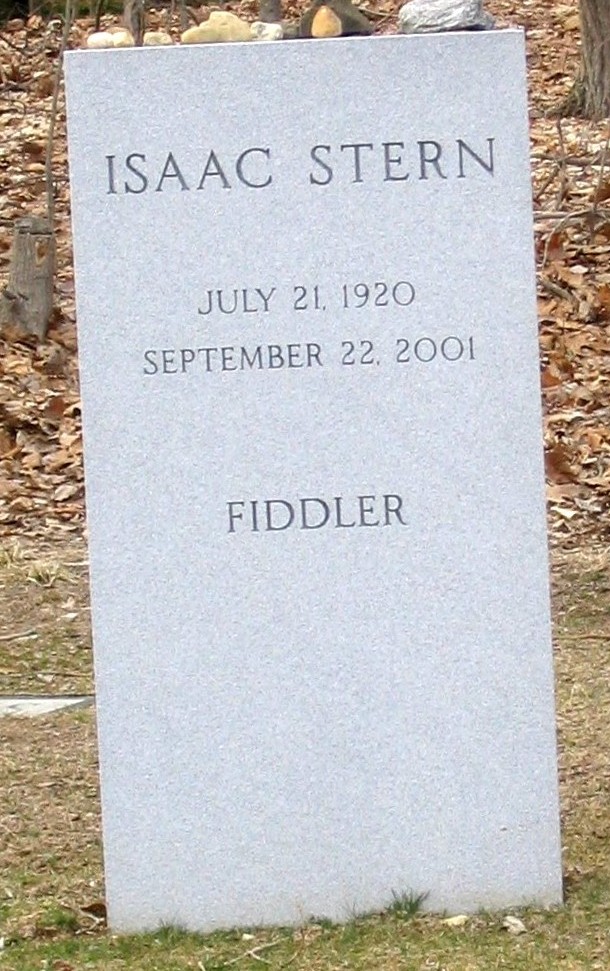
Inscription
FIDDLER