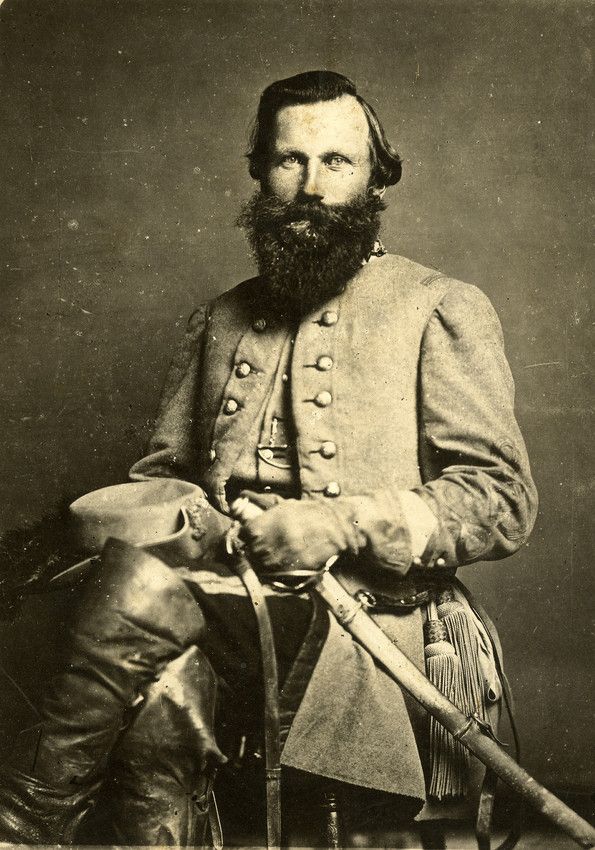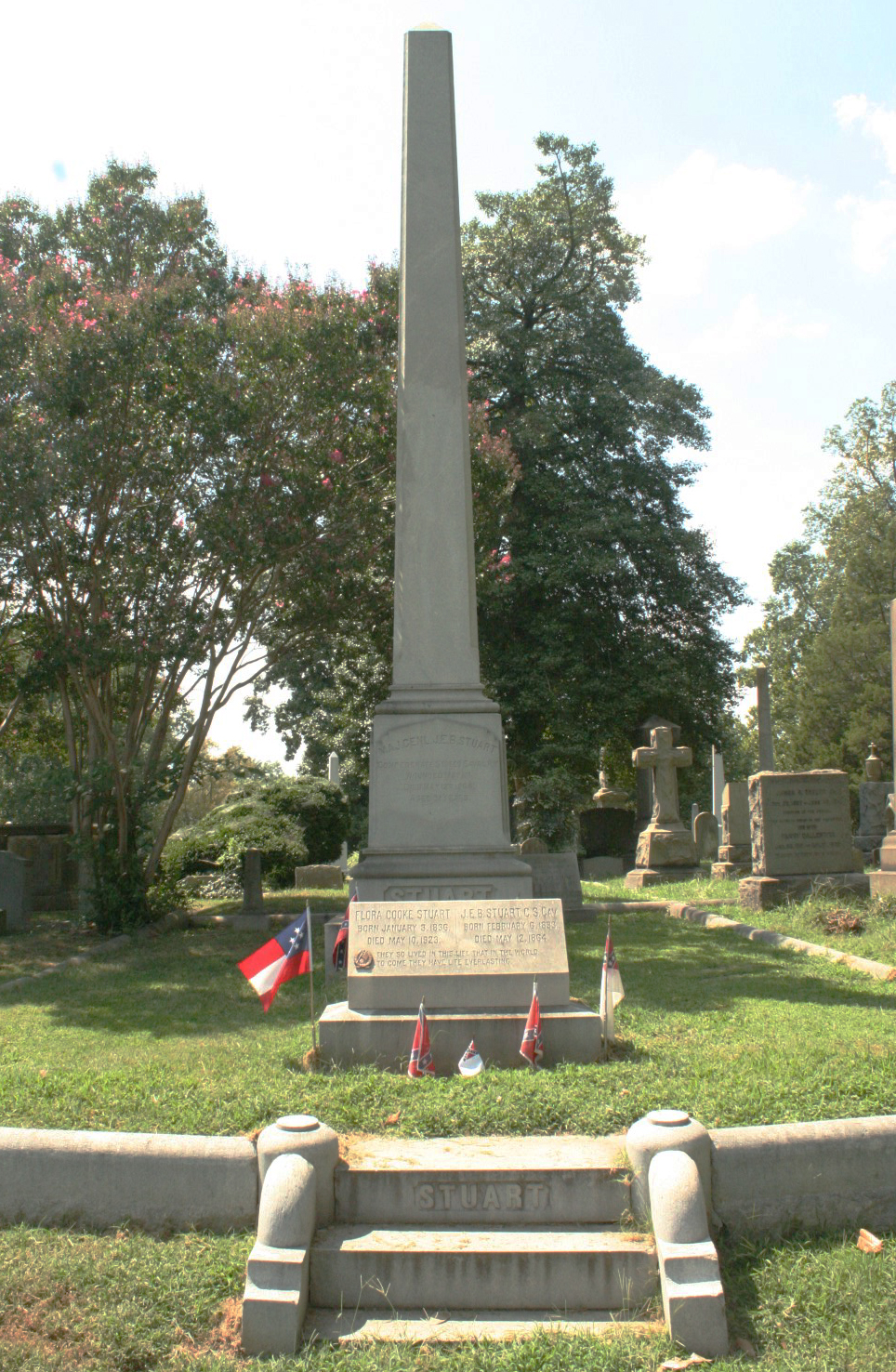
Civil War Confederate Major General. After graduating from West Point in 1854, he became a first lieutenant in the United States Army 1st Cavalry, and an Indian fighter in the west. In 1859, he was sent with orders for Robert E. Lee to go to Harper's Ferry to stop the raid of John Brown. After Brown's raiders were surrounded in the town, Stuart volunteered to issue the ultimatum to Brown before the final assault. In April of 1861, he was promoted to captain, but he resigned to join the Confederate Cavalry. He was promoted several times in the first few months of the war, eventually becoming a Major General in July of 1862. He led the cavalry in the battles at Manassas, Antietam, Fredericksburg, Gettysburg, and many others. He also led many raids around the Union army that boosted Southern morale, as well as providing valuable intelligence. He was wounded in a cavalry battle in Yellow Tavern, on the outskirts of Richmond, on May 11, 1864, and died the next day in the capital city.
From ''reminiscences of the civil war'', pg. 273
by general john b. gordon
''Stuart had few equals as a commander of cavalry on either side or in any war, and his fall was a serious blow to that branch of Lee's army. Stuart's temperament, his exuberance of spirit, his relish for adventure, and his readiness of resourse in extremity, added to a striking personality and charm of manner which greatly enhanced his influence over his men, combined to make him an ideal leader for that dashing arm of the service. General Lee and his whole army, as well as the authorities at Richmond, were profoundly grieved at his fall. As soon as his death was reported, General Lee at once withdrew to his tent, saying: 'I can scarcely think of him without weeping.' ''
Civil War Confederate Major General. After graduating from West Point in 1854, he became a first lieutenant in the United States Army 1st Cavalry, and an Indian fighter in the west. In 1859, he was sent with orders for Robert E. Lee to go to Harper's Ferry to stop the raid of John Brown. After Brown's raiders were surrounded in the town, Stuart volunteered to issue the ultimatum to Brown before the final assault. In April of 1861, he was promoted to captain, but he resigned to join the Confederate Cavalry. He was promoted several times in the first few months of the war, eventually becoming a Major General in July of 1862. He led the cavalry in the battles at Manassas, Antietam, Fredericksburg, Gettysburg, and many others. He also led many raids around the Union army that boosted Southern morale, as well as providing valuable intelligence. He was wounded in a cavalry battle in Yellow Tavern, on the outskirts of Richmond, on May 11, 1864, and died the next day in the capital city.
From ''reminiscences of the civil war'', pg. 273
by general john b. gordon
''Stuart had few equals as a commander of cavalry on either side or in any war, and his fall was a serious blow to that branch of Lee's army. Stuart's temperament, his exuberance of spirit, his relish for adventure, and his readiness of resourse in extremity, added to a striking personality and charm of manner which greatly enhanced his influence over his men, combined to make him an ideal leader for that dashing arm of the service. General Lee and his whole army, as well as the authorities at Richmond, were profoundly grieved at his fall. As soon as his death was reported, General Lee at once withdrew to his tent, saying: 'I can scarcely think of him without weeping.' ''
Bio by: kimshockey (reb)
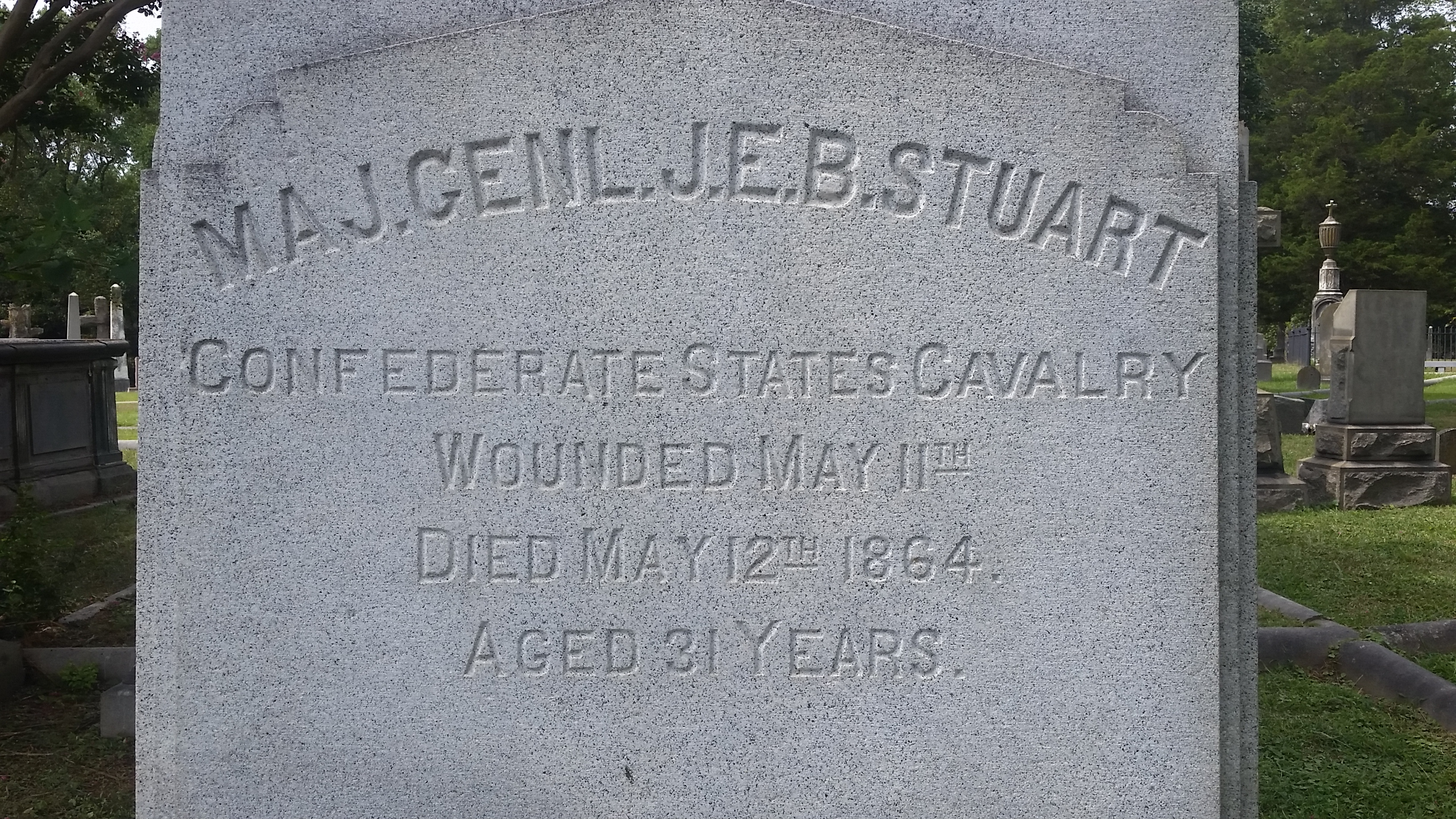
Inscription
CONFEDERATE STATES CAVALRY
WOUNDED MAY 11TH
DIED MAY 12TH 1864.
AGED 31 YEARS.
THEY SO LIVED IN THIS LIFE THAT IN THE WORLD
TO COME THEY HAVE LIFE EVERLASTING
Family Members


-
![]()
Anne Dabney "Nancy" Stuart Peirce
1818–1846
-
Bethenia Frances Stuart Chevalier
1819–1905
-
![]()
Mary Tucker Stuart Headen
1821–1888
-
![]()
David Pannill Stuart
1823–1846
-
![]()
William Alexander Stuart
1826–1892
-
![]()
Dr John Dabney Stuart
1828–1877
-
![]()
Columbia Lafayette "Lummie" Stuart Hairston
1830–1857
-
![]()
Daniel Patrick Stuart
1834–1834
-
![]()
Virginia Josephine Stuart
1836–1842