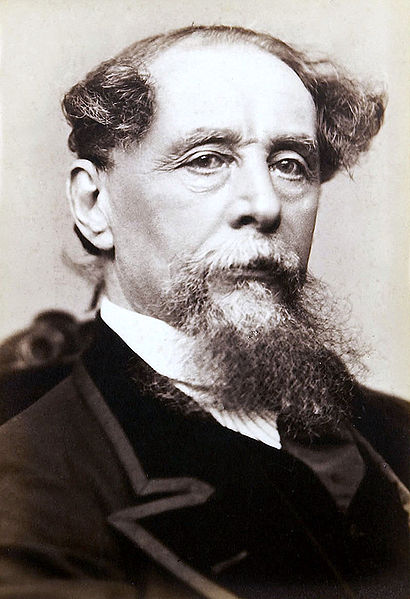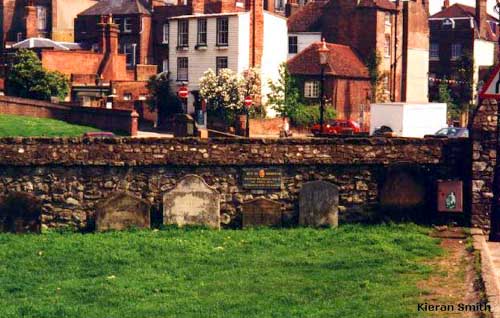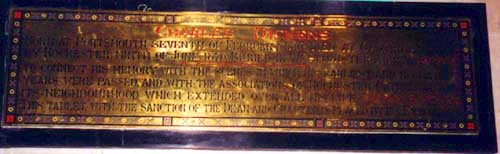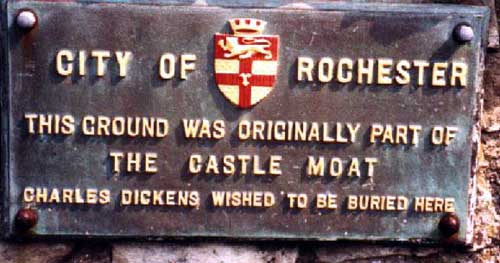
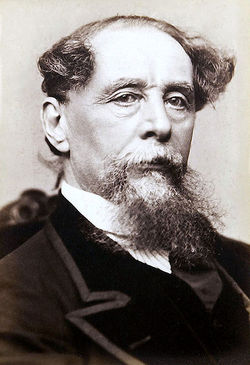
Author. He was the son of Elizabeth Cuilliford Barrow and John Dickens, a Naval Pay Office clerk. During his childhood, the family spent time between Plymouth, London, and Chatham. When he was 12, his father was imprisoned for debt, and the boy was forced to work labeling bottles at a boot blacking factory. After his father's release, Dickens was enrolled in a London school as a day pupil between 1824 and 1827. At 15, he was employed as an office boy in an attorney's office, while he studied shorthand at night. At 17, he became a court stenographer, and took a position as a newspaper reporter covering Parliament for the Morning Chronicle under the pen name of Boz. In April 1836, he married Catherine Hogarth; they would have 10 children. The same year, he began a feature series on commission, Those Posthumous Paper of the Pickwick Club, which was very successful. Most of his work would debut as periodical serials before being published in novel form. Among these works were included Oliver Twist (1838), Nicholas Nickleby (1839), The Old Curiosity Shop (1841), and Barnaby Rudge (1841). In 1842, he traveled to Canada and the United States as an advocate for international copyright laws, and spoke against slavery. A Christmas Carol appeared in December 1843, which has since proved his most popular work, and has been adapted for stage and screen many times. His Martin Chuzzlewit in 1844, included an unflattering depiction of the United States, angering readers there. His prolific output also included, David Copperfield (1850), Bleak House (1853), Hard Times (1854), Little Dorrit (1857), A Tale of Two Cities (1859), Great Expectations (1861), and Our Mutual Friend (1865). He also edited weekly periodicals including Household Words and All Year Round, wrote travel books, and administered charitable organizations. In 1856, he moved to his country home at Gads Hill after growing unhappy with his marriage, and in 1858, he legally separated from his wife. Beginning that year, he began taking commissions for public readings of his works. In 1863, he embarked on a tour of England and France; in 1866, on a tour of England and Scotland; and, in 1867, on a tour of England and Ireland. The traveling soon exhausted him, causing his health to decline, but he continued with another reading tour to the United States in 1868. This was followed by another tour through England the following year, during which he collapsed, probably the result of a stroke. The remaining engagements were canceled. At home, he continued to write his novel The Mystery of Edwin Drood. By March 1870, he had submitted the first installment of Drood and completed 12 public readings in London. Five more of the proposed 12 installments of Drood were published by June before he suffered another stroke. He succumbed within a day, never having regained consciousness. Despite his wishes to be quietly buried at Rochester Cathedral, he was interred in the Poets' Corner of Westminster Abbey after a private funeral.
Author. He was the son of Elizabeth Cuilliford Barrow and John Dickens, a Naval Pay Office clerk. During his childhood, the family spent time between Plymouth, London, and Chatham. When he was 12, his father was imprisoned for debt, and the boy was forced to work labeling bottles at a boot blacking factory. After his father's release, Dickens was enrolled in a London school as a day pupil between 1824 and 1827. At 15, he was employed as an office boy in an attorney's office, while he studied shorthand at night. At 17, he became a court stenographer, and took a position as a newspaper reporter covering Parliament for the Morning Chronicle under the pen name of Boz. In April 1836, he married Catherine Hogarth; they would have 10 children. The same year, he began a feature series on commission, Those Posthumous Paper of the Pickwick Club, which was very successful. Most of his work would debut as periodical serials before being published in novel form. Among these works were included Oliver Twist (1838), Nicholas Nickleby (1839), The Old Curiosity Shop (1841), and Barnaby Rudge (1841). In 1842, he traveled to Canada and the United States as an advocate for international copyright laws, and spoke against slavery. A Christmas Carol appeared in December 1843, which has since proved his most popular work, and has been adapted for stage and screen many times. His Martin Chuzzlewit in 1844, included an unflattering depiction of the United States, angering readers there. His prolific output also included, David Copperfield (1850), Bleak House (1853), Hard Times (1854), Little Dorrit (1857), A Tale of Two Cities (1859), Great Expectations (1861), and Our Mutual Friend (1865). He also edited weekly periodicals including Household Words and All Year Round, wrote travel books, and administered charitable organizations. In 1856, he moved to his country home at Gads Hill after growing unhappy with his marriage, and in 1858, he legally separated from his wife. Beginning that year, he began taking commissions for public readings of his works. In 1863, he embarked on a tour of England and France; in 1866, on a tour of England and Scotland; and, in 1867, on a tour of England and Ireland. The traveling soon exhausted him, causing his health to decline, but he continued with another reading tour to the United States in 1868. This was followed by another tour through England the following year, during which he collapsed, probably the result of a stroke. The remaining engagements were canceled. At home, he continued to write his novel The Mystery of Edwin Drood. By March 1870, he had submitted the first installment of Drood and completed 12 public readings in London. Five more of the proposed 12 installments of Drood were published by June before he suffered another stroke. He succumbed within a day, never having regained consciousness. Despite his wishes to be quietly buried at Rochester Cathedral, he was interred in the Poets' Corner of Westminster Abbey after a private funeral.
Bio by: Iola