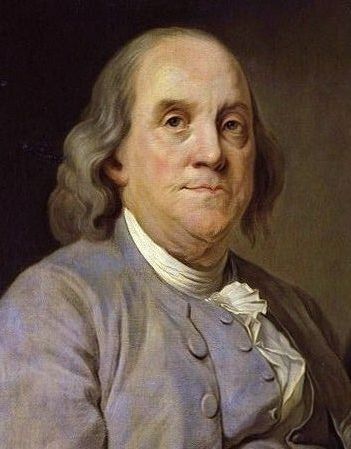
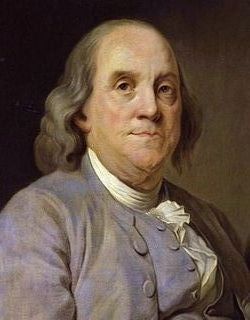
Declaration of Independence Signer, United States Constitution Signer, Continental Congressman, United States Diplomat, Printer, First Postmaster General of the United States, Scientist, and Inventor. Published the Pennsylvania Gazette and Poor Richard's Almanack. Famous for confirming lightning is electricity by flying a kite in a thunderstorm. Invented bifocals, the Franklin Stove, the Lightning Rod, and other inventions. Created the political cartoon "Join, or Die" in 1754, one of the earliest American political images advocating colonial unity. He was the first to propose a formal plan for uniting the American colonies under a single central government with the Albany Plan of Union in 1754. Mapped the Gulf Stream, improving navigation and making transatlantic travel faster and more efficient. Served as a Delegate from Pennsylvania to the Continental Congress from 1775 to 1776. Signed the Declaration of Independence in 1776. Served as United States Minister to France during the Revolutionary War. Instrumental in encouraging France to side with the United States. One of the main negotiators of the peace treaty with Britain. Signed the Treaty of Paris in 1783. Signed the United States Constitution in 1787, as a delegate to the Constitutional Convention. His son William Franklin was the last Royalist Governor of New Jersey, remained loyal to England, and died in London. Great–Uncle of Revolutionary War New Jersey Militia Major General and United States Senator Franklin Davenport, as well as Great–Uncle of United States Army officer, engineer, and first Superintendent of the United States Military Academy at West Point, Jonathan Williams. His grandson was Benjamin Franklin Bache, a prominent journalist, printer, and publisher. Twenty-three United States states have counties named after him. One of the most famous and well known 18th Century thinkers, Renaissance men, and Revolutionary Patriots. His life and legacy of scientific and political achievement, and his status as one of America's most influential Founding Fathers, have seen Franklin honored more than two centuries after his death on coinage and the $100 bill, warships, and the names of many towns, counties, educational institutions, and corporations, as well as countless cultural references. He is honored with the name "First American" for helping shape the early identity of the United States.
Declaration of Independence Signer, United States Constitution Signer, Continental Congressman, United States Diplomat, Printer, First Postmaster General of the United States, Scientist, and Inventor. Published the Pennsylvania Gazette and Poor Richard's Almanack. Famous for confirming lightning is electricity by flying a kite in a thunderstorm. Invented bifocals, the Franklin Stove, the Lightning Rod, and other inventions. Created the political cartoon "Join, or Die" in 1754, one of the earliest American political images advocating colonial unity. He was the first to propose a formal plan for uniting the American colonies under a single central government with the Albany Plan of Union in 1754. Mapped the Gulf Stream, improving navigation and making transatlantic travel faster and more efficient. Served as a Delegate from Pennsylvania to the Continental Congress from 1775 to 1776. Signed the Declaration of Independence in 1776. Served as United States Minister to France during the Revolutionary War. Instrumental in encouraging France to side with the United States. One of the main negotiators of the peace treaty with Britain. Signed the Treaty of Paris in 1783. Signed the United States Constitution in 1787, as a delegate to the Constitutional Convention. His son William Franklin was the last Royalist Governor of New Jersey, remained loyal to England, and died in London. Great–Uncle of Revolutionary War New Jersey Militia Major General and United States Senator Franklin Davenport, as well as Great–Uncle of United States Army officer, engineer, and first Superintendent of the United States Military Academy at West Point, Jonathan Williams. His grandson was Benjamin Franklin Bache, a prominent journalist, printer, and publisher. Twenty-three United States states have counties named after him. One of the most famous and well known 18th Century thinkers, Renaissance men, and Revolutionary Patriots. His life and legacy of scientific and political achievement, and his status as one of America's most influential Founding Fathers, have seen Franklin honored more than two centuries after his death on coinage and the $100 bill, warships, and the names of many towns, counties, educational institutions, and corporations, as well as countless cultural references. He is honored with the name "First American" for helping shape the early identity of the United States.
Bio by: RPD2
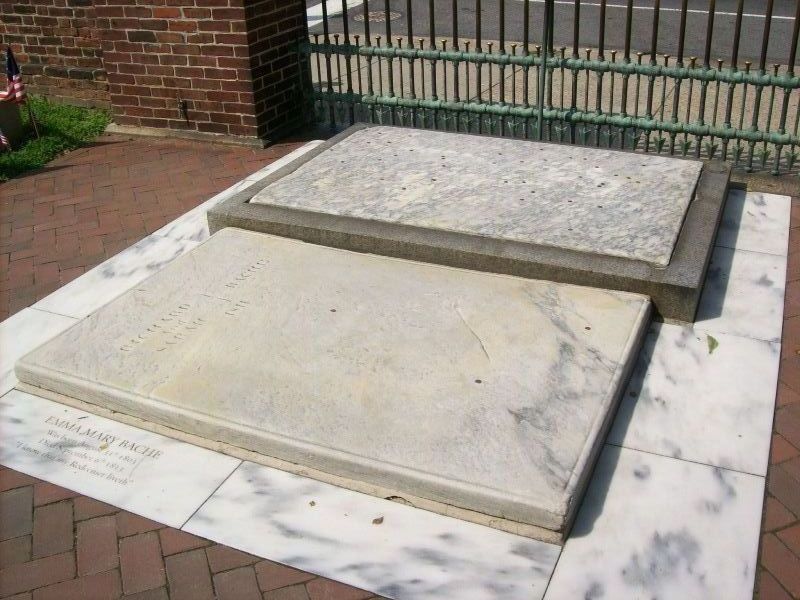
Inscription
The Body of
B. Franklin, Printer.
Like the Cover of an old Book.
Its Contents torn out.
And Stript of its Lettering & Gilding.
Lies here, Food for Worms.
But the Work shall not be wholly lost.
For it will, as he believ'd,
appear once more
In a new & more perfect Edition,
Corrected and Improved
By The Author.
(This epitaph written by Franklin as a young
man, was not intended to be used. His nearby
gravestone was prepared in exact accordance
with the instructions contained in his will.)
This gravesite restored
by the Poor Richard Club
of Philadelphia
through the generosity
of Howard C. Story
in memory of his parents
Edward A. and Mary Elizabeth Story.
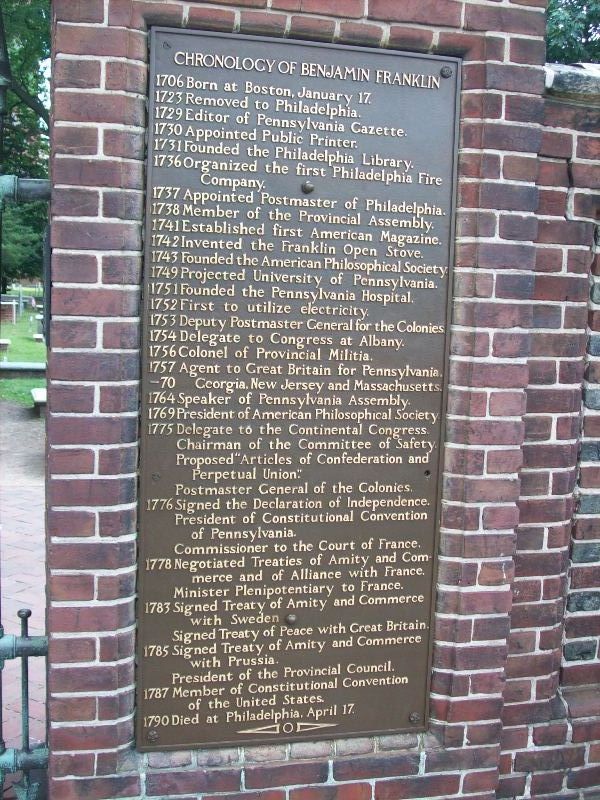
Chronologically. Of Benjamin Franklin.
1706-. Born in Boston, January 17th.
1723- Remove. To Philadelphia.
1729. Editor of the Pennsylvania Gazette.
1730 Appointed to public printer.
1731 founded the Philadelphia Library.
1736. Organize the first Philadelphia Fire Company.
1737 Appoint a postmaster Philadelphia.
1738 member of the Provincial Assembly.
1741. Established first magazine.
1742. Inventing the first. Franklin Open stove.
1743. Founded the American philosophical opera.
1749. Projected. The University of Pennsylvania.
1751. Founded. The Pennsylvania. Hospital.
1752. First to utilize. Electricity.
1753. Deputy Postmaster General. Of the colonies.
1754. Delegate of the Congress of Albany.
1756. Colonel of the provincial. Militia
1757. Agent to Great Britain. For Pennsylvania. Georgia. New Jersey. Massachusetts.
1764. Speaker of Pennsylvania Assembly.
1769. President of the American Philosophical Society.
1775. Delegate to the Constitutional Congress. Chairman of the Committee of Safety.
Proposed articles of Confederate and perpetual Union.
1776. Signed the declaration. Of independence, President of the Constitutional Convention of Pennsylvania.
1778. Negotiated treaties of the Amity and Commerce and Alliances with France.
Minister Plenipotentiary To France.
1783. Sign Treaty of Amity and Commerce. With Sweden.
1787. Member of the Constitution Convention of the United States.
1790. Died at Philadelphia. April 17th.
Gravesite Details
Interment Date: April 21, 1790