Jay Wright
- Member for
- 14 years 7 months 28 days
- Find a Grave ID
Bio
No, not Jay Wright, the Villanova basketball coach (two national championships) from 2001 to 2022.
No, not Jay Wright, the talented African-American poet and playwright -- he's Jay L. Wright.
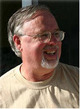
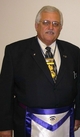
Yes, Jay Wright, Syracuse University communications law professor (retired), co-author of The First Amendment and the Fourth Estate (14th ed., March 2026), editor of The Legal Handbook for New York State Journalists (published by the New York State Bar Assn.), member of The Dutch Settlers Society of Albany, First Families of Ohio, Flagon and Trencher, Society of Indiana Pioneers, Descendants of Early Quakers, Descendants of the Knights of the Garter, Sons and Daughters of the Colonial and Antebellum Bench and Bar, and other lineage societies, and listee in Who's Who in Genealogy & Heraldry (1982 & 1990).
Yes, the Jay Wright who grew up in Florida and Indiana, college in Illinois, and Vietnam Era military service at Ft. Knox, KY, Ft. Slocum, NY, and Ft. Benjamin Harrison, IN. Married 1970. Retired 2011. Widowed 2021.
Since 1967, I have lived in Onondaga County, NY, on land for generations occupied by the Onondagas, one of the Six Nations of the Iroquois Confederacy. I balance my remorse over how the Onondagas unfairly lost much of their land (i.e., land they occupied, although the idea of humans' owning land was foreign to the Native Americans' way of thinking, and they thought of themselves more as stewards of the land) against my pride that one of my 4th-great-grandfathers settled in Onondaga County because he received bounty land for his Revolutionary War military service at Saratoga. He was also a batteauman (boatman) along the Hudson River and the Mohawk River. That particular Rev War ancestor was descended from numerous residents of the New Netherlands colony from which the British drove the Dutch in 1664 to turn "New Netherlands" and "New Amsterdam" into "New York." Most of my other half dozen or so Rev War ancestors were traitors to the English homeland of their forefathers, and most of them were from colonies whose economies depended on slave labor. Hardly something one could be proud of. History is complicated, isn't it?
Academic and Professional: BSJ, MSJ, Northwestern Univ; PhD, Syracuse Univ; post-doctoral MSL, Yale Law School. Instructor, Defense Information School (DINFOS), 1964-1967; Professor, Syracuse Univ, 1967-2011; Professor Emeritus, S.I. Newhouse Endowed Chair, Syracuse Univ, 2011 to date.
Quote from the Find A Grave FAQs (rules): "Death certificates may be added." That quote is a cut-and-paste from an earlier version of the FAQs, apparently subsequently deleted. However, the principle is reaffirmed in 2021 "Common Questions" found in FG's HELP section, where it specifically defines "Other" types of photos that may be added as, "A document or record related to person." If you're a trust-but-verify kind of person as I am, you'll want to see it for yourself at https://support.findagrave.com/s/article/Types-of-Photos
If you send a message asking me to ignore FG rules because your personal preference happens not to agree with the rules ---- for example by asking me to delete an image that's within FG's allowable images and relates directly to the person being memorialized ---- please state why you think I should disregard the rules (something more persuasive than "I prefer" or "I don't like"). And please be sure you're accepting messages so that I can reply after I've given your request the attention it deserves.
I try to make memorials as complete and accurate as possible, particularly when images of old records are in the public domain. Public records (marriage records, death records, etc.) -- just like tombstones and family bibles and "what my grandmother told me" -- sometimes contain errors. But we need to see the records if we're going to judge whether they are right or wrong. Even though some of us might be distressed that public records are revealing, there's a reason they are public, and wishing won't make them secret again, just as you can't "unring" a bell. Let's follow the FG rules. As Thomas Hardy said in quoting St. Jerome, "If an offence come out of the truth, better is it that the offence come than that the truth be concealed."
"Trust but verify" is excellent advice, whether one is compiling a scholarly genealogy or just trying to honor a deceased person with accurate information on FG. But to "verify" (or, for that matter, disprove), one needs to see records openly. Arguing against openness of the records is an argument in favor of errors, and who wants that on FG?
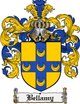
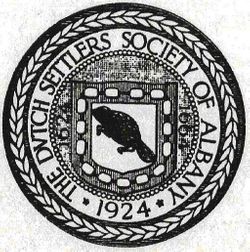
Why do I use the seal of The Dutch Settlers Society of Albany as my profile image? Many of us were taught in school that America was created by 13 English colonies. Too many people forget that the Dutch colony of New Netherlands existed for decades before the English took over in 1664 and renamed it New York. Most American universities have no "Dutch Department" to focus attention on the achievements of New Netherlands and its settlement at New Amsterdam (today's Manhattan). And, lest we forget, the Dutch themselves had been newcomers to the lands owned for many years before by the Haudenosaunee Confederacy.
An irony. Is it not ironic that we FG contributors (myself included) work so hard to honor the burial places of thousands of Americans, yet many of us (myself included) are proud descendants of European invaders who came across the Atlantic to land that wasn't theirs, and pushed the Indigenous People off the land -- and that included the sacred burial places of the ancestors of those Indigenous People? Consider this quotation from James Fenimore Cooper in his classic novel, Last of the Mohicans: "The Hurons drove him from the graves of his fathers, as they would chase the hunted buffalo." [Cooper was describing how one tribe of Indigenous People had pushed another tribe of Indigenous People off their ancestral land.]
James Fenimore Cooper, in The Last of the Mohicans, writes of a character, one of the Indigenous People, a sage, who says, "The chlldren of Minquon are the justest white men." And Cooper added this footnote to the name Minquon: "William Penn was termed Minquon by the Delawares, and, as he never used violence or injustice in his dealings with them, his reputation for probity passed into a proverb. The American is justly proud of the origins of his nation, which is perhaps unequalled in the history of the world; but the Pennsylvanian and Jerseyman have more reason to value themselves in their ancestors than the natives of any other State, since no wrong was done the original owners of the soil."
No, not Jay Wright, the Villanova basketball coach (two national championships) from 2001 to 2022.
No, not Jay Wright, the talented African-American poet and playwright -- he's Jay L. Wright.
Yes, Jay Wright, Syracuse University communications law professor (retired), co-author of The First Amendment and the Fourth Estate (14th ed., March 2026), editor of The Legal Handbook for New York State Journalists (published by the New York State Bar Assn.), member of The Dutch Settlers Society of Albany, First Families of Ohio, Flagon and Trencher, Society of Indiana Pioneers, Descendants of Early Quakers, Descendants of the Knights of the Garter, Sons and Daughters of the Colonial and Antebellum Bench and Bar, and other lineage societies, and listee in Who's Who in Genealogy & Heraldry (1982 & 1990).
Yes, the Jay Wright who grew up in Florida and Indiana, college in Illinois, and Vietnam Era military service at Ft. Knox, KY, Ft. Slocum, NY, and Ft. Benjamin Harrison, IN. Married 1970. Retired 2011. Widowed 2021.
Since 1967, I have lived in Onondaga County, NY, on land for generations occupied by the Onondagas, one of the Six Nations of the Iroquois Confederacy. I balance my remorse over how the Onondagas unfairly lost much of their land (i.e., land they occupied, although the idea of humans' owning land was foreign to the Native Americans' way of thinking, and they thought of themselves more as stewards of the land) against my pride that one of my 4th-great-grandfathers settled in Onondaga County because he received bounty land for his Revolutionary War military service at Saratoga. He was also a batteauman (boatman) along the Hudson River and the Mohawk River. That particular Rev War ancestor was descended from numerous residents of the New Netherlands colony from which the British drove the Dutch in 1664 to turn "New Netherlands" and "New Amsterdam" into "New York." Most of my other half dozen or so Rev War ancestors were traitors to the English homeland of their forefathers, and most of them were from colonies whose economies depended on slave labor. Hardly something one could be proud of. History is complicated, isn't it?
Academic and Professional: BSJ, MSJ, Northwestern Univ; PhD, Syracuse Univ; post-doctoral MSL, Yale Law School. Instructor, Defense Information School (DINFOS), 1964-1967; Professor, Syracuse Univ, 1967-2011; Professor Emeritus, S.I. Newhouse Endowed Chair, Syracuse Univ, 2011 to date.
Quote from the Find A Grave FAQs (rules): "Death certificates may be added." That quote is a cut-and-paste from an earlier version of the FAQs, apparently subsequently deleted. However, the principle is reaffirmed in 2021 "Common Questions" found in FG's HELP section, where it specifically defines "Other" types of photos that may be added as, "A document or record related to person." If you're a trust-but-verify kind of person as I am, you'll want to see it for yourself at https://support.findagrave.com/s/article/Types-of-Photos
If you send a message asking me to ignore FG rules because your personal preference happens not to agree with the rules ---- for example by asking me to delete an image that's within FG's allowable images and relates directly to the person being memorialized ---- please state why you think I should disregard the rules (something more persuasive than "I prefer" or "I don't like"). And please be sure you're accepting messages so that I can reply after I've given your request the attention it deserves.
I try to make memorials as complete and accurate as possible, particularly when images of old records are in the public domain. Public records (marriage records, death records, etc.) -- just like tombstones and family bibles and "what my grandmother told me" -- sometimes contain errors. But we need to see the records if we're going to judge whether they are right or wrong. Even though some of us might be distressed that public records are revealing, there's a reason they are public, and wishing won't make them secret again, just as you can't "unring" a bell. Let's follow the FG rules. As Thomas Hardy said in quoting St. Jerome, "If an offence come out of the truth, better is it that the offence come than that the truth be concealed."
"Trust but verify" is excellent advice, whether one is compiling a scholarly genealogy or just trying to honor a deceased person with accurate information on FG. But to "verify" (or, for that matter, disprove), one needs to see records openly. Arguing against openness of the records is an argument in favor of errors, and who wants that on FG?
Why do I use the seal of The Dutch Settlers Society of Albany as my profile image? Many of us were taught in school that America was created by 13 English colonies. Too many people forget that the Dutch colony of New Netherlands existed for decades before the English took over in 1664 and renamed it New York. Most American universities have no "Dutch Department" to focus attention on the achievements of New Netherlands and its settlement at New Amsterdam (today's Manhattan). And, lest we forget, the Dutch themselves had been newcomers to the lands owned for many years before by the Haudenosaunee Confederacy.
An irony. Is it not ironic that we FG contributors (myself included) work so hard to honor the burial places of thousands of Americans, yet many of us (myself included) are proud descendants of European invaders who came across the Atlantic to land that wasn't theirs, and pushed the Indigenous People off the land -- and that included the sacred burial places of the ancestors of those Indigenous People? Consider this quotation from James Fenimore Cooper in his classic novel, Last of the Mohicans: "The Hurons drove him from the graves of his fathers, as they would chase the hunted buffalo." [Cooper was describing how one tribe of Indigenous People had pushed another tribe of Indigenous People off their ancestral land.]
James Fenimore Cooper, in The Last of the Mohicans, writes of a character, one of the Indigenous People, a sage, who says, "The chlldren of Minquon are the justest white men." And Cooper added this footnote to the name Minquon: "William Penn was termed Minquon by the Delawares, and, as he never used violence or injustice in his dealings with them, his reputation for probity passed into a proverb. The American is justly proud of the origins of his nation, which is perhaps unequalled in the history of the world; but the Pennsylvanian and Jerseyman have more reason to value themselves in their ancestors than the natives of any other State, since no wrong was done the original owners of the soil."
Following



Contributions
- Memorials Added
- Memorials Managed
- 21 Memorials per Week
- 58,934 Photos Added
- Volunteer Photos Taken
- Flowers Added
- Virtual Cemeteries
- 73 Fame Ratings
- Memorial Sponsorships
- Followers