Tom DeNardo
- Member for
- 25 years 10 months 22 days
- Find a Grave ID
Bio
I have written my bio page to help assist, and educate, current and future researchers. All of my biographies are written as professionally as possible. The intention is that my bio page be used as a resource document. My documents are sourced, click on the photos. All my information and tips are from my own personal experiences in researching the deceased. Numbered 1-45. All of my work is "Copyright Protected."
1. Library of Congress (www loc gov)
Every year on January 1st, a new year of copyright material has entered the public domain. "On 1 January 2021, copyright works from 1925 will enter the public domain." Year 2026 is for year 1930. The 1998 Copyright Term Extension Act. Article 1, Section 8 of the US Constitution grants Congress the power, " To Promote the Progress of Science and useful Arts, by securing for limited Times to authors and inventors the exclusive Rights to their respective Writings and Discoveries.
The Family History Library (FHL) became the Family Search Library on 10 January 2023.
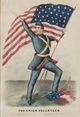
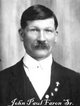
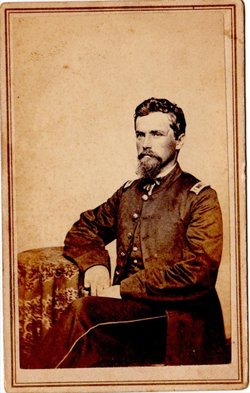
2. The civil war photograph posted up above is at civilwarphotosleuth com by Brian Downey, (ID:48681317). Who is this 2Lt? The reverse side: Partridge's Gallery, Wheeling West Virginia. It has a used blue 2 cent revenue stamp ssued in 1862. The Carte de Visite (CDV), in use from 1864-1866. Andre Adolphe Eugene Disderi.
TIP: TAPHOPHILLIA. Greek words, taphos (tomb) and philia (affinity or love). Necropolis is greek, meaning "City of the Dead." Taphophobia: The fear of being buried alive. Burial Bells: Edward Perry Vollum, Charles F. Mills and Albert Fearnaught. Dr Timothy Clark Smith. Trivia: "Saved By the Bell and Graveyard Shift", came from Burial Bells.
3. Cemetery vs Graveyard. Cemetery is Greek for sleeping or resting place. Graveyard are burials in a churchyard. As graveyards filled up, cemeteries became necessary. The first known cemetery in the United States is the Standish Burial Ground in Duxbury, Massachusetts. Myles Standish.
Do you know the difference between Gravestone, Headstone, Tombstone? The Rural Cemetery Act was passed by the New York legislature on 27 April 1847. This led to cemeteries becoming a business.
4. There were 6 pandemics in the 18th century; Cholera, Plague, Scarlett Fever, SmallPox, Typhus, and Yellow Fever. The 1918-1920 Spanish Flu Epidemic was global. Cemeteries could not keep up with the massive death toll, so family members were buried in unmarked graves with no record or paper trail of the deceased. The California and Oregon Trails are known as the "Nation's Longest Graveyard." Bodies were buried on the trail to protect them from desecration. Henry Sager. Ignaz Semmelweis, cure Childbed/ Puerperal Fever.
5. The First U. S. Census. Its titled " Heads of Families at the First Census of the United States, taken in the year 1790, MA." See Ebenezer Munroe Jr., ID: 67393849, (census added to memorial). On 24 August 1814, the British destroyed many of our historical records when they set fire to buildings in Washington D.C.
6. In 1995, Jim Tipton, ID: 1, created Findagrave. When I joined this site in 1999, Warrensburg, MO., we had to mail our photos to Utah and they would upload the records, which meant I did not get credit for many memorials. Contributor ID's with 3 digits or less are considered pioneer's and legend's of the digital genealogy community for having joined during it's infancy. On July 26, 2000, I created the memorial for William Howard Russell (1827-1907), ID: 11214. Anytime you see my photos attached to famous memorials dated before Dec 2001, means I created the memorial but only credited with the photo and some have been replaced. In year 2000, I added numerous famous memorials, which this site denied me as being the creator. An example is Mount Washington Cemetery, Independence, Missouri. On 10 July 2000, I created these memorials and added their photos on the same date for theses Medal of Honor recipients; Herbert Burr, Charles Long and Thomas Toohey. Their policy with famous records in 2000 was to "postdate" the photos which denied the original creator credit. Any records dated 30 August 2000 were created Tom DeNardo, ID: 767. At Leavenworth National Cemetery, Kansas. I created the Medal of Honor memorials for John Shingle, John S. Durham and John Gray. All these gravestones had a blue MOH citation attached to the grave. John Gray, ID: 12034, no longer is a MOH recipient or famous. His status is now " Burial Unknown." I created the memorial for rodeo bull Bodacious (1988-2000), ID: 10529, on 9 July 2000. Created by Tom DeNardo was removed and listed as "maintained by Findagrave." Then the bio was rewritten. The earliest photo's I added was for the Old Drum Monument; William C. Quantrill (1837-1865) on 10 April 2000, in the Confederate Cemetery, Higginsville, Missouri. Once my record became Famous, their policy back then was to remove contributors name and replace it with "Maintained by FAG which began in August 2000.They did change this so the contributors name was always listed as: Maintained by Findagrave,Created by Tom DeNardo. Photos to famous records used to include the dates. I created the Hiram Bledsoe memorial on 22 Nov 2001. It was famous, then removed. Created by me was removed and my photos changed to7 March 2002. Three of my earliest famous records with "Created by Tom DeNardo", are (1) Freeman Davis (1842-1899), Medal of Honor, Oak Hill Cemetery, Butler, Missouri, added 25 September 2001, and (2) John Hack MOH, (1842-1933) Maple Grove Cemetery, Trenton, Missouri, added 14 November 2001, (3) Daniel Read Anthony Jr (1870-1931), Leavenworth National Cemetery, Kansas, added 17 October 2001. Some of my older famous photos still include the date.
In November 2025, I began researching lost burial records in Union Cemetery. There are 55,000 burials and about 5,000 gravestones.
The first National MOH Museum in the USA opened in Arlington, Texas on Tuesday, March 25, 2025.
7. I added famous records in Kansas, but not given credit for include: William Beach, Camillo Carr, Edward Hatch, Henry Leavenworth, Medal of Honor recipients; Roger Durham, Harry Bell, Fitz Lee, George Miller, Edward Pengally, and Albert Sale, also, Lucien Baker, Daniel Read Anthony, Sr & Jr., Maj Gen George Dietzler, Maj Gen Richard Curtis Moore, Brig Gen Thomas Moonlight, George Yates, killers Perry Edward Smith and Richard Hickock. Famous records I created in Missouri are Martin Warren John William Fletcher, James Goodloe, Alexander William Doniphan, Brig Gen James Totten, MOH Sterling Galt Henry Louis Routt, William Cowherd, Laura (Hawkins) Frazer of Samuel Clemens fame, and children, Joe "Indian Joe" Douglass (1821-1923), Robert Coontz, Gov Willard Preble Hall, David Johnson Heaton. Woodlawn Cemetery in Independence, MO; are John Boyd (1835-1862), John Taylor Hughes (1817-1862), and Samuel Hughes Woodson. There are more where credit was not given to me as "created by Tom DeNardo." Many of my once-famous records were duplicated.
8. The Eugenics Movement applies to Insane Asylums. (NO 29). Founded by Sir Francis Galton. Eugenics believed in sterilization for certain types of people. Charles Benedict Davenport, founder of Eugenics Record Office and Harry Laughlin, created the Eugenics State Law. Carrie Detamore.
The Gregorian Calendar went into effect in October 1582, it is shown as: Day-Month-Year.
9. PROGENITOR: A person or thing from which a person is descended or originates from. George Payne, ID: 11294367, Payne Cemetery, Goochland, Virginia. An example is the family bible.
Smock Marriages. When a widow remarried, her new husband became responsible for her debt, and her deceased husband's debt. To relieve her husband of any pre-exisiting debt, the bride wore only her "smock." See Hannah (Taft) Ward Joy.
Tip: Duplicate memorial's that have merged into your memorial: any biography you wrote stays at the top. Ancestry add's a "Tilde" or squiggly line= everything below the tilde, is from the duplicate.
10. Adding your relationship to family members you manage. Tap Edit Memorial. Below "Famous: Yes or No", is CLOSE RELATIVE? Tap Yes. Choose your relationship: Parent or Grandparent. Click on these words to see "Options." The result is Maintained By or Created by: Tom Denardo • Relative - Child.
Tip: Research the WPA and Charles Roswell Hale.
11. Use the Cemetery Map to find memorials by name. It does not work on Defunct Cemeteries. Click on the cemetery name. Below this are three words going from left to right: About Photos, Map. (a) Click on Map and Scroll down below the aerial view of the cemetery. (b) Click on MORE TIPS. It explains what the numbers and colors mean. (c) A window opens up to allow you "Search This Map Area to find a memorial by name. Numbers with different colors appear on the map. To turn off: The left side button removes the numbers from the map. Swipe left.Type the name, gavestone appears.
Tip: Black Clothing worn by the widow at funerals.
It was called " Widows Weeds."
12. Updates created in May 2023:
(1) Tag A Veteran.(2) Add Grave Marker Options.
(a) Edit Memorial, "Additional Grave Marker Options"• Label as Cenotaph • Label as Monument.
13. River Pig or Log Drivers.
This occupation killed thousands on the rivers. Their names are lost forever. Very few names exist:
Ole H. Horne (1864-1905), Paul LaBounty and (1890-1905), and Louis Gokey (1870-1905).
Tip: The first Social Security Number was issued in 1936 to John David Sweeney Jr. ID: 121301212.
14. Grave Stones.
I never changed what's on the gravestone. It can misdirect researchers and cause a duplicate memorial to be created. Family grave stones usually look identical when they are in the same cemetery. When you find a stone that says "Sarah, dau of G.and E. Jones", link them together. Transcribe inscriptions. *Many times the death date on the gravestone is the burial date,(*see 36). Example: Mary Jones 1865-1895 and husband Henry Jones 1863-19__, the blank space, in my experience has shown that he is buried in a different cemetery and possibly a different state, and this is usually because the spouse died at a young age. Henry Jones memorial will be labeled as a Cenotaph,(see Number 10. (2). Burial Customs and Religions often determined whether if your grave faced west or east, and if your married, it determined whether you were buried to the left or right side of your spouse.
15. Birth and Death Locations.
If your unsure of where this person was born or died, leave it blank. never. assume because you may enter incorrect information. I have corrected countless memorials using obituaries, birth and death certificates, and these are not always accurate. Example: Dr Walter Cary (1818-1881), ID: 61078499. The obituary says he died in Italy, and his ashes were flown to New York. A second obituary has been added to Dr Walter Carys memorial. It says he died in Marseille, France.
16. Gravestone Photo Request. Add burial Plot.
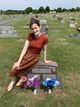
I used a pink rose, it is"my unique signature photo. I began using the rose as early as 2015, for photo request and in creating new memorials.
I link family members together using hyper-links in the biography sections. My format is example: Parents were John and Mary (Jones) Stafford.Their children or surviving children were:
1. * hyper-linked. *The correct memorial gets *hyper-linked. See photo for Catherine (Howard) Scannell, (1838-1913) and James Blackford (1835-1918), ID: 149248890.
17. Toponymic Surnames.
Also called topographic surnames, is a surname derived from a place name. It was a trend linking people to their places of origin. My surname was originally "Di Nardo," from Nardo", Italy. Actress Ann Bancroft, (1931-2005). ID: 11121391, Kensico Cemetery, Valhalla, New York. Her real name was Anna Maria Italiano. Both of her parents have toponymic surnames; her father was Italiano and mothers name was Di Napoli.
A message sent to me by Dave Davenport, ID: 475 29 177. It is about his family member, Paul Riordan, (1920-1944), MOH recipient at Mount Olivet Cemetery, Kansas City, Missouri. I told Davenport that Riordan has a MOH stone is at the cemetery entrance. I included a long distant photo to show him. "This has been a great morning, I discovered that Paul Riordan was awarded the Congressional Medal of Honor. My wife was not aware of that.
18. Orphan Trains in the USA (1854-1929). Founded by Charles Loring Brace in 1853 in New York. It's goal was to ease the over-crowding in Eastern cities by putting roughly 200,000 abandoned, and homeless children on trains to other states to be adopted, many were used as forced labor. Frank Champagne Sr, born Frank Wiggins (1910-1971). Most of these children lost their identities and were given new names. The National Orphan Train Complex Museum in Concordia, Kansas.
19. The 8870 Formula.
This method is used to "estimate" a birth date when you have a complete death date, includes years, months, and days. Created by the Hawkins County Genealogical and Historical Society in TN.
20. Prince Greer was the first African American embalmer in the United States. Henrietta (Bowers) Duterte was the first African American woman to own and operate a mortuary in the United States.
21. Nicknames, Middle Names.
Many people used these names their entire lives, and its reflected on their gravestones. Examples:
(a) Minnie: Minerva or Wilhelmina
(b) Maggie: Margaret (c) Lottie or Lola: Charlotte
(d) Carrie: Caroline or Carolyn
(e) Sadie: Sarah (f) Etta, Hattie, Hetty: Harriet or Henrietta (g) Nellie: Eleanor (h) Polly: Mary
(i) Nannie: Anne or Hannah
22. Global Positioning System Coordinates.
These are estimates. Go to Edit Memorial, Scroll down and click on "Pin On Maps", the location pin appears on the map, click on the pin. Hit the "Save" once for GPS, then hit Save Suggestions for the memorial.
23. Maiden names from 1800s to the early 1900s:
(a) Mary T. Lincoln, the 'T'usually represents her maiden name, not her middle name. (b) Robert Todd Lincoln. The first born son's middle name is usually his mothers maiden name. When you see (nee), it refers to the mothers maiden name: Mary Lincoln (nee Todd).
Tip: Middle Initials. Many people have initials but they are meaningless. Examples: Harry S. Truman (1884-1972) and Ulysses S. Grant (1822-1885).
24. Henry Sassaman Dotterer (1841-1903), Laurel Hill Cemetery, Philadelphia, PA, ID: 739 981 57. Authored a monthly publication titled "The Perkiomen Region, Past & Present." Source: The Harrisburg (PA) Telegraph, page 7, Saturday, 23 September 1899. It has a very detailed family genealogy list of surnames dating back to the 1600s. See: Francis Daniel Pastorius (1651-1720), Germantown, PA. Memorial ID: 159 702 69. Nathan Evans, (1711-1777), ID: 110540268, Bangor Episocal Cemetery, Lancaster County, Pennsylvania. The same article is attached to all three memorials.
25. Tip: In researching any subject, if you hit that brick wall, ask your internet search engine the same research question using different search criteria and you will get your questioned answered.
26. Italian Foundling Surnames.
In Italian Trovatella(fem), Trovatello(Masc) means "Foundling", which translates to "Parents Unknown". Foundling Wheels were used to drop off the unwanted newborns at orphanages and churches and this is when they were given new last names "Foundling Names", which became associated with orphans. As these children grew up, they would be stigmatized. People would recognize your surname as being an orphan and that you were dropped off at an orphanage or church. The Italian government changed this policy and said surnames were now given based on things like , the day of the week, location where baby was found, or the type of a day it was, pretty, gloomy, sad. Foundling names are not exclusive to just the Italians.
27. Ships Lost at Sea.
Many people have been incorrectly listed as lost at sea. Prior to the passage of the Steerage Act on 2 March 1819, passenger manifest were not correctly maintained or updated. This meant that any passenger could either sell their ticket, give away their ticket, or simply not show up for the ships departure and this change would never be reflected or annotated on the ships manifest. Over time, hundreds of ships and thousands of passengers were lost at sea. The Steerage Act regulated the condition of the ship and Section 4 requires captains to provide a list of passengers with their destination information. The Louisville (KY) Daily Courier, page 2, Friday 21 February 1851. Robert Price (1810-1851), ID: 136943614, this article was recanting the story of Robert being buried at sea. His body was brought to shore where his brother John brought him to Cave Hill Cemetery, Louisville, Kentucky. I have created 2 virtual cemeteries: (a) Ships and People Lost at Sea and (b)The SS Central America.
28. The SS Central America.
This steam-ship was a side-wheel steamer. It was enroute from San Francisco to New York when it sank, losing approximetly 425 of her 578 passengers and crew, including 30,000 pounds of gold. Numerous articles list some people having been lost at sea but were actually rescued. It was carrying gold dust which would be made into buillon and then made into gold coins. The loss of this ship has been compared to the Wall Street Crash of 1929. The SS Central America sank on Saturday 12 September 1857 at Cape Hatteras off the north/ south carolina coast. Spellings of the passengers names are inconsistant. Three recovery efforts were made in 1988, 1991 and in 2014. Pascual Esquerra coins found. Actual glass plate portrait photographs were found in 2014. Their names are unknown. It's known as "The Ship of Gold." I have found 193 of the passengers and crew. The goal is to find as many as possible. Where are these 2: John Tice, 2nd Engineer; Theodore Paine. The Liberator, page 3, Friday, 2 October 1857, MA.
Buried at Sea. The "Last Stitch through the Nose."
Maritime Tradition or Superstition?
Tip: Burials Unknown.
There are 2 ways to find them.
(1) Example: Your looking for James Woodson (1855 -1900 in Illinois). When you type this information, no record comes up. My method to find burial unknowns: Leave the death location blank. (2) Go to the Findagrave home page. To the right of the "Search" button is "More Search Options, click on it. First column is called "By Memorial Types", the 3rd option shows " Not Buried in a Cemetery."
29. State Insane Asylums, Blind Asylums, Deaf and Dumb Asylums, Orphan Asylums, Asylums for Feeble-Minded Children, and State Hospitals.
See my Virtual Cemetery --Asylums/Potters Field.
* Dr Thomas Monro was forced to resign from Bedlam Asylum in England. Alienists was a 19th century term for specialist who treated the mentally ill.
*Eastern State Lunatic Asylum (1773) in Williamsburg, Virginia was the oldest mental institution in the USA.
*George Remus (1878-1952), ID: 14415008. He tried the first case of temporary insanity, his own!
*In 1925, Texas became the first state to use the word "hospital" in place of lunatic and insane asylum. Dr Philippe Pinel, he believed " the insane were patients, not prisoners." James/William Norris (d.1814) Bedlam Asylum. James Tilly Matthews (1770-1815). The first known case of schizophrenia. I created his memorial.
I focused my research on the Topeka State Hospital Cemetery and the Osawatomie State Hospital Burial Ground, in Kansas. Most of these older state hospitals, and insane asylums and cemeteries were torn down, or defunct, (no longer in existence), and a new structure was built in place of them. Many defunct cemeteries had the bodies disinterred and buried in a different cemetery. An example is Abraham DeHart (1809-1891), ID: 11083074, Arlington Cemetery, Drexel, Delaware, PA. DeHart was a 49 year supertintentdant at the Philanthropic Cemetery (Defunct), Philadelphia, PA. Two 1914 articles added about this cemetery being closed and all burials being reinterred at Arlington and other cemeteries.
The Blackwell Lunatic Asylum for Women, New York. To reduce cost, the asylum hired ex-cons from the Blackwell Island Penitentiary to work as attendants.
Many people were unjustly sent to insane asylums or state hospitals. Patients, or "Inmates", were commited to these institutions involuntarily and usually without any evidence proving they were insane. Doctors at this time, were paid a fee for every patient they certified as insane. Some legal guardians, Thomas Jackson Radford who were the benefactors of the estate, would have this person committed "unjustly" to an insane asylum in order to receive their inheritance sooner. Vctim August H. Korfhage. If a person sustained a painful injury which caused their behavior to change, they were viewed as being "temporarily insane", and sent to an asylum. Example is George P. Dykes (1857-1904), ID: 340 95 758, City of Mesa Cemetery, Mesa, Arizona.
Nine cases listed below.
(1a) Osawatomie Insane Asylum, Kansas. Source: The Hutchinson (KS) News, page 10, Monday, 12 July 1915.
Lydia A. Doyle (1859-1944), ID: 395 99 630, Greenwood Cemetery, Newton, Kansas. The Hutchinson News, page 10, Monday, 12 July 1915, Hutchinson, Kansas, article added to her memorial. Her brother's George and Handsel Abbott had Lydia sent to an asylum to steal all the land her parents bequeathed to her. She gained her freedom and recovered all the stolen land. I linked her entire family to her.
(2b) Bloomingdale Insane Asylum, New York.
Source: The Star-Gazette, page 1, Saturday, 21 September 1901, Elmira, New York.
History on Bloomingdale Insane Asylum.
Source: The New York Times, page 2, Monday, 9 April 1866. Look at "Local Intelligence," The New- York Hospital", See: "Bloomingdale Asylum."
John Armstrong Chanler (1862-1935), ID: 35946079, Grace Episcopal Church Cemetery, Cismont, Virginia. I added an article about him being sent to the Bloomingdale Asylum. He escaped after 1 year, he had his day in court and proved he is not insane and fought to reclaim his fortune. His father was John Winthrop Chanler (1826-1877).
(3c) The Cook County Insane Asylum, known as "Dunning" operated from 1854-1912 in Chicago, Illinois. Railroad employee D.V. Connelly is sane but sent to the Insane Asylum. Source: The Daily Inter Ocean, page 16, Saturday, 24 December 1887, Chicago, Illinois. "Nothing to Prevent Sane Persons Being Sent to the Asylum and Kept There Indefinetly." "A letter was written to point out the necessity for a new law governing the admission of person's claiming to be insane into the asylum." A physician who worked here was Dr. John Campbell Spray (1845-1906), ID: 127 246189, Illinois.
(4d) Elizabeth Parsons Ware Packard (1816-1897), ID: 43674883, Rosehill Cemetery & Masoleum, Chicago, Illinois. She had different religious beliefs from her husband Reverand Theophilius Packard (1802-1885), ID: 184 373053. On just his word alone, with no proof of her being insane, he had her sent to the Jacksonville, Illinois Insane Asylum for 3 years. After her release he had her sent back to the asylum. Once she gained her freedom from the asylum, she realized Theophilius had sold everything she owned, and their home and took their children to another state. Women at this time did not have any rights to property or children so Elizabeth helped changed the law. In 1868 she wrote " The Prisoner's Hidden Life."
(5e) Samuel Phenes (1841-1919), ID: 378 23102, Willard Asylum Cemetery, Willard, Seneca, New York. Source: Buffalo (NY) Evening Express, page 4, Monday, 20 March 1922. Titled " Learn of Death of Father Who Died Three Years Ago." The family was never notified of his death which meant he was buried at the asylum cemetery.
(6e) Mary Maloney (1842-1921), ID: 128 615 681, Grant County Cemetery, (also known as Grant County Farm), Lancaster, Grant, Wisconsin. Source: Grant County Herald, page 1, Wednesday, 2 February 1921. The decision was made for her daughters, Lizzie, age 9 and Annie, age 7, will join their mother Mary in the asylum because they were deemed simple-minded.
(7 f) Rosina Bulwer-Lytton, (1802-1882), ID:219 64031, burial in England. Her husband Edward Bulwer-Lytton, (1803-1873), ID: 19131, had her committed to an asylum. Her story, "A Blighted Life", published in 1880.
(8 g) Montee Ledderhos, (1895-1907), ID: 95698653, Sonoma State Home Cemetery, California. Montee fell and hit his head. At age 4, Judge William P. Lawler adjudged Montee insane and sent him to the Asylum at Napa.
(9 h) Charles Brooks Hardy, ( 1857-1902), ID: 34205095, Walnut Hill Cemetery, Kingman, Kansas. The Topeka State Journal, page 1, Saturday, 25 October 1902, Topeka, Kansas. Hardy committed suicide by stepping in front of a train instead of returning to the asylum. Article describes the horrible condition in which his body was shipped home to his family.
Hospital staff did not have a uniformed dress code which made it difficult to differentiate between hospital staff and patients. These institutions were known to be inhumane, brutal and abusive to the patients. When some of these people were adjudged insane they chose to commit suicide instead of being sent to the insane asylum.
Nellie Bly, Journalist, (1864-1922), memorial ID: 106. Nellie went undercover from 26 September to 7 October 1887 in Blackwells Island's Lunatic Asylum for Women in New York. Her mission was to expose the atrocities being committed. Later that year, her articles, "10 Days in a Madhouse", were released to the public. In 2019, Lifetime released "Escaping the Madhouse: The Nellie Bly Story." The New York Correction History Society has a report.
Clarissa Caldwell Lathrop (1847-1892), ID: 32090593, Mount Hope Cemetery, Rochester, New York. Family members had her committed to an asylum. Once freed, she became the founder and organizer of the Lunacy Law Reform League.
Julius Chambers, Journalist, (1850-1920), ID: 978 246 97, Green-Wood Cemetery, Brooklyn, New York. In 1872, he went undercover for 10 days in the Bloomingdale Insane Asylum in New York. Chambers fought to expose the ill-treatment of patients. After his release, his articles were published. In 1876, he wrote " A Mad World and It's Inhabitants." His work helped change the laws pertaining to the insane. Two other champions in the cause to help the mentally ill were:
(a) Dr Thomas Story Kirkbride (1809-1883)
Memorial ID : 278 416 17.
(b) Dorothea Dix (1802-1887) Memorial ID: 286.
The Chatham Record, page 2, Thursday, 7 November 1878, Pittsboro, North Carolina. " The Colored Insane Asylum at Goldsboro." It opened in August 1880. In 1959, the name changed to Cherry Hospital Cemetery named after former Governor Gregg Cherry (1891-1957). One of his objectives as Governor was to improve conditions at state run facilities. The patients are buried at the Cherry Hospital Cemetery, Goldsboro, Wayne, N. C.
Tip: Jim Crow Laws. It was mandatory that segregation existed between black and white cemeteries. See Thomas Dartmouth Rice.
30. Potters Field or Pauper Burials.
The term Potters Field originated in the Bible,
Matthew 27:7- "And they took counsel, and bought with them the potter's field, to bury strangers in."
Burial locations are recorded in the Cemetery Management Tracking System @ Hartisland .net.
In 1869, Potter's Field on Hart's Island in New York became a public cemetery. A pauper usually refers to a very poor person. The first burial here was Louisa Van Dyke (1845-1869), ID:24061149.
See the following news articles :
(a) The Buffalo (NY) Daily Republic, page 2, Monday, 17 July 1854, " Do We Really Need A Potter's Field?"
(b) The Brooklyn Citizen, page 12, Sunday, 3 February 1899, New York, "Our Last Road House."
(c) The Standard Union, page 16, Sunday, 27 January 1901, Brooklyn, New York,"Romance and Tragedy of the Potter's Field."
(d) The New York Tribune, page 38, Sunday, 1 April 1900, New York. It describes the schedule and transportation of unclaimed corpses to Hart's Island.
Burials in Potters Field.
Bodies were buried in boxes, with a number and location written on it. No grave markers. They were buried in mass graves, boxes stacked on top of one another, about 6 high and 25 in a row. See the New York Tribune, page 38, Sunday, 1 April 1900. See: The Kansas City (MO) Star, page 1, Saturday, 17 December 1881, "How Paupers Are Buried in Union Cemetery." The burial ledger was called the "case record", which was the complete list of all the burials. It was kept by the undertaker. If this case record were lost, so were all the records of those burials. A corrupt practice was exposed which showed corpses were being sold to medical hospitals for dissection. When a family member would give an undertaker money for the burial,he would keep that money and go to the county to get money for a Potters field burial. In many cases the sexton or undertaker could get away with this because family members were not allowed in potter's fields to witness the burial. Another record of this "individual burial", is the receipt the undertaker would have given the family member. These criminal acts were exposed and brought to justice. Joseph Milton DeLap, (1863-1921), ID: 237193802.
A detailed article on this subject is on the memorial of George Childs (1841-1886), ID:144 706049, Topeka State Hospital Cemetery. Resource : The Topeka Daily Herald, pg 9, Saturday, 30 September 1905 Topeka, Kansas. "Phossy Jaw and Mudlarks."
Many families never talked about their loved one's being sent to, or being buried at, one of these places. My experience has shown that very few people who are buried at an insane asylum or potter's field, are rarely linked to their parents or children.I always linked family members together whenever possible. Family members would leave notice at these hospitals saying " Notify me if my loved one has died, because I want to give him/her a proper burial. In many cases, such as the example below, those wishes were ignored. The Standard Union, page 6, Tuesday, 15 August 1899, Brooklyn, New York. William Stemmler (1824-1899), ID: 218766515, Potter,'s Field, Harts Island, New York. Example: Robert M. Wells, (1838-1901), ID: 15 777 879, Topeka State Hospital Cemetery, Topeka, Kansas. When I found his memorial in this asylum, it was R.M. Wells d. 1901. I found an article from his sister, Mrs Phoebe A. Mason, and the contents helped me find his full name, date of death and link his entire family to him.
A Poem "In Potter's Field", is on Annie Dugan, ID: 116874542, Hart's Island, New York.
Gong Farmers or Night Soil Men. This profession ended with the implementation of the new sewage systems by Sir Joseph William Bazalgette. Sanitation workers found many corpses in these cesspools. Research "Toshers" also called sewage scavangers, during Victorian England (1837-1901).
31. Pest House or Shed House.
A building used to house people who were afflicted with communicable diseases such as, cholera, scarlet fever, smallpox, tuberculosis and typhus. Dr. John Jay Terrell (1829-1922), ID: 11432406, implemented cleaning practices at the pest house which reduced the mortaliy rate of his patients.
32. Almshouses and Poor Farms.
You worked here. Inmates buried with no paper trail. These places disappeared with the Social Security Act of 1935.
33. Body Snatching.
Body snatchers were known as "resurrectionists", or "resurrection men." It was based on a fictional character called Jerry Cruncher, from the classic 1859 novel " A Tale of Two Cities," written by Charles Dickens. This practice of stealing cadavers for profit, was very popular up until the early 1900's. Medical Colleges needed these cadavers to practice on. Bodies were typically buried about three feet deep. Robbers would dig into the grave and steal the corpse, and sometimes, they stole bodies from morgues. On many occassions, the robbers were medical students, and physicians. The bodies of the poor and destitute were easier to obtain. "The No Property Loophole," corpses were "res-nullies" belonging to no one. It was a midemeanor to steal a corpse. The Anatomy Act of 1832 made body snatching a criminal offense. See my virtual cemetery called Body Snatching.
The Inter Ocean, page 3, Saturday, 19 January 1884, Chicago, Illinois. This article includes 23 physicians giving their professional opinions on paupers and medical institutions needing cadavers for research.
Otto Albert, (1861-1894), ID: 6343 4786. There are two different detailed articles about Otto Albert's corpse being found in a dissection room: The "Omaha (NE) Daily Bee, 1 December 1894," is added to his memorial. The second article can be found at The Lincoln (NE) Evening Call, page 1, Monday, 3 December 1894.
Catherine Doehring (1836-1902), ID: 183 027850, Holy Cross and Saint Joseph Cemetery, Indianapolis, Indiana. I added a photo of her grave after her body was stolen. Source: Star-Tribune, page 45, Sunday, 27 February 1916, Minneapolis, Minnesota.
Robert Louis Stevenson (1850-1894), ID: 3770, buried at Stevenson Family Estate Grounds in Vailima, Samoa. Body Snatching was big business in the United Kingdom and Stevenson wrote "The Body Snatcher", which was published in 1884. It became the basis for the 1945 horror movie "The Body Snatcher."
John Scott Harrison (1804-1878), ID: 8624. His father was President William Henry Harrison. John's corpse was stolen by body snatchers.
Ralph H. Woods (1876-1896), ID: 190 990 420. Source: The Kansas City (MO) Gazette, page 1, Tuesday, 18 August 1896. The body of Ralph H. Woods was stolen by body snatchers.
Dr Joseph C. Alexander (1859-1925), ID: 1644 5165, Crown Hill Cemetery, Indianapolis, Indiana and Rufus Cantrell, "King of the Ghouls", went on trial for being body snatchers. Cantrell confesses to stealing bodies from the following cemeteries in Indianapolis, Indiana: the Central Hospital for the insane, Ebenezer, German Luthern, Jones Chapel, and Mount Jackson. Source: The Courier-Journal, page 20, Sunday, 5 October 1902, Louisville, Kentucky. Full page article is titled "Indianapolis Stirred Over the Desecration of Graves."
The Cinncinati (OH) Enquirer, page 12, Saturday, 23 July 1881. "Body Snatching, How the horrid business is carried on in the East---Scenes in the Dissecting Rooms-To Purchase and Sale of Human Bodies, etc."
When did Rufus William Cantrell die and where is he buried? I created his memorial ID: 271882407.
Burial Location: Unknown. Rufus was born 3 April 1879. His parents were Bateman and Sarah (Lawrence) Cantrell. Rufus Cantrell disappeared after 1915. Another well-known body snatcher was Hampton West, (1844-1904), ID: 46045754, Indiana.
Carrie T. Selvage (1856-1900), ID: 460130 23, Crown Hill Cemetery, Indianapolis, Indiana. Source: The Nashville (TN) Banner, page 7, Saturday, 12 June 1920. Selvage was a patient at a local hospital and walked to a nearby cemetery on 11 March 1900 and was never heard from again. Her misfortune was running into the Rufus Cantrell gang as they were leaving the cemetery with stolen corpses. She was kidnapped, killed and her body was sold to a medical college. When her body was on a dissection table, a medical student recognized her from all the media coverage. Her corpse was untouched and was buried in Crown Hill. Twenty years later, her bones were found during construction on a building where the hospital stood.
Lena (Carey) Hodgin (1859-1902), ID: 363 82736, Summit Lawn Cemetery, Westfield, Indiana. Her husband Jesse E Hodgin, with the approval of the cemetery association, rigged her casket with nitroglycerin. It would only detonate, if disturbed. Source: The Topeka (KS) Daily Herald, page 1, Wednesday, 12 November 1902.
The African Burial Ground National Monument, Cemetery ID: 240 70 27, Manhattan, New York.
Rembrandt (1606-1669) did an oil painting in 1632 titled "The Anatomy Lesson of Dr Nicolaes Tulp (1593-1674), ID: 226993350. It portrays an actual dissection by Dr Tulp on Aris Kindt, who was hung on 31 January 1632. I created his memorial: Aris Kindt, ID: 219968725, Body -"Donated to Science."
Three changes helped end body snatching; (1) the use of Pine Box Caskets, (2) bodies were buried six feet deep and (3) Anatomy Boards. Corpses were now being buried in pine boxes which meant thieves had to dig up the entire coffin to expose the lid on the pine box. Anatomy Board's were created to send unclaimed corpses to medical institutions. These boards did not eliminate all the problems. There were times when a spouse would visit a family member at the insane asylum or the state hospital and tell the staff, " notify me when my spouse has passed away". The surviving spouse was not notified , or was notified when it was too late, your spouse was already buried in potters field. I added William Burke (1792-1829).
The Anatomy Act of 1832 was the first law in the United States that authorized students to dissect unclaimed corpses. In 1968 all 50 states adopted the Uniform Anatomy Gift Act (UAGA) where donors can bequeath their bodies to medical science.
34.The US Census Bureau became an agency in 1902. Census Records, Death Certificates and Obituaries, are not always accurate. They do contain errors.
35. Ancestry purchased Findagrave on 30 Sept 2013. I found out about this in 2022. Home page, scroll to the very bottom. Click on Terms and Conditions. "Summary of Changes, Effective Date."
My work, and yours is protected under this copyright law. The law states: Prior to 1978, only published work was protected. The Copyright Act of 1976, went into effect in 1978. This act extended copyright protection to all new works from the moment they are created. For unpublished work, (my bio page), the copyright term is the life of the author plus 70 years. The Fair Use Doctrine applies meaning its permissable to use limited portions of a work. Since Ancestry purchased Findagrave, we have to follow their guidelines. Ancestry, by law, can not sell our work without the authors written permission.
I, Thomas M. Denardo, have not, nor have I ever given any permission to Ancestry, Findagrave or any person, or entity, the right to; copy, publish or sell the rights to my content, mainly my bio page. I claim copyright to my bio page and all my work. Ancestry purchased Findagrave in 2013. Ancestry, should post this on their home page. "Ancestry purchased Findagrave." The original Findagrave died 20 August 2018. The 1950 U.S. Census was released to the public on Friday 31 March 2022. The 1960 Census will be released to the public on 1 April 2032. Census Records are released every 72 years after the census date.
36. The 1890 US Census. (See my virtual cemetery).
From 1790-1880, all county courthouses kept a copy of their census records and the original was sent to Washington, D.C.. The population in 1890 was 62, 979,766. County courthouses were no longer needed because on 2 June 1890, enumerators visited homes using Herman Hollerith's electonic tabulating machine. A fire on 10 January 1921, destroyed most of the 1890 census. The government felt none of it was salvageble, so in 1934, this damaged and moldy census was burned. I have 4 fragments; James Anderson, John Hayward James Smith and George Singer. Headers from that census are: Name, Military, Relationship to head of household, White, Black, etc , Sex, Age, Marital Status, Place of Birth, Mother to how many children.
(a) The 11th Census of the United States:
-Supervisor's District No. 3,-Enumeration District No. 172,-County: Ellis, State: Texas,-City,Town, District, Beat,Civil Division: J. P. No 6
-Enumerated: 17 day of June, 1890
-Number of person's in this family: 6 (not visible).
This census was burned. James E. Smith (1828-1913) and wife Nancy (1831-1910) are buried at Mountain Peak Cemetery, Texas. These memorials show most of this 1890 Census.
- James E. Smith, (HOH) age 63, white, Alabama,
Confederate. Nancy H. Smith, wife, 58, white, TN,
Children: 8-5. (she had 8 kids-only 5 survive).
-- Joseph T. Smith, son, 27, single, Texas
---Louella J. Smith, daughter, 21, single, Texas
--David Smith, son, 18, Texas
(b) There are two 1890 Census dated 12 June 1890 for the township of Mound City, McDonough, Illinois. The parents are buried at Bushnell Cemetery, Bushnell, McDonough, Illinois. A copy of this census is added to their memorials.
Husband William H. Anderson (1841-1916)
Wife Hester (Wilson) Anderson (1850-1917)
George A. Singer (1837-1917) and his family. ID:165 151 817, Industry, McDonough, Illinois
(c) William Anderson, b. Indiana, age 50, married
Hester Anderson b. Illinois, age 40 married
Jasper H. Anderson, b. Illinois, age 17, son
Charles H. Anderson, b. Illinois, age 14, son
John M. Anderson, b. Illinois, age 10, son.
(d) The 12 June 1890 Census for Washington, District of Columbia. John Hayward (1835-1909), Arlington National Cemetery, Wife Mary (Ferris) Hayward. Daughters: Mary, Emma, Mabel.
Here are some of the surviving fragments of the 1890 U.S. Census that do exisit :
1. Alabama‐-------------Perry County
2. District of Columbia
3. Georgia--‐-----Muscogee and Columbus County
4. Illinois---------McDonough County
5. Minnesota‐----Wright County
6. North Carolina---Cleveland and Gaston County
7. New Jersey----Hudson County
8. New York-------Suffolk and Westchester County
9. Ohio-------------Clinton and Hamilton County
10. South Dakota----Union County
11. Texas------Ellis,Hood, Rusk and Trinity County
37. Use census records as a source or a starting point in your search because they often times conflict with death certificates, obituaries, and other census records. Do not use or trust the information that is transcribed on "Cover Pages." Use the actual document.
Massachusetts was the first state to require the registration of deaths in 1842. In 1933, all 50 states were required to register all births and deaths and provide data to the census bureau.
38. Death Certificates.
When information is being provided, many times the answer is "I think" instead of "I know for a fact." Nosology: Medical science that classifies & names diseases (malady).
39. Many people died in late December which means the obituary may be posted in January of the next year. The opposite of this is when the obituary is posted in early January, means you should look for the obituary in December of the previous year. This is when the death date versus the burial date becomes important. An example is Jesse Allum (1818- Dec 1893), ID: 119586566, Bedminster, Pennsylvania. His obituary can be found at the News Herald, page 3, Thursday, 25 January 1894, Perkasie, PA. The obituary spelled his surname incorrectly as "Ahlum."
40. Newspaper Obituaries.
If you are having trouble finding the year your relative died, do what I do. I narrow down my search (year range) by using obituaries . Find the obituaries for the parents and siblings that have a death year. Now look for "Survived By, or The Late" or " Was preceded in death by " or "Leaves Behind." Next step is to change the year range. I keep narrowing the range until I find the missing year of death. Death Notice's and Funeral Notice's. My format is: The Kansas City (MO) Star, page 5, Saturday, 22 May 1875.
Tip: Obituaries do not always tell you what city, and county the person died in but you can find the answer. If the obituary says for example: "Herman Munster died at 1313 Mockingbird Lane", this means he died locally. Research the address and it will tell you the city. Now you can find the county. When the person died else where, it usually list the city or the county and state. Example: She died in Richmond, Virginia, or Shawnee Co. Kansas.
Obituaries from the 1700s to the early 1900s.
My research has taught me not to rely solely on the information in just one obituary. Many times obituaries had different spelling variations, or the dates of birth or death were different. Some provide a more detailed history of the deceased. Other differences included where they were born or where they died. To be more accurate in your research, look at more than one obituary for that person. Below are two examples which include discrepancies.
The obituary for Bertha Marmont (1865-1907), ID: 269964633, buried at Webb City Cemetery in Webb City, Missouri. Her actual gravestone says: Bernadine Marmont (1866-1907), ID: 25056117, Hosey Hill Cemetery, Weir, Kansas.
The actual gravestone for John Mapes (1749-1847), ID: 203330298, Mapes Cemetery, New Jersey. The obituary from the Oquawka (IL) Spectator, page 2, Wednesday, 4 February 1852, says John Mapis.
The age at death in 1700s obituaries are hard to believe. I added Christopher Dunlap Drankenberg, d. 1770, age 146, ID: 141980640, source: Dunlap & Claypoole's American Daily Advertiser, page 3, Thursday, 19 June 1788. It contains the names of deceased persons ranging in age from 122 to 152.
Story about a Civil War Veteran.
Source : The Pratt Republican, page 7, Thursday, 28 February 1889, Pratt, Kansas. " A Soldier Twice Dead, One Grave at Gettysburgh, Another in Germantown." Stephen Kelly, served in Company E, 91st Pennsylvania Volunteer Infantry. For the next 25 years, Kelly visited the grave of this soldier who was supposely himself. After Kelly's, death this gravestone was changed to "Unknown," ID:16206033, Gettysburgh National Cemetery, Pennsylvania. Stephen Kelly died 29 January 1889.
The example below shows 4 differences for the same person, BaKeman, BaTeman, 1869 and 1871.
"Oldest and last surviving Revolutionary War Veteran. (a) Famous Memorial: Daniel Frederick Bakeman, (1759-1869) ID: 4061,Sandusky Cemetery Freedom, Cattaraugus, New York.
(b) I found an article which conflicts with the surname BaTeman and 1869 death year. " The Ogle County Press, page 3, Polo, Illinois, Saturday April 29, 1871" which says the oldest and last known surviving revolutionary war veteran is Daniel Frederick Bateman, age 109.
41. Revolutionary War Website.
https: // revwarapps.org. It is a free alphabetical database of historical documents to help prove you are related to a veteran of the revolutionary war. This site list veterans of the revolutionary war who filed for their transcripts and pensions. This site is only for the Southern Campaigns, which include: Delaware, Maryland, Missouri, North Carolina, South Carolina and Virginia. I created a virtual cemetery called D.A.R. and S.A.R.
42. Newspaper Terminology.
(a) "Relic" refers to the "wife of."
Example: Martha, relic of Amos Jones, died last Monday . Another word used for wife was "Consort."
(b) "Inst" is short for Instant.
It refers to the current month. Example:
Martha Jones, from MO, died on the 2nd inst.
(c) "Ult" is short for Ultimo. It means last month.
Example: Died- In this city, on the 27th ult, Martha, relic of Amos Jones.
(d) "Esq" is short for Esquire. Used for a person who is a lawyer. Example: Mr Wilson, Esq.,
(e) "Intestate" means there was no legal will.
(f) " Issue" refers to a person's children or grandchildren, direct lineal descendant.
How to add Articles and Documents in numerical order. For a memorial you manage:
(a) Click on Photos (b) Click on Arrange Photos .
For a memorial managed by someone else, add them in reverse order. (3/3, 2/3, 1/3).
43. Family Reunions.
A newspaper subscription is a great resource to find Family Reunions. I've seen lineage described back to the 1700s . Example is from " The Buffalo Sunday Morning News, page 44, Sunday, 5 July 1915, Buffalo, New York." The article is titled "Jewett Family Annual Reunion Held in Buffalo. Distinguished Men and Women Bearing Notable Names and Boasting Ancient Lineage from all parts of the country." It includes information from 1855, photos of people, homes, and the Coat of Arms. The Jewetts had a patriotic song composed by H. J. Prentiss for the reunion of 1855, Tune : America", lyrics included.
44. Publications on Genealogy.
(a) Maj John Bolling II, ( 1700-1757), ID: 434 32041, Cobbs Cemetery, Enon, Virginia. Bolling is one of the oldest Colonial families in Virginia. " The Bolling Memoirs", written by Robert Bolling, born in 1738, was originally written in French.
(b) Richard Gentry (1846-1916), ID: 719 366 71, Forest Hill Cemetery, Kansas City, Missouri. I created his memorial 25 June 2011. He is a descendant of a line of Richard Gentry's who have been in the U.S., since 1676. He wrote a book titled " The Gentry Family In America, 1676-1909." His paternal great grandfather, Richard Gentry (1763-1843) was a veteran of the American Revolutionary War. It has two thousand indexed names. Source: The Kansas City (MO) Times, page 2, Tuesday, 9 May 1916.
(c). Dr. Charles Henry Stanley Davis, (1840-1917), ID: 611 733 28, In Memoriam Cemetery, Wallingford, Connecticut. I added this article, titled " A Complete History of Meridan, Wallingford and Cheshire, Conneticutt. Source: The Meridan (CT) Daily Republican, page 2, Wednesday, 11 May 1870. It is 800 pages. Here are just a few of the surnames in his book: Atwater, Beach, Bristol, Brockett,Carrington, Harriman, Hough, Ives, and Tuttle. He was a member of the New England Historical Society.
(d) Reverand Henry A. Hazen, (1832-1900), ID: 615 11 733, Christian Street Cemetery, Hartford, Vermont. He wrote a " History of Billerica (MA) with a Genealogical Register."
(e) Reverand Edward Griffin Porter, (1837-1900), ID: 155 17 1967, Cedar Grove Cemetery, Dorchester, Massachusettes. **The following article is added to the memorials of Hazen and Porter , "Boston Evening Transcript, page 6, Friday, 30 March 1883, Massachusettes." A chapter is contributed by Porter called " The Mother of Billericay (MA). It includes 200 pages with records prior to 1800. All families bearing the names Farley, Farmer, Jefts, Kidder, Kittredge, Pollard, Shed, and Toothaker, whose lines in this country go back to 1700, find their American *progenitor in Billerica. He lists over 60 surnames. * See number 7 for its definition.
(f) Henry Franklin Andrews (1844-1919),ID: 78712122, Exira Cemetery, Audubon, Iowa. " Audubon (IA) Republican, page 4, Thursday, 25 July 1901. Article says " Honorable H.F. Andrews is regarded as a pioneer in Genealogy work in Iowa." See the article added to his memorial, Audubon County Journal, Exira, Iowa, page 4, Thursday, 22 May 1919. Read the 4th paragraph. His published works include, The Andrews Family, 1890, The Hamlin Family in 1894, 1900 and 1902 and the History of Audubon County, Iowa, 1918. See memorial for Giles Hamlin (1622-1689), ID: 21317504, Riverside Cemetery, Middletown, CT.
(g). Captain Samuel Hanford (1674-1751), ID: 172 654 69, East Norwalk Historical Cemetery, East Norwalk, Connecticut. Article is titled " Hanford Family." Descendants date back to William The Conqueror 1066. Lawrence Hanford, son of Robert Hanford, settled in Worcester, Connecticut in 1567. Lawrence's wife was Margaret (Highford) Hanford.
45. Free sources to help your research:
(a) Nationwide grave locator.
(gravelocator . cem . va . gov) This is only for military burials in national cemeteries.
(b) Soldier and Sailor System ( nps . gov)
Military information for civil war soldiers.
(c) Politicalgraveyard . com
(d) Missouri Death Certificates (w. sos . mo .gov)
Free Death Certificates (1910-1975):
Each year more certificates are added.
Pre 1910 information---No death certificates.
(e) llinois Statewide Database. ( w. ilsos .gov)
(f) Ohio Statewide Death Index. Civilian and
military. //resources.ohiohistory.org
(g) Arizona Department of Health
(w . azdhs . gov)Look for: Arizona Genealogy Record Search: "Free death certificates."
(h) Erie Railroad Internet Employee Archives
http : // freepages dot rootsweb dot com
Google "Erie Railroad Magazine Deaths."
Two research websites that I did not use:
My Heritage and Family Search. All of my research was accomplished using my smart phone.
My goal on Findagrave has always been to do Quality Work, Not Quantity Work. I leave it all to future posterity. Copyright information: You may use my photos, but only in a dignified, respectful manner. My photos may not be sold. Always give credit to the people who actually took the photos.
Transfer unwanted grave records to Findagrave ID: 8. To manage a non-famous record that is maintained by Findagrave, hit Suggest Edits, "do you want to manage it?", click yes. On 22 February 2023, I had findagrave remove my name from all of my 144 famous bios. I do not need that recognition.
My name is Thomas M. DeNardo, currently residing in Missouri, originally from California. My parents were George Anthony Denardo and Lois (Bailey) Denardo. My fathers dad, Matteo immigrated from Italy at age 6 with his brother James and mother Magdalena (Di Tommaso) Di Nardo. Matteo married my first generation Sicilian grandmother Colagera " Lillian" Domino in 1922, who was born in New Jersey. Our surname was originally spelled Di Nardo. Matteo changed his name to Matthew Denardo. I will use DeNardo on this site. My mother's paternal grandparents were Joseph and Mary Ann (Eacrett) Cassidy, their parents immgrated from Ireland. Joseph and Mary Cassidys son was Harold Joseph Cassidy, my mothers father. Harold's parents died when he was about age three or four. My mother's maternal grandparents were Jacob and Emma (Sicknick) Bagger, who immigrated from Haderslav, Denmark.
In 2020, I learned about the decline of monarch butterflies. Insects are ESSENTIAL to the world's food supply. Female monarch's can only lay their eggs on milkweed plants and if milkweed ever disappear's completey, so do the monarchs. From 2020 to September 2026, I have successfully raised and released (catepillar to adult) 196 monarchs. I gave away milkweed seeds and those plants are producing monarchs. Please plant milkweed to help our pollinating insects.
I was honorably discharged from the U.S. Air Force after serving 10 years on active duty. After my military service, I completed my Bachelors Degree at the former Central Missouri State University in Warrensburg, Missouri. I retired from my government job in Missouri after 20 years of faithful service. My ashes will be buried at Conejo Mountain Memorial Park , Camarillo, California.
God Bless America, Land of the Free.
I have written my bio page to help assist, and educate, current and future researchers. All of my biographies are written as professionally as possible. The intention is that my bio page be used as a resource document. My documents are sourced, click on the photos. All my information and tips are from my own personal experiences in researching the deceased. Numbered 1-45. All of my work is "Copyright Protected."
1. Library of Congress (www loc gov)
Every year on January 1st, a new year of copyright material has entered the public domain. "On 1 January 2021, copyright works from 1925 will enter the public domain." Year 2026 is for year 1930. The 1998 Copyright Term Extension Act. Article 1, Section 8 of the US Constitution grants Congress the power, " To Promote the Progress of Science and useful Arts, by securing for limited Times to authors and inventors the exclusive Rights to their respective Writings and Discoveries.
The Family History Library (FHL) became the Family Search Library on 10 January 2023.
2. The civil war photograph posted up above is at civilwarphotosleuth com by Brian Downey, (ID:48681317). Who is this 2Lt? The reverse side: Partridge's Gallery, Wheeling West Virginia. It has a used blue 2 cent revenue stamp ssued in 1862. The Carte de Visite (CDV), in use from 1864-1866. Andre Adolphe Eugene Disderi.
TIP: TAPHOPHILLIA. Greek words, taphos (tomb) and philia (affinity or love). Necropolis is greek, meaning "City of the Dead." Taphophobia: The fear of being buried alive. Burial Bells: Edward Perry Vollum, Charles F. Mills and Albert Fearnaught. Dr Timothy Clark Smith. Trivia: "Saved By the Bell and Graveyard Shift", came from Burial Bells.
3. Cemetery vs Graveyard. Cemetery is Greek for sleeping or resting place. Graveyard are burials in a churchyard. As graveyards filled up, cemeteries became necessary. The first known cemetery in the United States is the Standish Burial Ground in Duxbury, Massachusetts. Myles Standish.
Do you know the difference between Gravestone, Headstone, Tombstone? The Rural Cemetery Act was passed by the New York legislature on 27 April 1847. This led to cemeteries becoming a business.
4. There were 6 pandemics in the 18th century; Cholera, Plague, Scarlett Fever, SmallPox, Typhus, and Yellow Fever. The 1918-1920 Spanish Flu Epidemic was global. Cemeteries could not keep up with the massive death toll, so family members were buried in unmarked graves with no record or paper trail of the deceased. The California and Oregon Trails are known as the "Nation's Longest Graveyard." Bodies were buried on the trail to protect them from desecration. Henry Sager. Ignaz Semmelweis, cure Childbed/ Puerperal Fever.
5. The First U. S. Census. Its titled " Heads of Families at the First Census of the United States, taken in the year 1790, MA." See Ebenezer Munroe Jr., ID: 67393849, (census added to memorial). On 24 August 1814, the British destroyed many of our historical records when they set fire to buildings in Washington D.C.
6. In 1995, Jim Tipton, ID: 1, created Findagrave. When I joined this site in 1999, Warrensburg, MO., we had to mail our photos to Utah and they would upload the records, which meant I did not get credit for many memorials. Contributor ID's with 3 digits or less are considered pioneer's and legend's of the digital genealogy community for having joined during it's infancy. On July 26, 2000, I created the memorial for William Howard Russell (1827-1907), ID: 11214. Anytime you see my photos attached to famous memorials dated before Dec 2001, means I created the memorial but only credited with the photo and some have been replaced. In year 2000, I added numerous famous memorials, which this site denied me as being the creator. An example is Mount Washington Cemetery, Independence, Missouri. On 10 July 2000, I created these memorials and added their photos on the same date for theses Medal of Honor recipients; Herbert Burr, Charles Long and Thomas Toohey. Their policy with famous records in 2000 was to "postdate" the photos which denied the original creator credit. Any records dated 30 August 2000 were created Tom DeNardo, ID: 767. At Leavenworth National Cemetery, Kansas. I created the Medal of Honor memorials for John Shingle, John S. Durham and John Gray. All these gravestones had a blue MOH citation attached to the grave. John Gray, ID: 12034, no longer is a MOH recipient or famous. His status is now " Burial Unknown." I created the memorial for rodeo bull Bodacious (1988-2000), ID: 10529, on 9 July 2000. Created by Tom DeNardo was removed and listed as "maintained by Findagrave." Then the bio was rewritten. The earliest photo's I added was for the Old Drum Monument; William C. Quantrill (1837-1865) on 10 April 2000, in the Confederate Cemetery, Higginsville, Missouri. Once my record became Famous, their policy back then was to remove contributors name and replace it with "Maintained by FAG which began in August 2000.They did change this so the contributors name was always listed as: Maintained by Findagrave,Created by Tom DeNardo. Photos to famous records used to include the dates. I created the Hiram Bledsoe memorial on 22 Nov 2001. It was famous, then removed. Created by me was removed and my photos changed to7 March 2002. Three of my earliest famous records with "Created by Tom DeNardo", are (1) Freeman Davis (1842-1899), Medal of Honor, Oak Hill Cemetery, Butler, Missouri, added 25 September 2001, and (2) John Hack MOH, (1842-1933) Maple Grove Cemetery, Trenton, Missouri, added 14 November 2001, (3) Daniel Read Anthony Jr (1870-1931), Leavenworth National Cemetery, Kansas, added 17 October 2001. Some of my older famous photos still include the date.
In November 2025, I began researching lost burial records in Union Cemetery. There are 55,000 burials and about 5,000 gravestones.
The first National MOH Museum in the USA opened in Arlington, Texas on Tuesday, March 25, 2025.
7. I added famous records in Kansas, but not given credit for include: William Beach, Camillo Carr, Edward Hatch, Henry Leavenworth, Medal of Honor recipients; Roger Durham, Harry Bell, Fitz Lee, George Miller, Edward Pengally, and Albert Sale, also, Lucien Baker, Daniel Read Anthony, Sr & Jr., Maj Gen George Dietzler, Maj Gen Richard Curtis Moore, Brig Gen Thomas Moonlight, George Yates, killers Perry Edward Smith and Richard Hickock. Famous records I created in Missouri are Martin Warren John William Fletcher, James Goodloe, Alexander William Doniphan, Brig Gen James Totten, MOH Sterling Galt Henry Louis Routt, William Cowherd, Laura (Hawkins) Frazer of Samuel Clemens fame, and children, Joe "Indian Joe" Douglass (1821-1923), Robert Coontz, Gov Willard Preble Hall, David Johnson Heaton. Woodlawn Cemetery in Independence, MO; are John Boyd (1835-1862), John Taylor Hughes (1817-1862), and Samuel Hughes Woodson. There are more where credit was not given to me as "created by Tom DeNardo." Many of my once-famous records were duplicated.
8. The Eugenics Movement applies to Insane Asylums. (NO 29). Founded by Sir Francis Galton. Eugenics believed in sterilization for certain types of people. Charles Benedict Davenport, founder of Eugenics Record Office and Harry Laughlin, created the Eugenics State Law. Carrie Detamore.
The Gregorian Calendar went into effect in October 1582, it is shown as: Day-Month-Year.
9. PROGENITOR: A person or thing from which a person is descended or originates from. George Payne, ID: 11294367, Payne Cemetery, Goochland, Virginia. An example is the family bible.
Smock Marriages. When a widow remarried, her new husband became responsible for her debt, and her deceased husband's debt. To relieve her husband of any pre-exisiting debt, the bride wore only her "smock." See Hannah (Taft) Ward Joy.
Tip: Duplicate memorial's that have merged into your memorial: any biography you wrote stays at the top. Ancestry add's a "Tilde" or squiggly line= everything below the tilde, is from the duplicate.
10. Adding your relationship to family members you manage. Tap Edit Memorial. Below "Famous: Yes or No", is CLOSE RELATIVE? Tap Yes. Choose your relationship: Parent or Grandparent. Click on these words to see "Options." The result is Maintained By or Created by: Tom Denardo • Relative - Child.
Tip: Research the WPA and Charles Roswell Hale.
11. Use the Cemetery Map to find memorials by name. It does not work on Defunct Cemeteries. Click on the cemetery name. Below this are three words going from left to right: About Photos, Map. (a) Click on Map and Scroll down below the aerial view of the cemetery. (b) Click on MORE TIPS. It explains what the numbers and colors mean. (c) A window opens up to allow you "Search This Map Area to find a memorial by name. Numbers with different colors appear on the map. To turn off: The left side button removes the numbers from the map. Swipe left.Type the name, gavestone appears.
Tip: Black Clothing worn by the widow at funerals.
It was called " Widows Weeds."
12. Updates created in May 2023:
(1) Tag A Veteran.(2) Add Grave Marker Options.
(a) Edit Memorial, "Additional Grave Marker Options"• Label as Cenotaph • Label as Monument.
13. River Pig or Log Drivers.
This occupation killed thousands on the rivers. Their names are lost forever. Very few names exist:
Ole H. Horne (1864-1905), Paul LaBounty and (1890-1905), and Louis Gokey (1870-1905).
Tip: The first Social Security Number was issued in 1936 to John David Sweeney Jr. ID: 121301212.
14. Grave Stones.
I never changed what's on the gravestone. It can misdirect researchers and cause a duplicate memorial to be created. Family grave stones usually look identical when they are in the same cemetery. When you find a stone that says "Sarah, dau of G.and E. Jones", link them together. Transcribe inscriptions. *Many times the death date on the gravestone is the burial date,(*see 36). Example: Mary Jones 1865-1895 and husband Henry Jones 1863-19__, the blank space, in my experience has shown that he is buried in a different cemetery and possibly a different state, and this is usually because the spouse died at a young age. Henry Jones memorial will be labeled as a Cenotaph,(see Number 10. (2). Burial Customs and Religions often determined whether if your grave faced west or east, and if your married, it determined whether you were buried to the left or right side of your spouse.
15. Birth and Death Locations.
If your unsure of where this person was born or died, leave it blank. never. assume because you may enter incorrect information. I have corrected countless memorials using obituaries, birth and death certificates, and these are not always accurate. Example: Dr Walter Cary (1818-1881), ID: 61078499. The obituary says he died in Italy, and his ashes were flown to New York. A second obituary has been added to Dr Walter Carys memorial. It says he died in Marseille, France.
16. Gravestone Photo Request. Add burial Plot.
I used a pink rose, it is"my unique signature photo. I began using the rose as early as 2015, for photo request and in creating new memorials.
I link family members together using hyper-links in the biography sections. My format is example: Parents were John and Mary (Jones) Stafford.Their children or surviving children were:
1. * hyper-linked. *The correct memorial gets *hyper-linked. See photo for Catherine (Howard) Scannell, (1838-1913) and James Blackford (1835-1918), ID: 149248890.
17. Toponymic Surnames.
Also called topographic surnames, is a surname derived from a place name. It was a trend linking people to their places of origin. My surname was originally "Di Nardo," from Nardo", Italy. Actress Ann Bancroft, (1931-2005). ID: 11121391, Kensico Cemetery, Valhalla, New York. Her real name was Anna Maria Italiano. Both of her parents have toponymic surnames; her father was Italiano and mothers name was Di Napoli.
A message sent to me by Dave Davenport, ID: 475 29 177. It is about his family member, Paul Riordan, (1920-1944), MOH recipient at Mount Olivet Cemetery, Kansas City, Missouri. I told Davenport that Riordan has a MOH stone is at the cemetery entrance. I included a long distant photo to show him. "This has been a great morning, I discovered that Paul Riordan was awarded the Congressional Medal of Honor. My wife was not aware of that.
18. Orphan Trains in the USA (1854-1929). Founded by Charles Loring Brace in 1853 in New York. It's goal was to ease the over-crowding in Eastern cities by putting roughly 200,000 abandoned, and homeless children on trains to other states to be adopted, many were used as forced labor. Frank Champagne Sr, born Frank Wiggins (1910-1971). Most of these children lost their identities and were given new names. The National Orphan Train Complex Museum in Concordia, Kansas.
19. The 8870 Formula.
This method is used to "estimate" a birth date when you have a complete death date, includes years, months, and days. Created by the Hawkins County Genealogical and Historical Society in TN.
20. Prince Greer was the first African American embalmer in the United States. Henrietta (Bowers) Duterte was the first African American woman to own and operate a mortuary in the United States.
21. Nicknames, Middle Names.
Many people used these names their entire lives, and its reflected on their gravestones. Examples:
(a) Minnie: Minerva or Wilhelmina
(b) Maggie: Margaret (c) Lottie or Lola: Charlotte
(d) Carrie: Caroline or Carolyn
(e) Sadie: Sarah (f) Etta, Hattie, Hetty: Harriet or Henrietta (g) Nellie: Eleanor (h) Polly: Mary
(i) Nannie: Anne or Hannah
22. Global Positioning System Coordinates.
These are estimates. Go to Edit Memorial, Scroll down and click on "Pin On Maps", the location pin appears on the map, click on the pin. Hit the "Save" once for GPS, then hit Save Suggestions for the memorial.
23. Maiden names from 1800s to the early 1900s:
(a) Mary T. Lincoln, the 'T'usually represents her maiden name, not her middle name. (b) Robert Todd Lincoln. The first born son's middle name is usually his mothers maiden name. When you see (nee), it refers to the mothers maiden name: Mary Lincoln (nee Todd).
Tip: Middle Initials. Many people have initials but they are meaningless. Examples: Harry S. Truman (1884-1972) and Ulysses S. Grant (1822-1885).
24. Henry Sassaman Dotterer (1841-1903), Laurel Hill Cemetery, Philadelphia, PA, ID: 739 981 57. Authored a monthly publication titled "The Perkiomen Region, Past & Present." Source: The Harrisburg (PA) Telegraph, page 7, Saturday, 23 September 1899. It has a very detailed family genealogy list of surnames dating back to the 1600s. See: Francis Daniel Pastorius (1651-1720), Germantown, PA. Memorial ID: 159 702 69. Nathan Evans, (1711-1777), ID: 110540268, Bangor Episocal Cemetery, Lancaster County, Pennsylvania. The same article is attached to all three memorials.
25. Tip: In researching any subject, if you hit that brick wall, ask your internet search engine the same research question using different search criteria and you will get your questioned answered.
26. Italian Foundling Surnames.
In Italian Trovatella(fem), Trovatello(Masc) means "Foundling", which translates to "Parents Unknown". Foundling Wheels were used to drop off the unwanted newborns at orphanages and churches and this is when they were given new last names "Foundling Names", which became associated with orphans. As these children grew up, they would be stigmatized. People would recognize your surname as being an orphan and that you were dropped off at an orphanage or church. The Italian government changed this policy and said surnames were now given based on things like , the day of the week, location where baby was found, or the type of a day it was, pretty, gloomy, sad. Foundling names are not exclusive to just the Italians.
27. Ships Lost at Sea.
Many people have been incorrectly listed as lost at sea. Prior to the passage of the Steerage Act on 2 March 1819, passenger manifest were not correctly maintained or updated. This meant that any passenger could either sell their ticket, give away their ticket, or simply not show up for the ships departure and this change would never be reflected or annotated on the ships manifest. Over time, hundreds of ships and thousands of passengers were lost at sea. The Steerage Act regulated the condition of the ship and Section 4 requires captains to provide a list of passengers with their destination information. The Louisville (KY) Daily Courier, page 2, Friday 21 February 1851. Robert Price (1810-1851), ID: 136943614, this article was recanting the story of Robert being buried at sea. His body was brought to shore where his brother John brought him to Cave Hill Cemetery, Louisville, Kentucky. I have created 2 virtual cemeteries: (a) Ships and People Lost at Sea and (b)The SS Central America.
28. The SS Central America.
This steam-ship was a side-wheel steamer. It was enroute from San Francisco to New York when it sank, losing approximetly 425 of her 578 passengers and crew, including 30,000 pounds of gold. Numerous articles list some people having been lost at sea but were actually rescued. It was carrying gold dust which would be made into buillon and then made into gold coins. The loss of this ship has been compared to the Wall Street Crash of 1929. The SS Central America sank on Saturday 12 September 1857 at Cape Hatteras off the north/ south carolina coast. Spellings of the passengers names are inconsistant. Three recovery efforts were made in 1988, 1991 and in 2014. Pascual Esquerra coins found. Actual glass plate portrait photographs were found in 2014. Their names are unknown. It's known as "The Ship of Gold." I have found 193 of the passengers and crew. The goal is to find as many as possible. Where are these 2: John Tice, 2nd Engineer; Theodore Paine. The Liberator, page 3, Friday, 2 October 1857, MA.
Buried at Sea. The "Last Stitch through the Nose."
Maritime Tradition or Superstition?
Tip: Burials Unknown.
There are 2 ways to find them.
(1) Example: Your looking for James Woodson (1855 -1900 in Illinois). When you type this information, no record comes up. My method to find burial unknowns: Leave the death location blank. (2) Go to the Findagrave home page. To the right of the "Search" button is "More Search Options, click on it. First column is called "By Memorial Types", the 3rd option shows " Not Buried in a Cemetery."
29. State Insane Asylums, Blind Asylums, Deaf and Dumb Asylums, Orphan Asylums, Asylums for Feeble-Minded Children, and State Hospitals.
See my Virtual Cemetery --Asylums/Potters Field.
* Dr Thomas Monro was forced to resign from Bedlam Asylum in England. Alienists was a 19th century term for specialist who treated the mentally ill.
*Eastern State Lunatic Asylum (1773) in Williamsburg, Virginia was the oldest mental institution in the USA.
*George Remus (1878-1952), ID: 14415008. He tried the first case of temporary insanity, his own!
*In 1925, Texas became the first state to use the word "hospital" in place of lunatic and insane asylum. Dr Philippe Pinel, he believed " the insane were patients, not prisoners." James/William Norris (d.1814) Bedlam Asylum. James Tilly Matthews (1770-1815). The first known case of schizophrenia. I created his memorial.
I focused my research on the Topeka State Hospital Cemetery and the Osawatomie State Hospital Burial Ground, in Kansas. Most of these older state hospitals, and insane asylums and cemeteries were torn down, or defunct, (no longer in existence), and a new structure was built in place of them. Many defunct cemeteries had the bodies disinterred and buried in a different cemetery. An example is Abraham DeHart (1809-1891), ID: 11083074, Arlington Cemetery, Drexel, Delaware, PA. DeHart was a 49 year supertintentdant at the Philanthropic Cemetery (Defunct), Philadelphia, PA. Two 1914 articles added about this cemetery being closed and all burials being reinterred at Arlington and other cemeteries.
The Blackwell Lunatic Asylum for Women, New York. To reduce cost, the asylum hired ex-cons from the Blackwell Island Penitentiary to work as attendants.
Many people were unjustly sent to insane asylums or state hospitals. Patients, or "Inmates", were commited to these institutions involuntarily and usually without any evidence proving they were insane. Doctors at this time, were paid a fee for every patient they certified as insane. Some legal guardians, Thomas Jackson Radford who were the benefactors of the estate, would have this person committed "unjustly" to an insane asylum in order to receive their inheritance sooner. Vctim August H. Korfhage. If a person sustained a painful injury which caused their behavior to change, they were viewed as being "temporarily insane", and sent to an asylum. Example is George P. Dykes (1857-1904), ID: 340 95 758, City of Mesa Cemetery, Mesa, Arizona.
Nine cases listed below.
(1a) Osawatomie Insane Asylum, Kansas. Source: The Hutchinson (KS) News, page 10, Monday, 12 July 1915.
Lydia A. Doyle (1859-1944), ID: 395 99 630, Greenwood Cemetery, Newton, Kansas. The Hutchinson News, page 10, Monday, 12 July 1915, Hutchinson, Kansas, article added to her memorial. Her brother's George and Handsel Abbott had Lydia sent to an asylum to steal all the land her parents bequeathed to her. She gained her freedom and recovered all the stolen land. I linked her entire family to her.
(2b) Bloomingdale Insane Asylum, New York.
Source: The Star-Gazette, page 1, Saturday, 21 September 1901, Elmira, New York.
History on Bloomingdale Insane Asylum.
Source: The New York Times, page 2, Monday, 9 April 1866. Look at "Local Intelligence," The New- York Hospital", See: "Bloomingdale Asylum."
John Armstrong Chanler (1862-1935), ID: 35946079, Grace Episcopal Church Cemetery, Cismont, Virginia. I added an article about him being sent to the Bloomingdale Asylum. He escaped after 1 year, he had his day in court and proved he is not insane and fought to reclaim his fortune. His father was John Winthrop Chanler (1826-1877).
(3c) The Cook County Insane Asylum, known as "Dunning" operated from 1854-1912 in Chicago, Illinois. Railroad employee D.V. Connelly is sane but sent to the Insane Asylum. Source: The Daily Inter Ocean, page 16, Saturday, 24 December 1887, Chicago, Illinois. "Nothing to Prevent Sane Persons Being Sent to the Asylum and Kept There Indefinetly." "A letter was written to point out the necessity for a new law governing the admission of person's claiming to be insane into the asylum." A physician who worked here was Dr. John Campbell Spray (1845-1906), ID: 127 246189, Illinois.
(4d) Elizabeth Parsons Ware Packard (1816-1897), ID: 43674883, Rosehill Cemetery & Masoleum, Chicago, Illinois. She had different religious beliefs from her husband Reverand Theophilius Packard (1802-1885), ID: 184 373053. On just his word alone, with no proof of her being insane, he had her sent to the Jacksonville, Illinois Insane Asylum for 3 years. After her release he had her sent back to the asylum. Once she gained her freedom from the asylum, she realized Theophilius had sold everything she owned, and their home and took their children to another state. Women at this time did not have any rights to property or children so Elizabeth helped changed the law. In 1868 she wrote " The Prisoner's Hidden Life."
(5e) Samuel Phenes (1841-1919), ID: 378 23102, Willard Asylum Cemetery, Willard, Seneca, New York. Source: Buffalo (NY) Evening Express, page 4, Monday, 20 March 1922. Titled " Learn of Death of Father Who Died Three Years Ago." The family was never notified of his death which meant he was buried at the asylum cemetery.
(6e) Mary Maloney (1842-1921), ID: 128 615 681, Grant County Cemetery, (also known as Grant County Farm), Lancaster, Grant, Wisconsin. Source: Grant County Herald, page 1, Wednesday, 2 February 1921. The decision was made for her daughters, Lizzie, age 9 and Annie, age 7, will join their mother Mary in the asylum because they were deemed simple-minded.
(7 f) Rosina Bulwer-Lytton, (1802-1882), ID:219 64031, burial in England. Her husband Edward Bulwer-Lytton, (1803-1873), ID: 19131, had her committed to an asylum. Her story, "A Blighted Life", published in 1880.
(8 g) Montee Ledderhos, (1895-1907), ID: 95698653, Sonoma State Home Cemetery, California. Montee fell and hit his head. At age 4, Judge William P. Lawler adjudged Montee insane and sent him to the Asylum at Napa.
(9 h) Charles Brooks Hardy, ( 1857-1902), ID: 34205095, Walnut Hill Cemetery, Kingman, Kansas. The Topeka State Journal, page 1, Saturday, 25 October 1902, Topeka, Kansas. Hardy committed suicide by stepping in front of a train instead of returning to the asylum. Article describes the horrible condition in which his body was shipped home to his family.
Hospital staff did not have a uniformed dress code which made it difficult to differentiate between hospital staff and patients. These institutions were known to be inhumane, brutal and abusive to the patients. When some of these people were adjudged insane they chose to commit suicide instead of being sent to the insane asylum.
Nellie Bly, Journalist, (1864-1922), memorial ID: 106. Nellie went undercover from 26 September to 7 October 1887 in Blackwells Island's Lunatic Asylum for Women in New York. Her mission was to expose the atrocities being committed. Later that year, her articles, "10 Days in a Madhouse", were released to the public. In 2019, Lifetime released "Escaping the Madhouse: The Nellie Bly Story." The New York Correction History Society has a report.
Clarissa Caldwell Lathrop (1847-1892), ID: 32090593, Mount Hope Cemetery, Rochester, New York. Family members had her committed to an asylum. Once freed, she became the founder and organizer of the Lunacy Law Reform League.
Julius Chambers, Journalist, (1850-1920), ID: 978 246 97, Green-Wood Cemetery, Brooklyn, New York. In 1872, he went undercover for 10 days in the Bloomingdale Insane Asylum in New York. Chambers fought to expose the ill-treatment of patients. After his release, his articles were published. In 1876, he wrote " A Mad World and It's Inhabitants." His work helped change the laws pertaining to the insane. Two other champions in the cause to help the mentally ill were:
(a) Dr Thomas Story Kirkbride (1809-1883)
Memorial ID : 278 416 17.
(b) Dorothea Dix (1802-1887) Memorial ID: 286.
The Chatham Record, page 2, Thursday, 7 November 1878, Pittsboro, North Carolina. " The Colored Insane Asylum at Goldsboro." It opened in August 1880. In 1959, the name changed to Cherry Hospital Cemetery named after former Governor Gregg Cherry (1891-1957). One of his objectives as Governor was to improve conditions at state run facilities. The patients are buried at the Cherry Hospital Cemetery, Goldsboro, Wayne, N. C.
Tip: Jim Crow Laws. It was mandatory that segregation existed between black and white cemeteries. See Thomas Dartmouth Rice.
30. Potters Field or Pauper Burials.
The term Potters Field originated in the Bible,
Matthew 27:7- "And they took counsel, and bought with them the potter's field, to bury strangers in."
Burial locations are recorded in the Cemetery Management Tracking System @ Hartisland .net.
In 1869, Potter's Field on Hart's Island in New York became a public cemetery. A pauper usually refers to a very poor person. The first burial here was Louisa Van Dyke (1845-1869), ID:24061149.
See the following news articles :
(a) The Buffalo (NY) Daily Republic, page 2, Monday, 17 July 1854, " Do We Really Need A Potter's Field?"
(b) The Brooklyn Citizen, page 12, Sunday, 3 February 1899, New York, "Our Last Road House."
(c) The Standard Union, page 16, Sunday, 27 January 1901, Brooklyn, New York,"Romance and Tragedy of the Potter's Field."
(d) The New York Tribune, page 38, Sunday, 1 April 1900, New York. It describes the schedule and transportation of unclaimed corpses to Hart's Island.
Burials in Potters Field.
Bodies were buried in boxes, with a number and location written on it. No grave markers. They were buried in mass graves, boxes stacked on top of one another, about 6 high and 25 in a row. See the New York Tribune, page 38, Sunday, 1 April 1900. See: The Kansas City (MO) Star, page 1, Saturday, 17 December 1881, "How Paupers Are Buried in Union Cemetery." The burial ledger was called the "case record", which was the complete list of all the burials. It was kept by the undertaker. If this case record were lost, so were all the records of those burials. A corrupt practice was exposed which showed corpses were being sold to medical hospitals for dissection. When a family member would give an undertaker money for the burial,he would keep that money and go to the county to get money for a Potters field burial. In many cases the sexton or undertaker could get away with this because family members were not allowed in potter's fields to witness the burial. Another record of this "individual burial", is the receipt the undertaker would have given the family member. These criminal acts were exposed and brought to justice. Joseph Milton DeLap, (1863-1921), ID: 237193802.
A detailed article on this subject is on the memorial of George Childs (1841-1886), ID:144 706049, Topeka State Hospital Cemetery. Resource : The Topeka Daily Herald, pg 9, Saturday, 30 September 1905 Topeka, Kansas. "Phossy Jaw and Mudlarks."
Many families never talked about their loved one's being sent to, or being buried at, one of these places. My experience has shown that very few people who are buried at an insane asylum or potter's field, are rarely linked to their parents or children.I always linked family members together whenever possible. Family members would leave notice at these hospitals saying " Notify me if my loved one has died, because I want to give him/her a proper burial. In many cases, such as the example below, those wishes were ignored. The Standard Union, page 6, Tuesday, 15 August 1899, Brooklyn, New York. William Stemmler (1824-1899), ID: 218766515, Potter,'s Field, Harts Island, New York. Example: Robert M. Wells, (1838-1901), ID: 15 777 879, Topeka State Hospital Cemetery, Topeka, Kansas. When I found his memorial in this asylum, it was R.M. Wells d. 1901. I found an article from his sister, Mrs Phoebe A. Mason, and the contents helped me find his full name, date of death and link his entire family to him.
A Poem "In Potter's Field", is on Annie Dugan, ID: 116874542, Hart's Island, New York.
Gong Farmers or Night Soil Men. This profession ended with the implementation of the new sewage systems by Sir Joseph William Bazalgette. Sanitation workers found many corpses in these cesspools. Research "Toshers" also called sewage scavangers, during Victorian England (1837-1901).
31. Pest House or Shed House.
A building used to house people who were afflicted with communicable diseases such as, cholera, scarlet fever, smallpox, tuberculosis and typhus. Dr. John Jay Terrell (1829-1922), ID: 11432406, implemented cleaning practices at the pest house which reduced the mortaliy rate of his patients.
32. Almshouses and Poor Farms.
You worked here. Inmates buried with no paper trail. These places disappeared with the Social Security Act of 1935.
33. Body Snatching.
Body snatchers were known as "resurrectionists", or "resurrection men." It was based on a fictional character called Jerry Cruncher, from the classic 1859 novel " A Tale of Two Cities," written by Charles Dickens. This practice of stealing cadavers for profit, was very popular up until the early 1900's. Medical Colleges needed these cadavers to practice on. Bodies were typically buried about three feet deep. Robbers would dig into the grave and steal the corpse, and sometimes, they stole bodies from morgues. On many occassions, the robbers were medical students, and physicians. The bodies of the poor and destitute were easier to obtain. "The No Property Loophole," corpses were "res-nullies" belonging to no one. It was a midemeanor to steal a corpse. The Anatomy Act of 1832 made body snatching a criminal offense. See my virtual cemetery called Body Snatching.
The Inter Ocean, page 3, Saturday, 19 January 1884, Chicago, Illinois. This article includes 23 physicians giving their professional opinions on paupers and medical institutions needing cadavers for research.
Otto Albert, (1861-1894), ID: 6343 4786. There are two different detailed articles about Otto Albert's corpse being found in a dissection room: The "Omaha (NE) Daily Bee, 1 December 1894," is added to his memorial. The second article can be found at The Lincoln (NE) Evening Call, page 1, Monday, 3 December 1894.
Catherine Doehring (1836-1902), ID: 183 027850, Holy Cross and Saint Joseph Cemetery, Indianapolis, Indiana. I added a photo of her grave after her body was stolen. Source: Star-Tribune, page 45, Sunday, 27 February 1916, Minneapolis, Minnesota.
Robert Louis Stevenson (1850-1894), ID: 3770, buried at Stevenson Family Estate Grounds in Vailima, Samoa. Body Snatching was big business in the United Kingdom and Stevenson wrote "The Body Snatcher", which was published in 1884. It became the basis for the 1945 horror movie "The Body Snatcher."
John Scott Harrison (1804-1878), ID: 8624. His father was President William Henry Harrison. John's corpse was stolen by body snatchers.
Ralph H. Woods (1876-1896), ID: 190 990 420. Source: The Kansas City (MO) Gazette, page 1, Tuesday, 18 August 1896. The body of Ralph H. Woods was stolen by body snatchers.
Dr Joseph C. Alexander (1859-1925), ID: 1644 5165, Crown Hill Cemetery, Indianapolis, Indiana and Rufus Cantrell, "King of the Ghouls", went on trial for being body snatchers. Cantrell confesses to stealing bodies from the following cemeteries in Indianapolis, Indiana: the Central Hospital for the insane, Ebenezer, German Luthern, Jones Chapel, and Mount Jackson. Source: The Courier-Journal, page 20, Sunday, 5 October 1902, Louisville, Kentucky. Full page article is titled "Indianapolis Stirred Over the Desecration of Graves."
The Cinncinati (OH) Enquirer, page 12, Saturday, 23 July 1881. "Body Snatching, How the horrid business is carried on in the East---Scenes in the Dissecting Rooms-To Purchase and Sale of Human Bodies, etc."
When did Rufus William Cantrell die and where is he buried? I created his memorial ID: 271882407.
Burial Location: Unknown. Rufus was born 3 April 1879. His parents were Bateman and Sarah (Lawrence) Cantrell. Rufus Cantrell disappeared after 1915. Another well-known body snatcher was Hampton West, (1844-1904), ID: 46045754, Indiana.
Carrie T. Selvage (1856-1900), ID: 460130 23, Crown Hill Cemetery, Indianapolis, Indiana. Source: The Nashville (TN) Banner, page 7, Saturday, 12 June 1920. Selvage was a patient at a local hospital and walked to a nearby cemetery on 11 March 1900 and was never heard from again. Her misfortune was running into the Rufus Cantrell gang as they were leaving the cemetery with stolen corpses. She was kidnapped, killed and her body was sold to a medical college. When her body was on a dissection table, a medical student recognized her from all the media coverage. Her corpse was untouched and was buried in Crown Hill. Twenty years later, her bones were found during construction on a building where the hospital stood.
Lena (Carey) Hodgin (1859-1902), ID: 363 82736, Summit Lawn Cemetery, Westfield, Indiana. Her husband Jesse E Hodgin, with the approval of the cemetery association, rigged her casket with nitroglycerin. It would only detonate, if disturbed. Source: The Topeka (KS) Daily Herald, page 1, Wednesday, 12 November 1902.
The African Burial Ground National Monument, Cemetery ID: 240 70 27, Manhattan, New York.
Rembrandt (1606-1669) did an oil painting in 1632 titled "The Anatomy Lesson of Dr Nicolaes Tulp (1593-1674), ID: 226993350. It portrays an actual dissection by Dr Tulp on Aris Kindt, who was hung on 31 January 1632. I created his memorial: Aris Kindt, ID: 219968725, Body -"Donated to Science."
Three changes helped end body snatching; (1) the use of Pine Box Caskets, (2) bodies were buried six feet deep and (3) Anatomy Boards. Corpses were now being buried in pine boxes which meant thieves had to dig up the entire coffin to expose the lid on the pine box. Anatomy Board's were created to send unclaimed corpses to medical institutions. These boards did not eliminate all the problems. There were times when a spouse would visit a family member at the insane asylum or the state hospital and tell the staff, " notify me when my spouse has passed away". The surviving spouse was not notified , or was notified when it was too late, your spouse was already buried in potters field. I added William Burke (1792-1829).
The Anatomy Act of 1832 was the first law in the United States that authorized students to dissect unclaimed corpses. In 1968 all 50 states adopted the Uniform Anatomy Gift Act (UAGA) where donors can bequeath their bodies to medical science.
34.The US Census Bureau became an agency in 1902. Census Records, Death Certificates and Obituaries, are not always accurate. They do contain errors.
35. Ancestry purchased Findagrave on 30 Sept 2013. I found out about this in 2022. Home page, scroll to the very bottom. Click on Terms and Conditions. "Summary of Changes, Effective Date."
My work, and yours is protected under this copyright law. The law states: Prior to 1978, only published work was protected. The Copyright Act of 1976, went into effect in 1978. This act extended copyright protection to all new works from the moment they are created. For unpublished work, (my bio page), the copyright term is the life of the author plus 70 years. The Fair Use Doctrine applies meaning its permissable to use limited portions of a work. Since Ancestry purchased Findagrave, we have to follow their guidelines. Ancestry, by law, can not sell our work without the authors written permission.
I, Thomas M. Denardo, have not, nor have I ever given any permission to Ancestry, Findagrave or any person, or entity, the right to; copy, publish or sell the rights to my content, mainly my bio page. I claim copyright to my bio page and all my work. Ancestry purchased Findagrave in 2013. Ancestry, should post this on their home page. "Ancestry purchased Findagrave." The original Findagrave died 20 August 2018. The 1950 U.S. Census was released to the public on Friday 31 March 2022. The 1960 Census will be released to the public on 1 April 2032. Census Records are released every 72 years after the census date.
36. The 1890 US Census. (See my virtual cemetery).
From 1790-1880, all county courthouses kept a copy of their census records and the original was sent to Washington, D.C.. The population in 1890 was 62, 979,766. County courthouses were no longer needed because on 2 June 1890, enumerators visited homes using Herman Hollerith's electonic tabulating machine. A fire on 10 January 1921, destroyed most of the 1890 census. The government felt none of it was salvageble, so in 1934, this damaged and moldy census was burned. I have 4 fragments; James Anderson, John Hayward James Smith and George Singer. Headers from that census are: Name, Military, Relationship to head of household, White, Black, etc , Sex, Age, Marital Status, Place of Birth, Mother to how many children.
(a) The 11th Census of the United States:
-Supervisor's District No. 3,-Enumeration District No. 172,-County: Ellis, State: Texas,-City,Town, District, Beat,Civil Division: J. P. No 6
-Enumerated: 17 day of June, 1890
-Number of person's in this family: 6 (not visible).
This census was burned. James E. Smith (1828-1913) and wife Nancy (1831-1910) are buried at Mountain Peak Cemetery, Texas. These memorials show most of this 1890 Census.
- James E. Smith, (HOH) age 63, white, Alabama,
Confederate. Nancy H. Smith, wife, 58, white, TN,
Children: 8-5. (she had 8 kids-only 5 survive).
-- Joseph T. Smith, son, 27, single, Texas
---Louella J. Smith, daughter, 21, single, Texas
--David Smith, son, 18, Texas
(b) There are two 1890 Census dated 12 June 1890 for the township of Mound City, McDonough, Illinois. The parents are buried at Bushnell Cemetery, Bushnell, McDonough, Illinois. A copy of this census is added to their memorials.
Husband William H. Anderson (1841-1916)
Wife Hester (Wilson) Anderson (1850-1917)
George A. Singer (1837-1917) and his family. ID:165 151 817, Industry, McDonough, Illinois
(c) William Anderson, b. Indiana, age 50, married
Hester Anderson b. Illinois, age 40 married
Jasper H. Anderson, b. Illinois, age 17, son
Charles H. Anderson, b. Illinois, age 14, son
John M. Anderson, b. Illinois, age 10, son.
(d) The 12 June 1890 Census for Washington, District of Columbia. John Hayward (1835-1909), Arlington National Cemetery, Wife Mary (Ferris) Hayward. Daughters: Mary, Emma, Mabel.
Here are some of the surviving fragments of the 1890 U.S. Census that do exisit :
1. Alabama‐-------------Perry County
2. District of Columbia
3. Georgia--‐-----Muscogee and Columbus County
4. Illinois---------McDonough County
5. Minnesota‐----Wright County
6. North Carolina---Cleveland and Gaston County
7. New Jersey----Hudson County
8. New York-------Suffolk and Westchester County
9. Ohio-------------Clinton and Hamilton County
10. South Dakota----Union County
11. Texas------Ellis,Hood, Rusk and Trinity County
37. Use census records as a source or a starting point in your search because they often times conflict with death certificates, obituaries, and other census records. Do not use or trust the information that is transcribed on "Cover Pages." Use the actual document.
Massachusetts was the first state to require the registration of deaths in 1842. In 1933, all 50 states were required to register all births and deaths and provide data to the census bureau.
38. Death Certificates.
When information is being provided, many times the answer is "I think" instead of "I know for a fact." Nosology: Medical science that classifies & names diseases (malady).
39. Many people died in late December which means the obituary may be posted in January of the next year. The opposite of this is when the obituary is posted in early January, means you should look for the obituary in December of the previous year. This is when the death date versus the burial date becomes important. An example is Jesse Allum (1818- Dec 1893), ID: 119586566, Bedminster, Pennsylvania. His obituary can be found at the News Herald, page 3, Thursday, 25 January 1894, Perkasie, PA. The obituary spelled his surname incorrectly as "Ahlum."
40. Newspaper Obituaries.
If you are having trouble finding the year your relative died, do what I do. I narrow down my search (year range) by using obituaries . Find the obituaries for the parents and siblings that have a death year. Now look for "Survived By, or The Late" or " Was preceded in death by " or "Leaves Behind." Next step is to change the year range. I keep narrowing the range until I find the missing year of death. Death Notice's and Funeral Notice's. My format is: The Kansas City (MO) Star, page 5, Saturday, 22 May 1875.
Tip: Obituaries do not always tell you what city, and county the person died in but you can find the answer. If the obituary says for example: "Herman Munster died at 1313 Mockingbird Lane", this means he died locally. Research the address and it will tell you the city. Now you can find the county. When the person died else where, it usually list the city or the county and state. Example: She died in Richmond, Virginia, or Shawnee Co. Kansas.
Obituaries from the 1700s to the early 1900s.
My research has taught me not to rely solely on the information in just one obituary. Many times obituaries had different spelling variations, or the dates of birth or death were different. Some provide a more detailed history of the deceased. Other differences included where they were born or where they died. To be more accurate in your research, look at more than one obituary for that person. Below are two examples which include discrepancies.
The obituary for Bertha Marmont (1865-1907), ID: 269964633, buried at Webb City Cemetery in Webb City, Missouri. Her actual gravestone says: Bernadine Marmont (1866-1907), ID: 25056117, Hosey Hill Cemetery, Weir, Kansas.
The actual gravestone for John Mapes (1749-1847), ID: 203330298, Mapes Cemetery, New Jersey. The obituary from the Oquawka (IL) Spectator, page 2, Wednesday, 4 February 1852, says John Mapis.
The age at death in 1700s obituaries are hard to believe. I added Christopher Dunlap Drankenberg, d. 1770, age 146, ID: 141980640, source: Dunlap & Claypoole's American Daily Advertiser, page 3, Thursday, 19 June 1788. It contains the names of deceased persons ranging in age from 122 to 152.
Story about a Civil War Veteran.
Source : The Pratt Republican, page 7, Thursday, 28 February 1889, Pratt, Kansas. " A Soldier Twice Dead, One Grave at Gettysburgh, Another in Germantown." Stephen Kelly, served in Company E, 91st Pennsylvania Volunteer Infantry. For the next 25 years, Kelly visited the grave of this soldier who was supposely himself. After Kelly's, death this gravestone was changed to "Unknown," ID:16206033, Gettysburgh National Cemetery, Pennsylvania. Stephen Kelly died 29 January 1889.
The example below shows 4 differences for the same person, BaKeman, BaTeman, 1869 and 1871.
"Oldest and last surviving Revolutionary War Veteran. (a) Famous Memorial: Daniel Frederick Bakeman, (1759-1869) ID: 4061,Sandusky Cemetery Freedom, Cattaraugus, New York.
(b) I found an article which conflicts with the surname BaTeman and 1869 death year. " The Ogle County Press, page 3, Polo, Illinois, Saturday April 29, 1871" which says the oldest and last known surviving revolutionary war veteran is Daniel Frederick Bateman, age 109.
41. Revolutionary War Website.
https: // revwarapps.org. It is a free alphabetical database of historical documents to help prove you are related to a veteran of the revolutionary war. This site list veterans of the revolutionary war who filed for their transcripts and pensions. This site is only for the Southern Campaigns, which include: Delaware, Maryland, Missouri, North Carolina, South Carolina and Virginia. I created a virtual cemetery called D.A.R. and S.A.R.
42. Newspaper Terminology.
(a) "Relic" refers to the "wife of."
Example: Martha, relic of Amos Jones, died last Monday . Another word used for wife was "Consort."
(b) "Inst" is short for Instant.
It refers to the current month. Example:
Martha Jones, from MO, died on the 2nd inst.
(c) "Ult" is short for Ultimo. It means last month.
Example: Died- In this city, on the 27th ult, Martha, relic of Amos Jones.
(d) "Esq" is short for Esquire. Used for a person who is a lawyer. Example: Mr Wilson, Esq.,
(e) "Intestate" means there was no legal will.
(f) " Issue" refers to a person's children or grandchildren, direct lineal descendant.
How to add Articles and Documents in numerical order. For a memorial you manage:
(a) Click on Photos (b) Click on Arrange Photos .
For a memorial managed by someone else, add them in reverse order. (3/3, 2/3, 1/3).
43. Family Reunions.
A newspaper subscription is a great resource to find Family Reunions. I've seen lineage described back to the 1700s . Example is from " The Buffalo Sunday Morning News, page 44, Sunday, 5 July 1915, Buffalo, New York." The article is titled "Jewett Family Annual Reunion Held in Buffalo. Distinguished Men and Women Bearing Notable Names and Boasting Ancient Lineage from all parts of the country." It includes information from 1855, photos of people, homes, and the Coat of Arms. The Jewetts had a patriotic song composed by H. J. Prentiss for the reunion of 1855, Tune : America", lyrics included.
44. Publications on Genealogy.
(a) Maj John Bolling II, ( 1700-1757), ID: 434 32041, Cobbs Cemetery, Enon, Virginia. Bolling is one of the oldest Colonial families in Virginia. " The Bolling Memoirs", written by Robert Bolling, born in 1738, was originally written in French.
(b) Richard Gentry (1846-1916), ID: 719 366 71, Forest Hill Cemetery, Kansas City, Missouri. I created his memorial 25 June 2011. He is a descendant of a line of Richard Gentry's who have been in the U.S., since 1676. He wrote a book titled " The Gentry Family In America, 1676-1909." His paternal great grandfather, Richard Gentry (1763-1843) was a veteran of the American Revolutionary War. It has two thousand indexed names. Source: The Kansas City (MO) Times, page 2, Tuesday, 9 May 1916.
(c). Dr. Charles Henry Stanley Davis, (1840-1917), ID: 611 733 28, In Memoriam Cemetery, Wallingford, Connecticut. I added this article, titled " A Complete History of Meridan, Wallingford and Cheshire, Conneticutt. Source: The Meridan (CT) Daily Republican, page 2, Wednesday, 11 May 1870. It is 800 pages. Here are just a few of the surnames in his book: Atwater, Beach, Bristol, Brockett,Carrington, Harriman, Hough, Ives, and Tuttle. He was a member of the New England Historical Society.
(d) Reverand Henry A. Hazen, (1832-1900), ID: 615 11 733, Christian Street Cemetery, Hartford, Vermont. He wrote a " History of Billerica (MA) with a Genealogical Register."
(e) Reverand Edward Griffin Porter, (1837-1900), ID: 155 17 1967, Cedar Grove Cemetery, Dorchester, Massachusettes. **The following article is added to the memorials of Hazen and Porter , "Boston Evening Transcript, page 6, Friday, 30 March 1883, Massachusettes." A chapter is contributed by Porter called " The Mother of Billericay (MA). It includes 200 pages with records prior to 1800. All families bearing the names Farley, Farmer, Jefts, Kidder, Kittredge, Pollard, Shed, and Toothaker, whose lines in this country go back to 1700, find their American *progenitor in Billerica. He lists over 60 surnames. * See number 7 for its definition.
(f) Henry Franklin Andrews (1844-1919),ID: 78712122, Exira Cemetery, Audubon, Iowa. " Audubon (IA) Republican, page 4, Thursday, 25 July 1901. Article says " Honorable H.F. Andrews is regarded as a pioneer in Genealogy work in Iowa." See the article added to his memorial, Audubon County Journal, Exira, Iowa, page 4, Thursday, 22 May 1919. Read the 4th paragraph. His published works include, The Andrews Family, 1890, The Hamlin Family in 1894, 1900 and 1902 and the History of Audubon County, Iowa, 1918. See memorial for Giles Hamlin (1622-1689), ID: 21317504, Riverside Cemetery, Middletown, CT.
(g). Captain Samuel Hanford (1674-1751), ID: 172 654 69, East Norwalk Historical Cemetery, East Norwalk, Connecticut. Article is titled " Hanford Family." Descendants date back to William The Conqueror 1066. Lawrence Hanford, son of Robert Hanford, settled in Worcester, Connecticut in 1567. Lawrence's wife was Margaret (Highford) Hanford.
45. Free sources to help your research:
(a) Nationwide grave locator.
(gravelocator . cem . va . gov) This is only for military burials in national cemeteries.
(b) Soldier and Sailor System ( nps . gov)
Military information for civil war soldiers.
(c) Politicalgraveyard . com
(d) Missouri Death Certificates (w. sos . mo .gov)
Free Death Certificates (1910-1975):
Each year more certificates are added.
Pre 1910 information---No death certificates.
(e) llinois Statewide Database. ( w. ilsos .gov)
(f) Ohio Statewide Death Index. Civilian and
military. //resources.ohiohistory.org
(g) Arizona Department of Health
(w . azdhs . gov)Look for: Arizona Genealogy Record Search: "Free death certificates."
(h) Erie Railroad Internet Employee Archives
http : // freepages dot rootsweb dot com
Google "Erie Railroad Magazine Deaths."
Two research websites that I did not use:
My Heritage and Family Search. All of my research was accomplished using my smart phone.
My goal on Findagrave has always been to do Quality Work, Not Quantity Work. I leave it all to future posterity. Copyright information: You may use my photos, but only in a dignified, respectful manner. My photos may not be sold. Always give credit to the people who actually took the photos.
Transfer unwanted grave records to Findagrave ID: 8. To manage a non-famous record that is maintained by Findagrave, hit Suggest Edits, "do you want to manage it?", click yes. On 22 February 2023, I had findagrave remove my name from all of my 144 famous bios. I do not need that recognition.
My name is Thomas M. DeNardo, currently residing in Missouri, originally from California. My parents were George Anthony Denardo and Lois (Bailey) Denardo. My fathers dad, Matteo immigrated from Italy at age 6 with his brother James and mother Magdalena (Di Tommaso) Di Nardo. Matteo married my first generation Sicilian grandmother Colagera " Lillian" Domino in 1922, who was born in New Jersey. Our surname was originally spelled Di Nardo. Matteo changed his name to Matthew Denardo. I will use DeNardo on this site. My mother's paternal grandparents were Joseph and Mary Ann (Eacrett) Cassidy, their parents immgrated from Ireland. Joseph and Mary Cassidys son was Harold Joseph Cassidy, my mothers father. Harold's parents died when he was about age three or four. My mother's maternal grandparents were Jacob and Emma (Sicknick) Bagger, who immigrated from Haderslav, Denmark.
In 2020, I learned about the decline of monarch butterflies. Insects are ESSENTIAL to the world's food supply. Female monarch's can only lay their eggs on milkweed plants and if milkweed ever disappear's completey, so do the monarchs. From 2020 to September 2026, I have successfully raised and released (catepillar to adult) 196 monarchs. I gave away milkweed seeds and those plants are producing monarchs. Please plant milkweed to help our pollinating insects.
I was honorably discharged from the U.S. Air Force after serving 10 years on active duty. After my military service, I completed my Bachelors Degree at the former Central Missouri State University in Warrensburg, Missouri. I retired from my government job in Missouri after 20 years of faithful service. My ashes will be buried at Conejo Mountain Memorial Park , Camarillo, California.
God Bless America, Land of the Free.
Following

Contributions
- Memorials Added
- Memorials Managed
- 7 Memorials per Week
- 24,316 Photos Added
- Volunteer Photos Taken
- Flowers Added
- Virtual Cemeteries
- Famous Bios
- 13 Fame Ratings
- Followers
- Photos Transcribed
1890 Census
14 Memorials
437th Fighter Interceptor Squadron
29 Memorials
Aa-Add Info Needed
566 Memorials